

























Bill Gates Warns AI Risks Are Escalating as He Seeks Talks With China’s Xi Jinping
Bill Gates is seeking talks with Chinese President Xi Jinping on global AI safety, warning that advanced systems could intensify cybersecurity, biological and employment risks while calling for stronger international oversight.
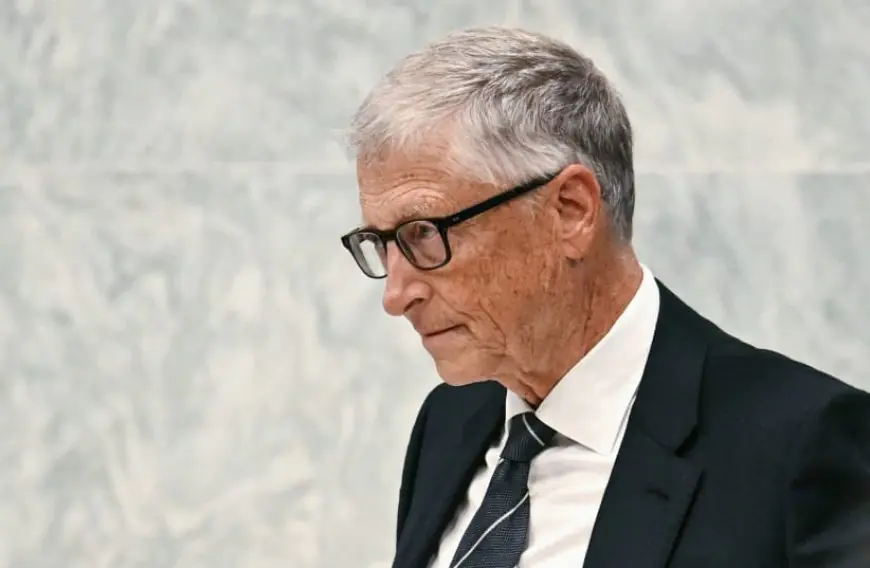
Bill Gates is escalating his warning about artificial intelligence, saying he wants to discuss global AI safety with Chinese President Xi Jinping later this year. According to Reuters, Gates is seeking a meeting during a planned China trip, tentatively scheduled for November, where he hopes to promote international measures for managing dangerous AI capabilities.


His concerns include advanced systems being used for cyberattacks, accelerating job displacement and potentially assisting the creation of biological threats. Gates also argues that the United States should take the lead on restricting the release of particularly dangerous AI models because, in his view, other major powers could follow. Bill Gates AI safety concerns are emerging as governments face growing pressure to regulate increasingly capable systems.
What makes the proposal significant is that Gates is not calling for a simple technology ban. Instead, he wants international monitoring and a new organization that could combine elements of nuclear inspection systems, aviation safety rules and environmental agreements.
His approach also reflects the wider economic debate around AI, including whether governments should protect certain human-centered jobs and use AI-related taxation to support workers affected by automation.
Gates has described responsible AI development as an urgent global priority, while recent discussions in both Washington and Beijing show that AI governance is becoming increasingly intertwined with national security and economic competition. China itself has recently promoted stronger international cooperation on AI governance, creating potential—although far from guaranteed—areas of common ground.
- AI safety: Gates wants stronger international monitoring of high-risk capabilities.
- Cybersecurity: He is increasingly concerned about AI-enabled attacks.
- Biological risks: He supports monitoring AI capabilities involving molecules and biological threats.
- Jobs: He is calling for policies to cushion workers from rapid automation.
The proposed Gates-Xi discussion matters because AI governance is moving beyond Silicon Valley and into global diplomacy. A meaningful U.S.-China conversation could help establish shared safety standards, but geopolitical tensions remain a major obstacle.
For the AI industry, stronger oversight could increase compliance costs while also giving businesses clearer rules for developing powerful models. For governments, the challenge is finding a balance between innovation and public safety.