










































AI-Generated Battlefield Video Debunked Amid Iran–US Conflict
AFP Fact Check confirmed a viral video showing Iranian forces downing a U.S. helicopter was entirely AI-generated. The clip is part of an unprecedented wave of synthetic war content flooding social platforms as the Iran-US conflict intensifies.
In the first days of the Iran-US conflict, a video rocketed across social media. It showed an Iranian fighter on a hillside, aiming a shoulder-fired missile at a U.S. military helicopter. The aircraft exploded in a fireball. The caption called it proof that Iran had fought back. The video racked up millions of views before anyone stopped to check whether it was real.


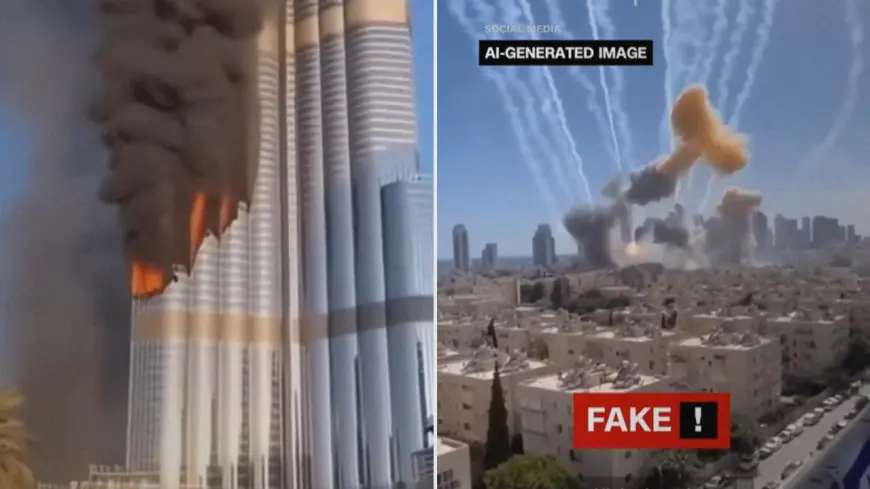
It was not. AFP Fact Check confirmed on June 19 that the footage contained multiple visual anomalies, including a misplaced American flag patch and a missile trajectory that ignored basic physics. The University at Buffalo’s DeepFake-O-Meter tool flagged it with a high probability of being AI-generated. Another synthetic clip had already appeared this week showing Iranian missiles reducing Tel Aviv to rubble, and another claiming to show the Burj Khalifa in flames. None of it happened.
“The barrier to creating convincing synthetic conflict footage has essentially collapsed. The scale is truly alarming, and this war has made it impossible to ignore.” – Timothy Graham, Queensland University of Technology
The mechanics behind this flood of fake content are brutally simple. A minute of generated video costs under a dollar through API aggregators. Social media platforms amplify engagement regardless of veracity, and their ad-sharing programs mean popular war clips can earn their creators real money. State-linked accounts in Iran have also been actively distributing AI-generated videos that portray the U.S. as a bumbling aggressor and Tehran as the scrappy underdog.
Mark Alfano, a computer science researcher at Macquarie University, described the situation as a new chapter in wartime propaganda. “This has been around ever since there’s been warfare,” he said, “but this is a new manifestation of it.”
The platforms are responding, sort of. X has temporarily suspended some accounts that posted unlabeled AI-generated conflict footage, but thousands of copies of the same clips continue circulating in private groups and on encrypted channels where moderation barely reaches. The European Union’s AI Act requires transparency labeling for synthetic media, but enforcement during an active conflict is minimal.
Detection tools are improving, but they are still outnumbered. A BBC analysis found that credible fact-checkers are racing against recommendation algorithms tuned for outrage. No single policy fix will solve this. The combination of cheap generation, platform monetization, and state sponsorship has created an information environment where the line between documentation and fabrication barely exists anymore.