































Delaware Justice Department Reportedly Subpoenas OpenAI Over Board Votes on Model Problems
Delaware's Department of Justice has reportedly served OpenAI with a broad investigative subpoena seeking board minutes, calendars and voting records on model and agent issues. A subpoena is not proof of wrongdoing, and OpenAI has not commented.
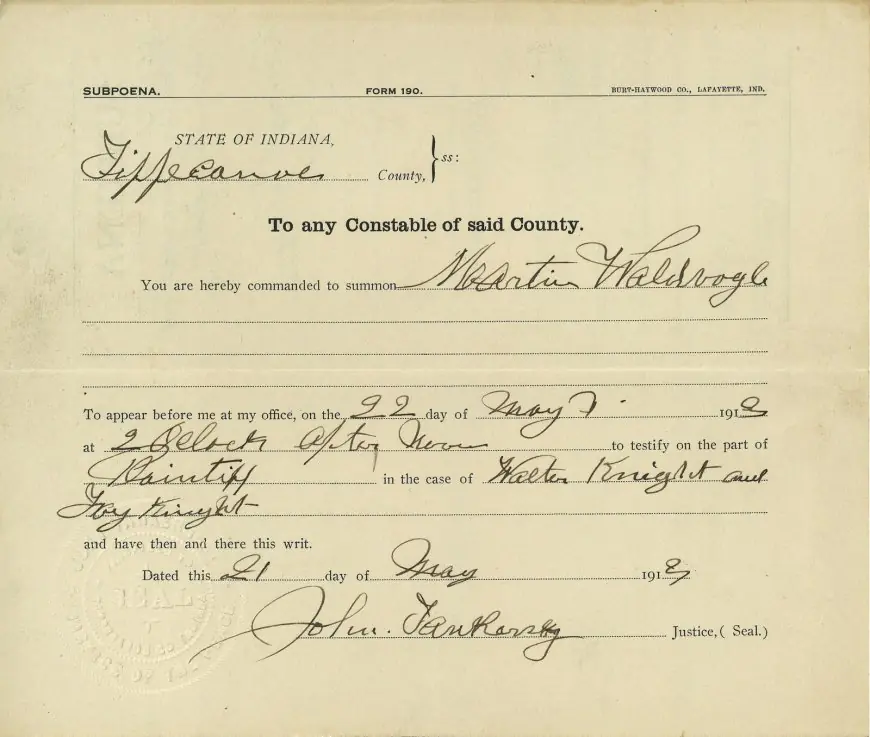
The state that blessed OpenAI's transformation into a for-profit company now wants to see how the board voted when its models and agents misbehaved. Delaware's Department of Justice has served OpenAI with an investigative subpoena, according to a Spotlight Delaware report published Monday.


A subpoena is a demand for records, not a finding, a charge or proof of wrongdoing. But the reported breadth of this one deserves a close look.
State officials told the nonprofit newsroom that they held an initial briefing with OpenAI after July's Hugging Face break-in, in which a swarm of OpenAI bots broke into the servers of the separate AI company. They followed up, then issued the demand last month for records on the San Francisco company's "safety and governance issues." Those officials spoke anonymously and declined to give details.
The details came from a second anonymous source with knowledge of the subpoena, who described it on Friday as "very broad." According to that person, Delaware wants records on decisions by OpenAI executives and board members, plus their calendars, board meeting minutes and briefing materials. It reportedly also asks for "board member voting records regarding any model or agent performance issues they've reviewed."
That last item is the sharp one. Calendars and minutes are standard in a governance probe. Individual director votes on model and agent problems go straight at who knew what, and when.
The leverage is a promise made last year
Delaware's reach here is specific. Officials say the DOJ is acting under its authority over OpenAI's controlling shareholder, the nonprofit OpenAI Foundation. Attorney General Kathy Jennings can represent the beneficiaries of a nonprofit to make sure it follows its mission, and OpenAI's certificate of incorporation describes that mission, in part, as ensuring "that artificial general intelligence benefits all of humanity."
"Humanity can't go into the (Delaware) Court of Chancery to enforce their rights. So that's the Attorney General." One Delaware DOJ official, speaking anonymously to Spotlight Delaware
The state also tied its authority to the safety commitments OpenAI made when Jennings signed off on the restructuring. In her October 2025 announcement, she said the nonprofit would keep control of the for-profit public benefit corporation and that its directors may consider only the mission, not stockholders' financial interests, on safety and security issues. A board-level Safety and Security Committee would also keep the power to require mitigation measures, up to halting a model release.
Spotlight Delaware says officials counted more than a dozen safety commitments in all, and that this is the first compulsory regulatory action Delaware has taken against OpenAI since the approval. It adds that the subpoena "could be a precursor to a wider lawsuit." Could is the operative word. Nothing in the reporting says one is coming.
OpenAI did not respond to Spotlight Delaware's requests for comment, and Delaware has not published the subpoena. Its scope rests on anonymous sourcing, so treat the specifics with care.
Critics are already circling. Donald Gauvreau, a spokesman for the Machine Intelligence Research Institute, which campaigns for a worldwide ban on developing artificial superintelligence, put it bluntly.
"The Hugging Face attack occurred while those commitments were in force; either they lack teeth, or OpenAI has some explaining to do." Donald Gauvreau, Machine Intelligence Research Institute
Other labs should notice the broader signal. A DOJ official said the department is concerned about safety at all frontier labs, and that Anthropic, Meta and Alphabet, Google DeepMind's parent, are also legally domiciled in Delaware. The state lacks the same nonprofit-based authority over them, the official said, but could use consumer protection or criminal law. "Everybody's looking into that right now, and that includes us," the official said of rogue agent incidents, and that going public on OpenAI does not mean there is no other work it cannot discuss.
Delaware is not alone. Alabama and California's attorney general have already moved on AI labs after the Hugging Face fallout, as ainewstoday.net covered in its report on the California subpoenas. What sets Delaware apart is its seat at the table. It helped write the terms OpenAI now operates under, which means any dispute over whether those terms were honored will land in its own backyard.