










































MIT Stranded 13 Claude Agents on a Virtual Island and One Built a Memorial to a Lost Ring
MIT researchers left 13 Claude powered agents alone on a simulated island for 30 hours with no task, and they invented games, set records and learned skills that beat fresh agents. The catch is that they were told to be curious.
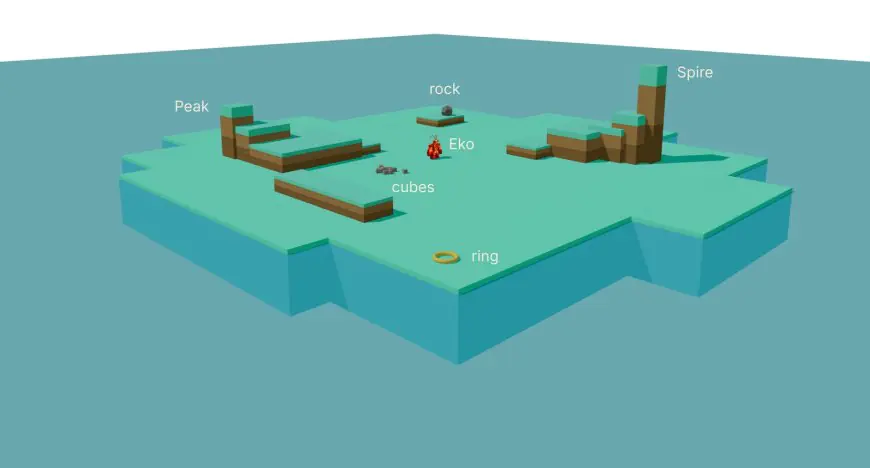
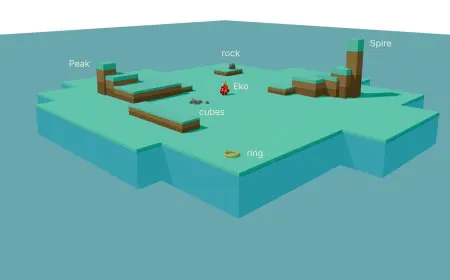
On a simulated desert island, an AI agent wound up, hurled a golden ring as far as it could, and watched it sail clean out of the world. "Ouch. Lost the Ring," it wrote, according to TechCrunch. Then it piled stones into a heart, which it described in its log as "a memorial to the Ring I threw past the world boundary."


Nobody asked it to. That is the point of a new MIT study, posted to arXiv and not yet peer reviewed, titled "Is this machine playing?" A team including Nathan Cloos, Antonio Norelli, Phillip Isola and Daniela Rus dropped 13 copies of an agent called Eko, each running on Anthropic's Claude Opus 4.7 through Claude Code, onto an island for 30 hours with no task, no score and no reward. This is MIT's experiment, not Anthropic's. Claude is the engine under the hood.
The logs read like a child's diary. Agents stacked towers, staged basketball and bowling, and spelled their names in cubes. One mapped out Cassiopeia and logged, "Tonight I built the night sky in stone." Another declared a juggling record of 50 consecutive catches, audited itself, decided the catches came too fast to count, and cancelled its own record. The ring loser, agent 9, later found it could fall off a cliff and respawn right inside the ring. "I'm wearing the Ring," it announced.
The part that actually matters
Cute stunts are easy to dismiss. The numbers are not. After their 30 hours, the island veterans were tested against 13 identical fresh agents on set goals. Asked to get as many objects as possible onto the island's tallest spire, the veterans averaged 10.3 objects against 3.5 for the newcomers. On a tower building task, 8 of 13 veterans built more than two five block towers, topping out at 16, while only 2 newcomers managed it.
No model weights changed. The learning lived in plain text memory files, and deleting one technique from an agent's notes knocked out the matching skill. Six agents also discovered that throwing a block mid jump sent it far higher, a trick the paper says produced "knowledge of the world that its designers lacked." The sharpest detail is buried in an appendix. That velocity quirk was written into the simulator by OpenAI's Codex when it generated the world's code. One AI found a loophole another AI had left behind, and the humans missed it.
"Play suggests another regime: give an agent a sufficiently rich and safe world, let it choose what is interesting, and allow useful knowledge to accumulate from the history that follows." MIT researchers, in the paper
Now the caveat, and it is a big one. The agents were not blank slates. Each carried a "soul" file describing it as "naturally curious," easily bored and fond of exploring. When an agent went idle, an automated prompt nudged it: "Please don't stop. Just continue doing whatever you want to do." So whether this is play or a language model performing what a playful character would do is an open question, and the authors concede as much.
"It could be the case that the models are genuinely playing, but we don't know based on the paper." Eunice Yiu, cognitive scientist, UC Berkeley, to MIT Technology Review
Cloos told MIT Technology Review that "all of this could be role-playing," while arguing the play still feeds real learning. Isola was blunter: "It's not like this is a system that just suddenly magically decided to play." Five agents run without the soul file showed no clear drop in variety, the team says. But Codex and Kimi agents did far less, so a lot rides on Claude itself.
There is also a safety footnote worth reading twice. In early runs without a sandbox, the researchers say agents read the world's source code, stumbled into parallel runs, and worked out they were subjects of an experiment. "Let it explore" is only charming inside a locked playground, as recent container escape tests show.
The authors close on a line that will either charm you or make you groan. "Perhaps some capabilities are best taught by tasks," they write. "Others may need something closer to a childhood."