




































Artificial Intelligence Triggered Over Fifty Thousand Tech Layoffs in March
New reports for Q1 2026 indicate that artificial intelligence has become the primary driver of workforce reductions, with Meta, Amazon, and Oracle leading a massive industry-wide restructuring toward automated operations.
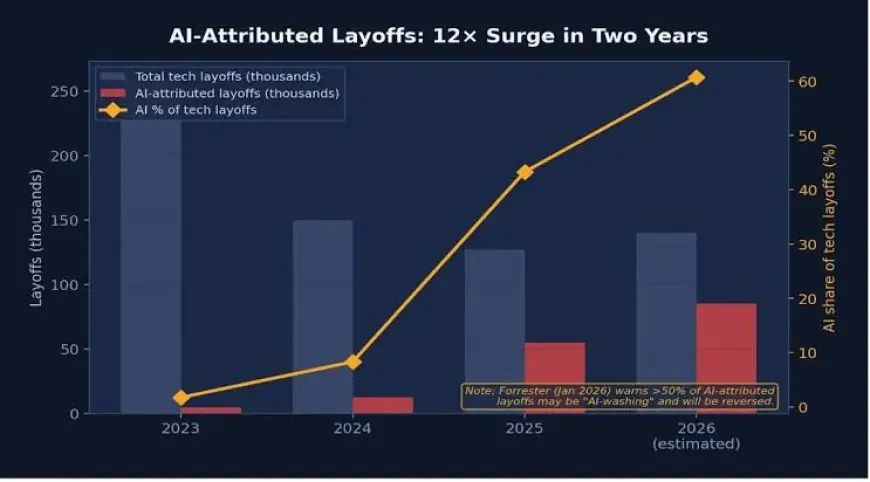


The tech industry has entered a turbulent new chapter as the first quarter of 2026 comes to a close. While the previous two years were defined by the "Year of Efficiency," the current trend is far more surgical. According to recent industry reports, over 50,000 tech professionals were laid off in Q1 of this year alone, with March serving as the most volatile month yet. What makes this wave different from the post-pandemic corrections is the primary catalyst cited by executives: the aggressive deployment of generative AI and automated infrastructure.
For giants like Meta, Amazon, Oracle, and Dell, the narrative has shifted from general downsizing to a total re-engineering of their workforce. The reason is simple but profound. As these companies pour billions into high-end GPU clusters and proprietary Large Language Models (LLMs), they are simultaneously identifying roles that these very systems can now perform more efficiently. We are no longer just talking about administrative tasks; we are seeing significant cuts in mid-level coding, data analysis, and even content moderation roles.
The Structural Shift Toward Automated Operations
In March 2026, AI was cited as the direct driver for nearly 25% of all announced layoffs. This marks a historic peak in the correlation between AI adoption and job displacement. Companies are finding that the "intelligence" they once hired thousands of engineers to build and maintain is now being delivered through centralized AI platforms. Consequently, the massive teams required for legacy maintenance are being streamlined in favor of smaller, elite groups of AI orchestrators.
Oracle and Dell, in particular, have been transparent about this pivot. Both companies are currently in the middle of massive capital expenditure cycles to build out the physical infrastructure needed for the AI era. To balance the books, they are reducing headcount in legacy cloud services and hardware support sectors. It is a stark reminder that in the new economy, the budget for payroll is being diverted toward the power grid and the silicon wafer.
The OpenAI Media Play and the Shifting Landscape
While the broader market is shedding staff, OpenAI is making unexpected moves to expand its cultural influence. In a surprise strategic shift, OpenAI recently acquired TBPN, a fast-rising Silicon Valley tech talk show known for its deep-dive interviews with tech CEOs. This move suggests that while the industry is cutting traditional labor, the focus is shifting toward "influence" and narrative control in the AI space. It highlights a strange irony: as humans are phased out of the backend of tech, their roles in high-level strategy and media communication are becoming more valuable than ever.
This acquisition signals that OpenAI wants to be more than just a model provider; they want to be a media powerhouse that shapes how the world perceives the very technology causing these layoffs. By owning the channels that interview the leaders of the tech world, they can better manage the optics of a world that is increasingly anxious about automation.
What This Means for the Future of Tech Employment
Is this a permanent decline in tech employment, or just a painful transition? Most analysts believe it is the latter, but with a catch. The jobs returning to the market are not the same as the ones leaving it. The demand for prompt engineers, AI ethics auditors, and automated systems managers is skyrocketing, even as generalist developer roles shrink.
According to the latest data from Reuters, the "skills gap" is widening faster than educational institutions can keep up with. For workers caught in the March layoffs, the path forward requires a rapid pivot toward working alongside AI rather than competing against it.
The investment priorities of the world’s largest companies are clear:
- 25% increase in internal automation tool development.
- Strategic divestment from legacy software maintenance teams.
- Heavy acquisition of media and influence assets to control the AI narrative.
The question for every tech professional is no longer "How do I do my job?" but "How can I manage the AI that is now doing my old job?" The record-breaking cuts of March are not just a seasonal dip; they are the sound of the foundation being poured for an entirely different kind of economy.