




































Google Expands Search Live Globally as Chinese Open Source AI Models Target Market Dominance
Google has officially launched its "Search Live" AI feature in over 200 countries, including Nigeria, bringing real-time voice and camera-based search to millions. Simultaneously, Chinese open-source AI models like Alibaba’s Qwen and DeepSeek are seeing a massive surge in global adoption, challenging the traditional dominance of Western proprietary systems.
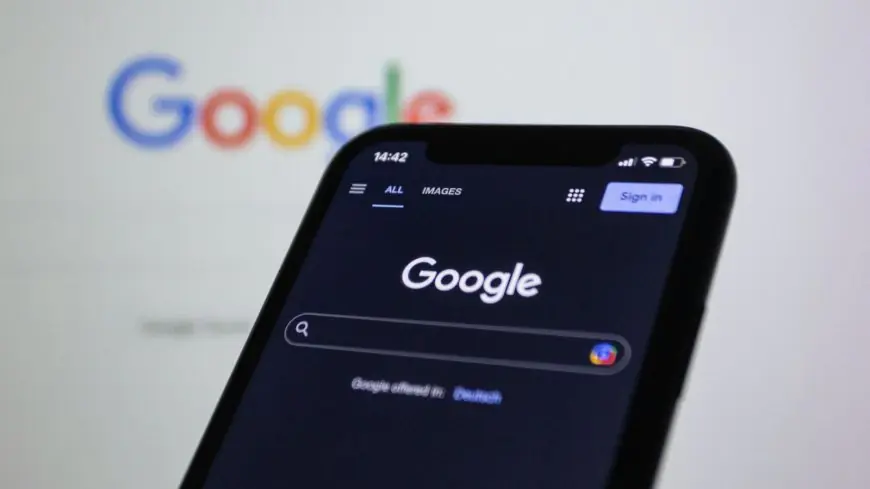

The global artificial intelligence landscape is witnessing a dramatic dual shift this week. Google has officially taken its "Search Live" feature global, extending the power of real-time, multimodal search to over 200 countries and territories. This rollout, which prominently includes emerging markets like Nigeria, represents a major step in making conversational AI a primary interface for billions of users worldwide.
Powered by the newly unveiled Gemini 3.1 Flash Live model, Search Live allows users to engage in natural, back-and-forth conversations with Google Search. Unlike traditional text-based queries, users can now tap a "Live" icon in the Google app to ask questions via voice or use their camera to provide visual context. Whether it is a student in Lagos asking for a real-time explanation of a complex physics problem or a DIY enthusiast in London using their camera to identify a specific mechanical part, the AI now "sees" and "hears" alongside the user.
Breaking Down the Global Rollout
Google’s strategy emphasizes accessibility and local relevance. The new Gemini 3.1 model is inherently multilingual, supporting over 90 languages at launch. In regions like India and Nigeria, this includes support for local dialects, ensuring that the "AI divide" does not widen as technology advances. This global expansion puts advanced reasoning and visual processing directly into the hands of mobile-first users, often bypassing the need for high-end hardware thanks to cloud-based processing.
The integration with Google Lens is perhaps the most impressive feature of this update. By enabling the camera, Search Live can offer step-by-step guidance on real-world tasks. For instance, pointing the camera at a malfunctioning home appliance allows the AI to diagnose the issue and suggest repair videos or local technicians in real-time. This move is widely seen as Google’s attempt to defend its search throne against a rising tide of specialized AI agents.
The Rise of China’s Open Source Giants
While Google scales its proprietary ecosystem, a different revolution is brewing in the East. Chinese open-source AI models are capturing a significant share of the developer market. Alibaba’s Qwen model family recently crossed a staggering 1 billion downloads, even surpassing Meta’s Llama in certain developer adoption metrics on platforms like Hugging Face.
Recent data indicates that Chinese "open-weight" models now account for nearly 30% of the working AI market. This is a massive leap from just a year ago. Startups and enterprises are increasingly turning to these models—such as DeepSeek and Qwen—because they are effectively free to download, easy to modify, and significantly cheaper to run at scale compared to the paid APIs of Western giants.
The competitive pressure is palpable. According to a report by the Stanford Institute for Human-Centered AI, Chinese developers now account for 17.1% of all major AI model downloads, slightly edging out U.S. developers at 15.8%. This shift suggests that the future of AI may not be a single-player game but a parallel leadership era between Western proprietary systems and Chinese-led open-source communities.
What This Means for the Future
The convergence of these two trends—Google’s multimodal global expansion and China’s open-source surge—points to a more decentralized and conversational future for technology. For users in Nigeria and other developing economies, the barrier to entry for world-class AI tools has never been lower. However, for tech giants, the race is no longer just about who has the smartest model, but who can get their AI into the most hands, in the most languages, at the lowest cost.
As 2026 progresses, the "search" box as we know it is fading, replaced by a lens that sees and a voice that understands. Whether the world interacts through a Google interface or a customized open-source model from Alibaba remains the billion-dollar question.