


































Runway Gives Away Its Praxis-1 Robot Brain and Says It Beats Every Open Rival
Runway has released open weights for Praxis-1, the 27 billion parameter robotics model it first showed partners in September. The company says it leads Nvidia's RoboLab-120 among world action models, though it ranks fifth overall.
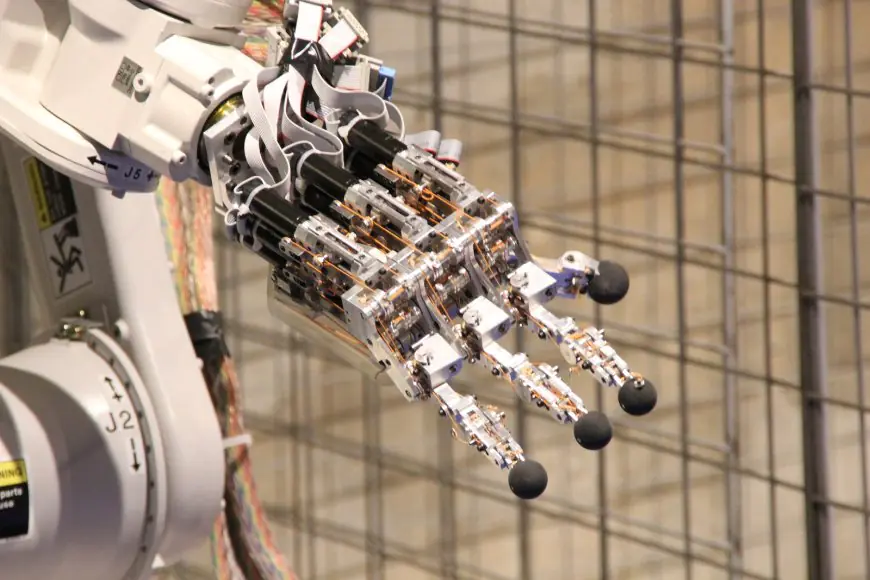
In September, Runway let three robot makers try its first robotics model behind closed doors. On Wednesday it handed the same model to everyone else. Praxis-1, which Runway calls a world action model, is now downloadable with open weights under the Apache 2.0 license, commercial use included, along with the inference and fine-tuning code to bend it to your own machine.


That is a bigger deal than another benchmark chart. Plenty of serious robot models sit behind partnerships or APIs. Runway, the New York company better known for AI video tools, is betting that free weights will pull developers toward its approach faster. The company said in its November 11 announcement that it had promised an open release from the start.
The idea behind Praxis-1 is that a model trained to predict video already knows a lot about how the physical world behaves. Runway describes it as a 27 billion parameter mixture-of-experts diffusion transformer that predicts video and robot actions together. In plain terms, the model imagines what the scene should look like a moment from now, then works out the motion that gets it there. Runway also claims ordinary web video works as well as teleoperated robot footage for pretraining, which, if it holds up, would ease one of robotics' most expensive bottlenecks.
The leaderboard fine print
Runway is leading with numbers, and they are Runway's numbers. The company says Praxis-1 is the top world action model on Nvidia's RoboLab-120 leaderboard, a simulation benchmark of 120 tabletop tasks, and that it beats every open-weight vision-language-action model. By Runway's count it succeeded in 46.2 percent of 1,200 episodes, ahead of FLUX 3 Action at 42.9 percent, Cosmos3 Nano at 36.8 percent and pi0.5 at 28.0 percent.
Two things are worth keeping in mind. First, "top" comes with qualifiers. The Robot Report noted that Praxis-1 ranks fifth overall on that leaderboard, so the crown applies to its category and to open models, not to every robot policy on the board. Second, 46.2 percent means the model failed more simulated tasks than it finished. Strong for this benchmark, maybe. Not a robot you would leave alone in a kitchen.
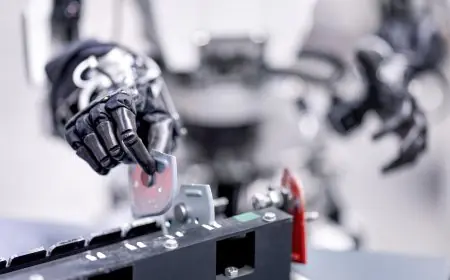
The more interesting evidence comes from the September partners: Noble Machines, which builds a legged humanoid, Standard Bots, which makes six-axis industrial arms, and Ultra, which runs dual-arm warehouse packing stations. Runway says all three have been running the model on their own hardware. Andy Chen, Runway's head of robotics, gave The Robot Report one concrete example.
"Praxis-1, built with more compute and data, learned it from half an hour of examples and got it right 15 times out of 15. Then we gave it a messy pile of planks it had never seen to clear into bins, and it cleared the whole pile six times out of 10." Andy Chen, head of robotics at Runway
Six out of 10 on a new mess is honest, and more useful than a polished demo reel. It also shows how far even good models remain from the reliability a factory floor demands.
The release itself is practical. Runway says Praxis-1 is on GitHub and Hugging Face, with native support in the LeRobot library and in vLLM-Omni, plus hosted inference on its Reactor service. It says the model runs on Nvidia hardware from H100 data center chips down to the Jetson Thor computer on the robot itself, with full fine-tuning or cheaper LoRA adaptation.
There is a flag-waving pitch attached too. Runway frames open weights as a matter of American competitiveness, and Chen did not soften it.
"Regaining our global lead in manufacturing, accelerating productivity across our economy, and securing ourselves and our allies will rely on this." Andy Chen, head of robotics at Runway
Strip out the patriotism and the strategy is familiar. Give away the weights, let developers build on your stack, and learn where the model breaks. This week's robotics story from DeepMind and Mercedes was about how hard the final few percent of reliability is. Runway says its next step is deploying with partners in real warehouses and factories. Open weights mean outsiders can now test those leaderboard claims for themselves.