





























How the Amazon Echo Studio 2026 with Alexa Plus finally made smart speakers intelligent
The 2026 Amazon Echo Studio marks a revolutionary shift in home automation, moving from simple voice commands to a deeply intuitive, LLM-powered conversation that understands context and manages your home with human-like reasoning.
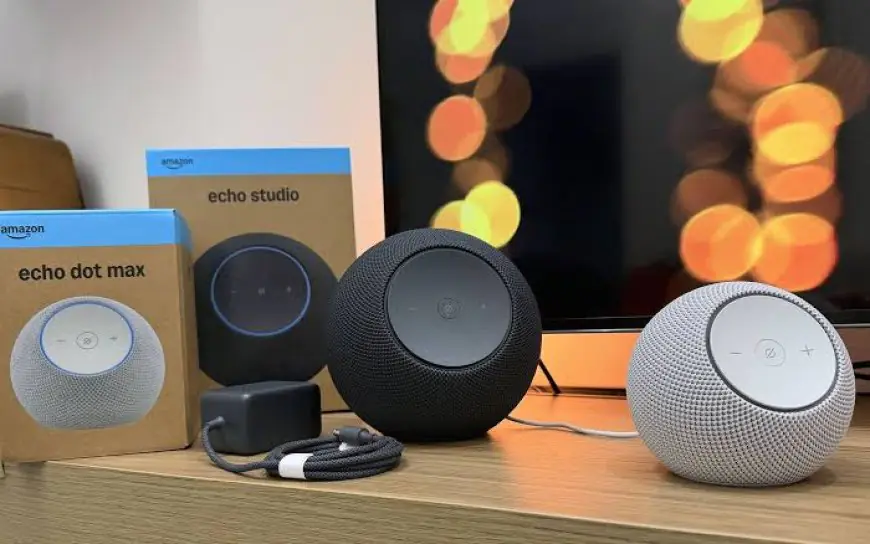


For nearly a decade, our interactions with smart speakers followed a rigid, frustrating script. You would say a specific "wake word," wait for the blue light, and issue a clinical command like "Set a timer for ten minutes" or "What is the weather?" If you tried to have a nuanced conversation, you were met with the dreaded "I'm sorry, I don't know that one." However, the 2026 release of the Amazon Echo Studio featuring Alexa Plus has officially ended that era of robotic limitations. We are finally living in the age of the ambient assistant.
The Power of the AZ3 Pro AI Accelerator
The secret behind this massive leap in intelligence isn't just better software; it is a fundamental redesign of the hardware. The 2026 Echo Studio is powered by the new AZ3 Pro chip, a custom-designed AI accelerator that allows the device to process complex Large Language Models (LLMs) locally at the "edge." In previous years, your voice was sent to a massive server in the cloud, processed, and sent back, causing a noticeable lag. With the AZ3 Pro, the Echo Studio can think, reason, and respond in real-time with almost zero latency.
This hardware upgrade enables what Amazon calls "Alexa Plus"—a version of the assistant that doesn't just recognize words but understands intent. It no longer requires you to memorize specific phrases. You can speak to it as you would a roommate, using natural pauses, slang, and even non-linear requests. The high-fidelity audio the Studio is known for hasn't been sacrificed either; it remains the gold standard for spatial audio, now enhanced by AI that tunes the acoustics to your room’s dimensions in real-time.
Beyond Commands: The "I'm Cold" Revolution
The most impressive demonstration of this new intelligence is how the device handles context. In 2025, if you told your smart speaker "I'm cold," it might have responded with a definition of hypothermia or a quirky joke. In 2026, the Echo Studio understands this as a multi-step problem-solving request. When you say "Alexa, I'm cold," the AI checks the current room temperature via its built-in sensors, looks at your smart thermostat, and analyzes your home’s environmental state.
Without needing a second prompt, the device can orchestrate a complex routine: it raises the temperature by two degrees, closes the smart blinds to keep the heat in, and dims the lights to create a cozy atmosphere. If it's evening, it might even offer to switch the TV to a relaxing fireplace scene. This shift from "command and control" to "contextual awareness" is what makes the 2026 assistants so much more than glorified timers. They are now proactive managers of our physical space.
Competing in a Gemini-Powered World
Amazon isn't the only giant in this race. Google has also made significant waves with its Gemini for Home update, which has transformed the Nest Audio into a serious competitor. While Google excels at information retrieval and deep integration with your Gmail and Calendar, the Echo Studio 2026 maintains an edge in smart home device interoperability. The battle for the "brain of the home" is no longer about who has the loudest speaker, but who has the smartest logic engine.
The industry consensus is that 2026 is the year voice assistants finally became "helpful" rather than just "handy." The integration of LLMs means these devices can now remember previous parts of a conversation. If you ask about a recipe and then say "Actually, make it for six people instead of four," the assistant remembers the context of the first question and recalculates the measurements instantly. This level of memory and reasoning was unthinkable just twenty-four months ago.
The Verdict: Is It Worth the Upgrade?
As a brand manager and long-time tech observer, I rarely suggest that users replace their functional hardware every single year. However, the 2026 Echo Studio is a rare exception. The jump from the old "Alexa" to "Alexa Plus" is not an incremental update; it is a total reimagining of what a home assistant can do. If you have a house full of smart lights, locks, and thermostats, you owe it to yourself to get a "brain" that actually knows how to use them together. The future of the smart home isn't just about being connected—it is about being understood.