







































How OpenAI Paused The Thirty One Billion Pound Stargate Infrastructure Project In The United Kingdom
OpenAI has officially halted its ambitious Stargate UK data center project, valued at £31 billion. The decision highlights a growing crisis in the AI industry where physical constraints like power availability and infrastructure costs are now outpacing the speed of model innovation.


The global race for artificial intelligence supremacy has hit its first major physical roadblock. OpenAI has reportedly hit the "pause" button on its massive Stargate UK project, a planned £31 billion investment intended to build one of the world's most advanced AI supercomputers on British soil. While the tech giant has spent years focusing on breaking the boundaries of large language models, this sudden shift suggests that the industry is no longer limited by code, but by the cold, hard realities of electricity and hardware economics.
The Stargate UK initiative was designed to be the crown jewel of OpenAI’s international expansion, providing the localized compute power necessary to serve the European market while bypassing transatlantic latency. However, as 2026 unfolds, the sheer scale of the project has run headlong into a perfect storm of soaring energy costs, grid instability, and a regulatory environment that is struggling to keep pace with the hunger of next-generation data centers.
The Realities Of The Power Wall
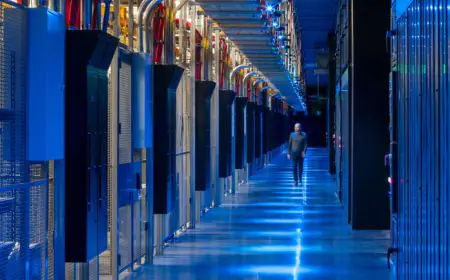
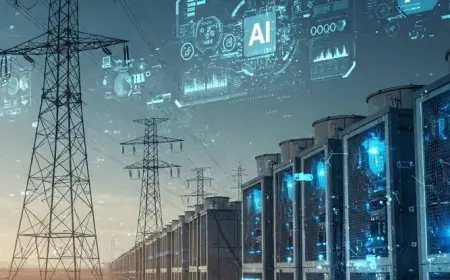
Industry insiders suggest that the primary catalyst for the pause is the United Kingdom’s aging energy infrastructure. An AI cluster of the magnitude envisioned for Stargate requires a level of consistent power draw that the current UK grid is simply not equipped to handle without massive upgrades. For OpenAI, the cost of not just building the facility, but effectively subsidizing the modernization of local power networks, has shifted the project’s ROI from "ambitious" to "prohibitive."
This situation is not unique to the UK. As AI models become more complex, the energy required to train and maintain them has increased exponentially. According to reports from the International Energy Agency, the total electricity consumption of data centers globally could double by the end of next year. OpenAI’s decision reflects a broader market realization: having the best algorithm means nothing if you cannot find a way to plug it into the wall.
Regulatory Uncertainty and Infrastructure Readiness
Beyond the power cables, the "Stargate" project has been bogged down by the UK’s complex planning and environmental regulations. Despite the government’s public enthusiasm for becoming an "AI Superpower," the local reality of securing permits for massive industrial sites remains a bureaucratic nightmare. Concerns over the environmental impact of cooling these massive server farms—which require millions of gallons of water—have led to increased friction with local councils and environmental advocacy groups.
Furthermore, the global supply chain for specialized high-end chips remains fragile. While OpenAI has been exploring custom silicon solutions, the immediate reliance on external hardware providers has created a bottleneck. The company appears to be pivoting its strategy, choosing to optimize its existing infrastructure in the United States and other more "plug-and-play" regions rather than fighting an uphill battle in a territory that lacks the immediate readiness for a project of this scale.
What This Means For The Future Of AI Expansion
This pause is a sobering reminder that we have entered the "Infrastructure Era" of artificial intelligence. For the past decade, the narrative was dominated by software breakthroughs and "Scaling Laws." Today, the narrative is being rewritten by civil engineers and energy executives. The suspension of Stargate UK serves as a warning to other nations: attracting the biggest players in tech requires more than just tax incentives; it requires a robust, high-capacity energy strategy and a streamlined digital infrastructure framework that can support the weight of the future.
OpenAI has not officially canceled the project, but the indefinite pause signals a strategic retreat. For now, the focus shifts back to efficiency. Instead of building bigger "Stargates," the industry may be forced to look at how to make their existing models smarter, leaner, and less power-hungry. If 2024 was the year of the agent and 2025 was the year of the enterprise, 2026 is shaping up to be the year that AI hit the limits of the physical world.