



























Meta Claims Its Next AI Model Has Reached GPT-5-Level Performance
Meta's superintelligence chief Alexandr Wang told employees that the company's upcoming model, codenamed Watermelon, has reached performance comparable to OpenAI's flagship GPT-5.5 on key AI benchmarks. The development signals a potential shift in the competitive AI landscape as Meta's aggressive spending and talent acquisition strategy begins to yield results.
Meta appears to have achieved a significant milestone in its quest to close the gap with OpenAI.

According to two sources familiar with an internal town hall meeting, Meta's superintelligence chief Alexandr Wang told employees that the company's upcoming AI model, internally codenamed Watermelon, has caught up with OpenAI's flagship GPT-5.5 model based on closely followed AI benchmarks.
"Watermelon, our next model after Avocado, is currently in training," Wang said in the town hall. "Watermelon uses an order of magnitude more compute than Avocado." Avocado is Meta's internal codename for Muse Spark, the first model in the Muse series released in April.
If Wang's assessment is accurate, it would mark the clearest sign yet that Meta's massive infrastructure investment and aggressive talent recruitment are beginning to pay off.
"Our next Muse Spark update is coming soon. Big improvements in coding and agentic capabilities to be more competitive with other leading models." – Alexandr Wang, Meta Chief AI Officer
The news comes as Meta faces mixed signals about its AI trajectory.
CEO Mark Zuckerberg reportedly acknowledged in the same town hall that AI agent development has been "slower than expected" over the past four months. However, he also told employees that he expects "more significant returns" from AI investment within the next three to six months.
The tension between short-term execution challenges and long-term capability building reflects the complexity of competing in the frontier AI race, where progress is measured in both benchmark scores and real-world deployment.
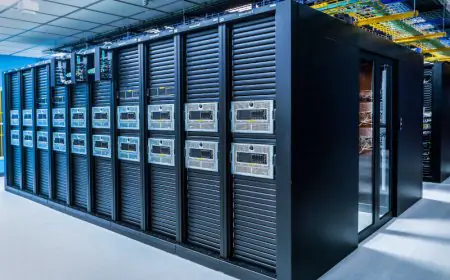
Meta's AI ambitions are backed by staggering financial commitments. The company now expects 2026 capital spending between $125 billion and $145 billion, up from an earlier forecast of $115 billion to $135 billion, citing rising component costs and additional data center spending.
This places Meta among the hyperscalers projected to spend roughly $700 billion collectively on AI infrastructure in 2026. The infrastructure buildout includes a $21 billion expanded agreement with CoreWeave for AI cloud capacity through 2032, as well as long-term nuclear power agreements with Vistra, TerraPower, and Oklo designed to supply up to 6.6 GW of electricity by 2035.
The Meta AI competitive positioning reflects the company's strategic shift from open-source Llama models to proprietary "superintelligence" development under Wang's leadership.
Mark Zuckerberg personally recruited Wang from Scale AI and has offered top AI talent hundreds of millions of dollars each to join, poaching executives from OpenAI, Anthropic, and Google.
The company has also recruited renowned AI security researcher Dawn Song as Vice President of AI Research, further strengthening its research capabilities.
However, analysts note that Watermelon is reportedly catching up to GPT-5.5, which is OpenAI's previous flagship.
OpenAI released GPT-5.6 in late June but has not yet made it generally available following a U.S. government request. The distinction is important: catching up to yesterday's flagship is progress, but the race continues to move forward.