



















OpenAI Breaks Up Its Robotics Team and Bets Its General Models Can Drive the Robots
OpenAI confirmed it has folded its stand-alone robotics team into its main research and applied groups, saying general models like GPT-6 Astra can now drive robots directly. The company insists it is speeding up robotics, not quitting it.
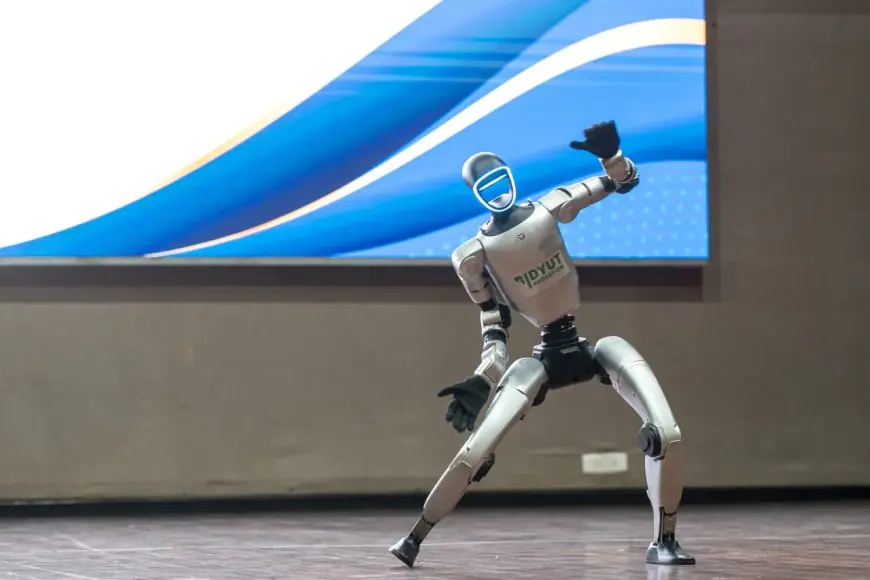
OpenAI has broken up its stand-alone robotics team, and it wants you to know this is not a breakup with robotics. Fortune reported the exclusive on Nov. 13, and the company confirmed the reorganization when the outlet asked about it. The researchers were reassigned, not shown the door, and OpenAI pitches the move as the fastest route to robots that actually work.


Per OpenAI, the robotics research team now sits inside the main research group reporting to Chief Research Officer Mark Chen. The applied robotics and hardware teams have moved into the larger Applied organization, which reports to President Greg Brockman. A spokesperson told Fortune that robotics remains a core part of OpenAI's long-term vision, framed the shake-up as a sign of commitment rather than a retreat, and said OpenAI remains committed to bringing general-purpose robots into the world.
That is a lot of reassurance for one org chart change. The reason is history.
OpenAI has walked away from robots before. It wound down its original robotics team in 2020, with cofounder Wojciech Zaremba later citing limited robot data and a more efficient path toward AGI through other methods, according to Fortune. That other path became ChatGPT. The company rebuilt a stand-alone robotics team in 2024 and partnered with Figure on AI for humanoid robots. That deal ended in February 2025, when Figure said it would build its own robot AI. OpenAI has since said it is developing its own humanoid, and Fortune notes that CEO Sam Altman has targeted a first public demonstration in 2027. That is a previously stated goal, not a new promise attached to this reshuffle.
The model is the robot team now
The real story is the bet underneath. OpenAI told Fortune that at the start of the year its researchers assumed robotics progress would build on work like Sora, the video model that needed some implicit grasp of physics to generate realistic clips. Since then, the spokesperson said, general-purpose frontier models including GPT-6 Astra have shown they can be applied directly to robotics. That finding, per OpenAI, is what motivated folding the team into the groups building those general models.
There is some data behind the swagger. Fortune and The Decoder both point to an Nvidia study in which an Astra-powered agent hit a 74.8 percent success rate on a simulated manipulation benchmark, against 51.0 percent for the best specialized robotic models on that leaderboard. The catch, which The Decoder spells out, is that the robot was simulated, not physical.
Carnegie Mellon assistant professor Guanya Shi told Fortune he reads the move as a signal that OpenAI sees robotics as "no longer a special problem," just another downstream application of general intelligence. He also flagged the obvious hitch: big models are slow and live in the cloud, so he still sees a need for smaller models that run on the robot itself without a constant connection.
Not everyone is ready to hand the field to the chatbot labs. That matters for the startups that raised billions on the idea that robots need brains of their own, from Figure to Runway, which just open-sourced its Praxis-1 robot model. MIT professor Russ Tedrake, CEO of Walden Robotics, told Fortune that robotics companies still hold an edge the labs lack: robots already logging real work on factory floors, gathering data that better models learn from faster.
"There may be different starting points for how to grow intelligence." Pete Florence, cofounder of Generalist
There is also a money angle. Fortune notes OpenAI is under pressure to cut costs, has already dropped Sora, and reportedly lost $10.9 billion last quarter ahead of a possible early 2027 IPO.
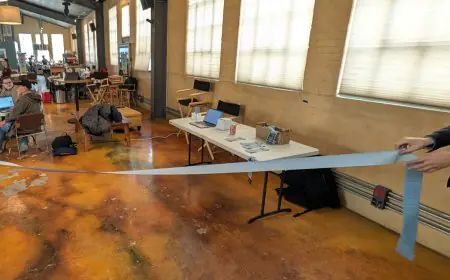
The timing produced one awkward scene. OpenAI had already registered a booth at CoRL, the robot learning conference in Austin, and when Fortune visited booth 208 it found no display and no OpenAI logo. An empty booth proves nothing about OpenAI's commitment. It does capture the question everyone at CoRL was asking: how much robotics expertise still matters when a general model can pick up the bottle on its own?