

























Microsoft Puts Its Own Coding Models in GitHub Copilot and Says They Nearly Match Pricier Rivals
Microsoft says MAI Code 2 nearly matches OpenAI and Anthropic coding models at a fraction of the cost, but its own footnotes show those numbers use a 50% promo price and max-effort runs on its home harness.
For years GitHub Copilot ran on a simple deal. Microsoft brought the distribution, and OpenAI brought the brains. On Tuesday at Ignite, Microsoft put more of its own brains in the box. It introduced MAI Code 2 and MAI Code 2 Flash, in-house coding models it says come close to OpenAI and Anthropic for everyday enterprise work at far lower cost. Both are now in GitHub Copilot.


The headline numbers are striking. The fine print matters more.
In its announcement on the Microsoft AI site, the company says that averaged across four benchmarks it ties to everyday Copilot work (DeepSWE 1.1, Terminal Bench 2.1, SWE-Atlas and FrontierCode v1.1), MAI Code 2 delivers 98% of the performance of GPT 6.1 Sol at 40% of the cost, and 96% of Claude Opus 5.5’s performance at 5% of the cost. Microsoft says the smaller Code 2 Flash offers comparable performance to GPT-6 Luna and Claude Haiku 5.5 at 65% and 20% of their cost across three coding benchmarks for routine, high-volume tasks. It also says reviewers in blind frontend tests, annotated by 258 people, preferred Code 2’s output over GPT-6 Sol 67% of the time.
Read the footnotes before the slide
Every one of those cost figures comes with an asterisk, and Microsoft wrote it itself. According to the post’s footnotes, all models were run at max reasoning effort, and the MAI Code 2 and Code 2 Flash costs are shown at a 50% promotional price. Three of the four benchmarks were run on MSBench, which Microsoft describes as its internal eval platform, using the GitHub Copilot CLI without subagents. Only the FrontierCode 1.1 scores and costs come from an outside party, Artificial Analysis.
That discount does quiet work. If the comparisons hold the same token usage and you simply take away the 50% discount, the MAI cost side roughly doubles. On that back-of-envelope math, Code 2 lands closer to 80% of GPT 6.1 Sol’s cost rather than 40%, and around 10% of Opus 5.5 rather than 5%. Flash looks even less flattering, since 65% of GPT-6 Luna’s cost would become roughly 130%. Microsoft did not publish list-price charts, so that is arithmetic on its figures, not a measured result. Half off, on its own harness, is about the friendliest setup a benchmark can get.
Microsoft is also unusually candid about where these models stop.
“They’re explicitly not yet tuned for harder problems, like fundamental science research and very long horizon agentic work.” Microsoft AI
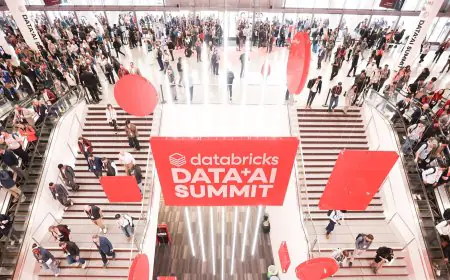
That is a narrower claim than the keynote energy suggested. Satya Nadella told the Ignite crowd in San Francisco that Code 2 is “at the frontier of cost-performance for everyday enterprise coding tasks.” The operative word is everyday. Microsoft is not saying it has built an Opus killer. It is betting most Copilot requests are bug fixes and refactors that do not need a rented frontier model.
The availability details are worth getting right. According to the GitHub changelog, MAI Code 2 is open to Copilot Pro, Pro+, Max, Business and Enterprise subscribers, while Code 2 Flash reaches further down to Free and Student plans too. Both use usage-based billing and appear in the model picker from VS Code to Xcode. GitHub says Business and Enterprise admins can control access through model policy, but new models switch on by default unless an admin has turned that off. Outside Copilot, Microsoft says Code 2 Flash is in limited-access preview in Microsoft Foundry, and that it plans to bring it to OpenRouter, Vercel, Hermes, Open Code and Kilo soon.
The bigger story is strategic. Microsoft has spent this year widening the set of models inside its products, including a move to switch on Claude by default for UK Copilot tenants. Now it is slotting its own models into the same picker, next to the partners it pays. Nadella also said in the keynote that GPT 6.2 is coming to Foundry. OpenAI is still very much in the building. It just has a cheaper roommate with the landlord’s last name.
The real test will not come from a footnoted chart. It will come from pull requests.