







































Big Tech Is Funding Energy Grids To Keep AI Growing Without Raising Your Utility Bills
A coalition of tech giants including Google, Microsoft, and OpenAI has signed a landmark pledge to directly fund the infrastructure and electricity costs for AI data centers, shielding everyday consumers from the rising financial burden of the artificial intelligence boom.
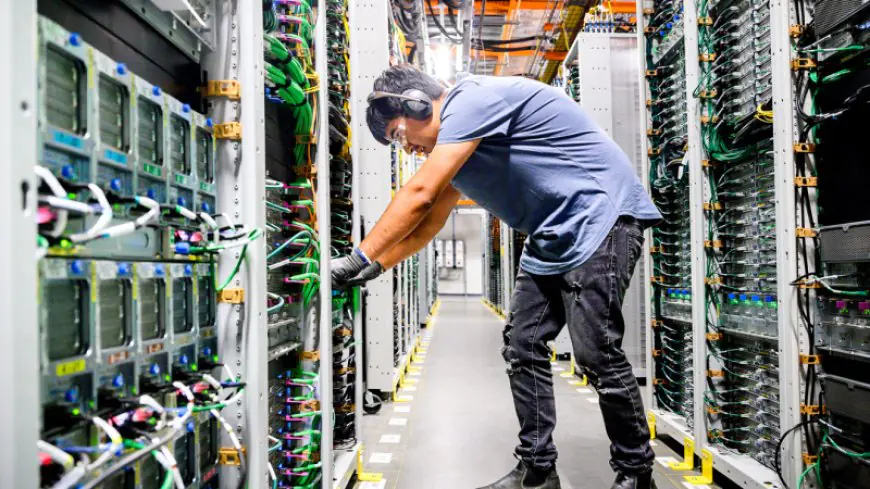


As the hunger for artificial intelligence reaches a fever pitch, the massive energy requirements of the data centers powering these systems have become a point of national tension. In a move designed to maintain public favor and secure their technological future, a powerhouse coalition of technology leaders has stepped forward with a historic financial commitment. Giants like Google, Microsoft, Amazon, Meta, Oracle, xAI, and OpenAI have officially signed a pledge to shoulder the massive electricity and infrastructure costs associated with the next generation of AI development.
The logic behind this move is as much about PR as it is about power. As these companies build out sprawling server farms to train and run Large Language Models (LLMs), the strain on local power grids has led to fears that utility companies would pass the bill for infrastructure upgrades onto ordinary households. By agreeing to fund these costs directly, Big Tech is attempting to neutralize a burgeoning political and social backlash against the "AI energy drain."
The True Cost of Intelligence
Training a single cutting-edge AI model can consume as much energy as hundreds of homes use in a year. When you scale that up to the thousands of enterprise-level tools being deployed globally, the math becomes staggering. Until now, the question of who pays to upgrade the aging transformers, high-voltage lines, and substations required to support these hubs has remained a contentious debate between tech companies and local governments.
According to recent analysis by the International Energy Agency (IEA), data center electricity consumption is projected to double in the coming years. This pledge signifies a shift in responsibility; rather than relying on public subsidies or rate-payer increases, these trillion-dollar companies are acknowledging that they must be the primary financiers of the energy ecosystem they rely upon.
What the Funding Pledge Covers
The agreement isn't just about paying a monthly power bill. It represents a deep investment in the "hardware" of the electrical grid. The commitment is structured to address three critical areas:
- Direct Infrastructure Investment: Funding the construction of dedicated substations and transmission lines that lead specifically to data center clusters.
- Advanced Cooling Solutions: Investing in localized water and energy-efficient cooling systems to reduce the overall "heat footprint" on local environments.
- Grid Resiliency: Paying into a "Consumer Shield" fund that prevents utility companies from raising base rates for residential neighborhoods when new data centers are integrated into the regional grid.
This massive injection of private capital is expected to accelerate the development of "modular" data centers that can operate with their own localized power sources, such as small modular nuclear reactors (SMRs) or massive battery arrays. This independence ensures that even if an AI model is running a high-intensity training cycle, your local lights won't flicker and your monthly bill won't spike.
The Race for Sustainability
For companies like Microsoft and Google, this isn't just about being good neighbors; it's about survival. Without a stable and socially acceptable way to power their chips, the AI revolution would hit a physical wall. By front-loading these costs, these firms are effectively buying "social license" to continue their rapid expansion. This strategy is also heavily aligned with broader environmental goals, as much of the new funding is being earmarked for carbon-free energy sources.
Industry experts at Reuters have noted that this collaborative effort marks a rare moment of unity among fierce competitors. While they may be fighting for dominance in the AI marketplace, they are standing together on the issue of energy. They realize that if the public views AI as the reason their heating bills have doubled, the regulatory backlash could be catastrophic for the entire sector.
As we look toward 2027 and beyond, the success of this pledge will be measured by the stability of the grid. If Big Tech can successfully decouple their massive growth from the rising costs of living for the average citizen, they may just pave a smooth road for the AI era to continue at full throttle. The message from the industry is clear: they are willing to pay the price for progress, so you don't have to.