


































TECNO and Arm Are Moving Generative AI From The Cloud To Your Smartphone
At MWC 2026, TECNO and Arm showcased a breakthrough in on-device generative AI, shifting complex processing from distant servers directly to your handset for faster, more private creative tools.
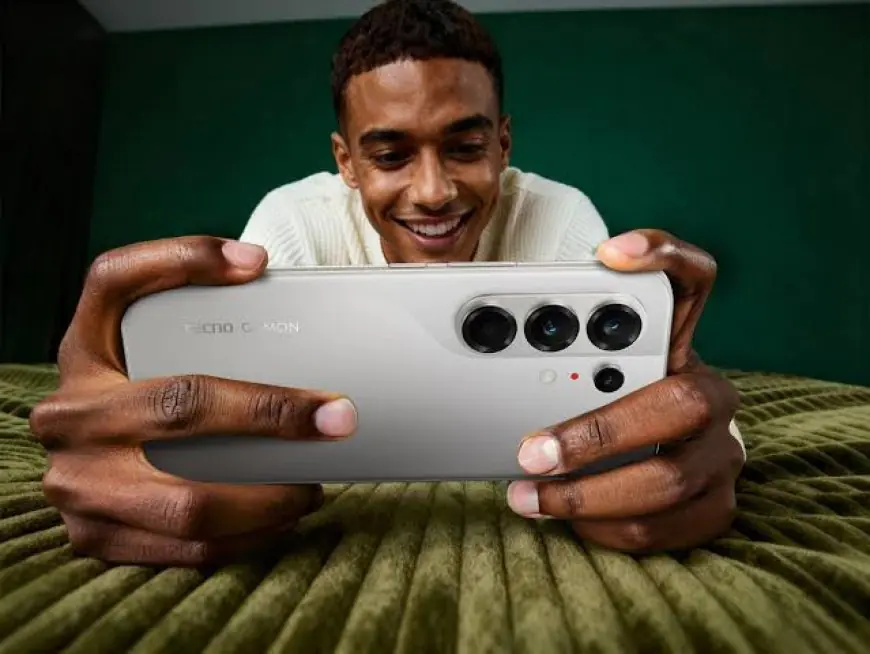


The tech world has converged on Barcelona for Mobile World Congress 2026, and the message echoing through the halls of the Fira Gran Via is clear: the era of "Cloud-only AI" is coming to an end. Leading this charge is TECNO, which just pulled the curtain back on a sophisticated new system designed to run massive generative AI models directly on smartphone hardware. By partnering with semiconductor giant Arm, TECNO is proving that the pocket-sized devices we carry every day are finally powerful enough to handle the heavy lifting previously reserved for massive data centers.
The Shift to the Edge
For the past few years, whenever you asked your phone to generate an image or rewrite an email, that request usually took a round trip to a server thousands of miles away. While effective, this process introduced latency and raised valid privacy concerns. TECNO’s announcement at MWC 2026 changes the narrative. Their new integration focuses on "edge computing," where the artificial intelligence lives and breathes inside the silicon of the phone itself.
This isn't just a minor speed boost. By keeping data on the device, users can generate high-fidelity AI art, edit complex videos, and use real-time creative assistants without needing a steady 5G connection. It’s a move toward a more autonomous, reliable user experience that doesn't tether your creativity to the strength of your signal.
Powered by Arm Silicon
At the heart of this innovation is a deep collaboration with Arm. The latest chip architectures from Arm have been specifically optimized to handle the mathematical intensity of neural networks. Unlike traditional processors that might struggle with the sheer volume of data required for generative tasks, these new chips feature dedicated AI accelerators that prioritize efficiency without draining the battery.
TECNO demonstrated several key features made possible by this hardware:
- Real-Time Image Synthesis: Generating unique wallpapers and icons in seconds based on text prompts.
- Advanced Local Photo Editing: Removing complex objects from photos or expanding backgrounds with seamless AI "outpainting" without uploading files to a server.
- Personalized AI Tutors: Voice assistants that learn user preferences locally, ensuring that sensitive personal data never leaves the device.
Why On-Device AI Is a Game Changer
The move toward on-device generative AI isn't just a technical flex; it’s a response to a growing demand for data sovereignty. In a world where AI ethics and data privacy are top of mind, consumers are increasingly wary of how their prompts and personal images are used by big-tech cloud providers. By processing these requests locally, TECNO effectively eliminates the "middleman," ensuring that your creative experiments remain your own.
Furthermore, the performance gains are undeniable. During the live demos at MWC, the latency between a text prompt and an AI-generated image was nearly non-existent. This "instant-on" AI feel is what will ultimately separate the next generation of smartphones from the models of 2024 and 2025. We are seeing a transition from smartphones that access AI to smartphones that are AI.
The Competitive Landscape in 2026
While Apple and Samsung have certainly made their own strides in local AI processing, TECNO’s aggressive push into the generative space shows that the mid-to-high-end market is becoming incredibly competitive. They aren't just looking to keep up; they are looking to redefine what a "smart" phone actually does. By democratizing access to high-end generative tools through optimized Arm chips, they are making professional-grade creative capabilities accessible to a much broader global audience.
As the week progresses at MWC, it’s likely we’ll see more manufacturers follow suit. However, the partnership between TECNO and Arm has set a high bar for 2026. The focus has officially shifted from how many megapixels your camera has to how many trillions of operations per second your AI engine can handle. For the average consumer, this means the device in their pocket is about to become a lot more personal, a lot faster, and significantly more creative.