



































China Expects Its AI Industry To Top 1.4 Trillion Dollars By 2030
China has unveiled a massive economic roadmap projecting that its AI-related industries will surpass 10 trillion yuan by 2030, driven by the national AI Plus initiative and a strategic pivot toward new quality productive forces.
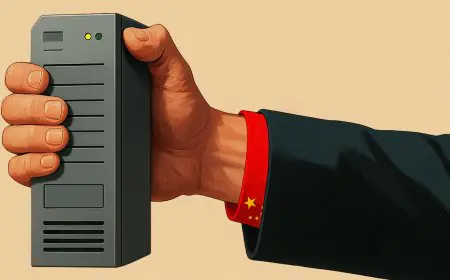
In a bold statement that has sent ripples through the global tech sector, Beijing’s top economic planner has officially set a staggering target for the nation's digital future. Speaking on the sidelines of the National People's Congress on March 6, 2026, Zheng Shanjie, head of the National Development and Reform Commission (NDRC), announced that China’s AI-related industries are projected to exceed a valuation of 10 trillion yuan—approximately $1.45 trillion—by the year 2030. This ambitious figure isn't just a number; it represents a comprehensive effort to restructure the world’s second-largest economy around the power of machine intelligence.


This projection comes as part of the initial rollout for the 15th Five-Year Plan, which covers the period from 2026 to 2030. The strategy signals a definitive shift from the "build fast" era of the previous decade to an era of "intelligent depth." By the end of 2025, China’s core AI industry had already surpassed the 1 trillion yuan mark, but the new 10-fold target for "AI-related" sectors suggests that the government now views artificial intelligence not as a standalone industry, but as the foundational layer for all future economic activity.
The Launch of the AI Plus Initiative
Central to this trillion-dollar vision is the "AI Plus" initiative, a high-level policy designed to accelerate the integration of large-scale AI models into traditional sectors. The goal is to move beyond the laboratory and onto the factory floor, the hospital ward, and the classroom. According to reports from Xinhua, the NDRC plans to position state-owned enterprises as "anchor adopters," creating a massive domestic market that will allow local AI startups to scale up with unprecedented speed.
The logic is clear: as traditional growth drivers like real estate and low-end manufacturing cool, China is leaning into what it calls "new quality productive forces." This term refers to high-tech, high-efficiency innovation that relies on advanced chips and sophisticated algorithms rather than just sheer labor volume. By embedding AI into the supply chain, Beijing hopes to offset the challenges of a shrinking workforce and maintain its global manufacturing edge.
Transforming Global Industry Standards
The 10 trillion yuan target encompasses a wide range of sub-sectors that are expected to see explosive growth over the next four years. Key among these are:
- Embodied AI and Humanoids: Integrating advanced neural networks into physical robotics to automate complex industrial assembly and logistics.
- Intelligent Healthcare: Using generative AI to provide diagnostic support in rural regions and accelerating the discovery of new pharmaceuticals.
- Smart Education: Deploying personalized AI tutors across the national curriculum to close the urban-rural education gap.
- Autonomous Infrastructure: Building out the 6G networks and massive data centers required to keep the national AI engine humming.
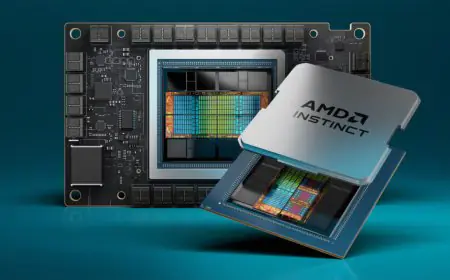
This aggressive push is also a direct response to the escalating technological competition with the West. With ongoing export restrictions on high-end semiconductors, the Chinese government is heavily subsidizing domestic R&D to ensure that the hardware powering this $1.4 trillion ecosystem is "homegrown." The World Economic Forum has previously noted that China’s focus on bringing AI to market quickly—often favoring application over pure theory—gives it a unique advantage in creating a self-sustaining digital economy.
A Strategic Pivot for the 2030 Horizon
What makes the 2030 goal particularly significant is the timeline. By aligning the AI industry's peak with the conclusion of the 15th Five-Year Plan, China is attempting to secure "technological self-reliance" before the end of the decade. The plan envisions a future where Chinese AI models aren't just competitive, but are the dominant standard for the Global South and beyond. The government’s willingness to deploy massive state capital into these "related industries" suggests that they see AI as a win-at-all-costs theater of national security.
As we move deeper into 2026, the success of this plan will depend on whether China can overcome its current bottlenecks in advanced chip manufacturing and high-end software development. However, the sheer scale of the 10 trillion yuan commitment shows that Beijing is no longer content to simply follow the leaders in Silicon Valley. They are building a parallel AI universe—one that is integrated into every bolt of a factory and every page of a textbook. If they hit their targets, the global balance of technological power will look very different by 2030.