











Nigeria Customs Service Launched AI To Stop Revenue Leakage And Boost National
The Nigeria Customs Service (NCS) has officially deployed a sophisticated AI-powered revenue intelligence program. This initiative is designed to automate duty valuations, identify financial anomalies, and significantly reduce human-led leakages, marking a pivotal moment for public-sector technology adoption in West Africa.
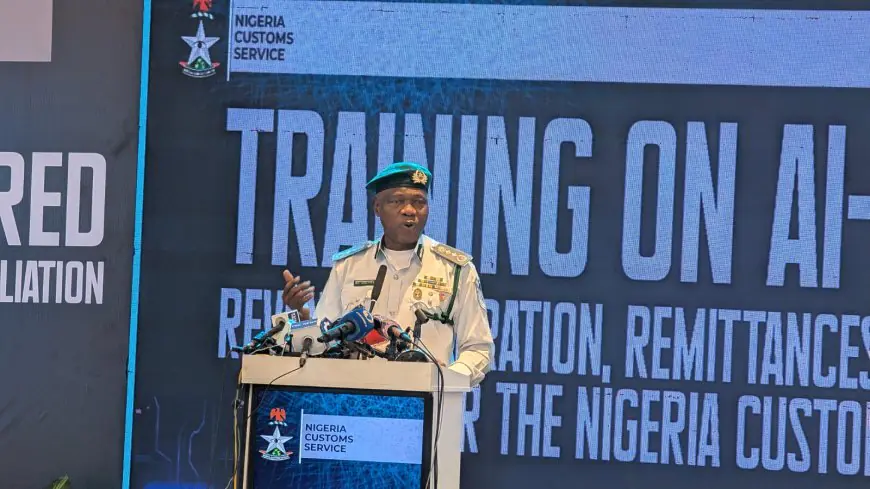


In what is being hailed as a landmark moment for Nigeria’s digital economy, the Nigeria Customs Service (NCS) has officially pulled the curtain back on its new AI-powered revenue intelligence program. This isn't just a minor software update; it is a fundamental overhaul of how the country manages its borders and collects duties. For a nation looking to diversify its income away from oil and gas, the timing couldn't be more critical. The introduction of artificial intelligence into the NCS workflow is a bold statement that Nigeria is ready to use 2026's most powerful tools to secure its financial future.
The program is the brainchild of the Comptroller-General of Customs, Bashir Adewale Adeniyi, who has been a vocal advocate for the "Trade Modernization Project" (TMP). By moving away from legacy manual systems that were often prone to human error and deliberate manipulation, the NCS is betting that algorithms can do what humans couldn't: provide an unblinking, objective eye over billions of dollars in trade volume. This shift is expected to close the "leakage gap" that has historically plagued the service, ensuring that every kobo intended for the federation account actually gets there.
Automating Transparency At The Border
The core of this AI initiative lies in its predictive valuation engine. Historically, the valuation of imported goods was a point of friction between officers and importers, often leading to delays or under-declarations. The new AI system analyzes historical data, global market prices, and shipping manifests in real-time to suggest an accurate duty value. This reduces the subjective power of individual officers and creates a level playing field for honest traders. According to the official Nigeria Customs Service portal, this automation is part of a broader goal to make Nigeria a more attractive hub for international trade by removing bureaucratic bottlenecks.
Beyond valuation, the AI system excels at "anomaly detection." By cross-referencing thousands of entries per hour, the software can flag inconsistent documentation or suspicious cargo descriptions that might indicate smuggling or tax evasion. It acts as a digital forensic accountant, working 24/7 to reconcile payments and detect financial discrepancies that would take a human team weeks to uncover. This level of speed and accuracy is essential as Nigeria aims to hit record-breaking revenue targets in the 2026 fiscal year.
A Regional Blueprint For Public Sector AI
Nigeria's move is being watched closely across the African continent. Many neighboring countries face similar challenges with revenue collection and port congestion. By successfully deploying AI at this scale, the NCS is providing a blueprint for how public-sector institutions can modernize without a total "rip and replace" of their existing staff. Instead, the service is focusing on upskilling officers to work alongside the AI, shifting their roles from data entry clerks to strategic investigators.
The impact is already being felt in the reconciliation process. What used to take days of back-and-forth between banks and the customs treasury now happens almost instantaneously. This real-time visibility into the nation’s "cash register" allows for better fiscal planning and immediate intervention when revenue dips are detected. As reported by Premium Times, this digital transformation is part of a larger push by the Nigerian government to digitize all revenue-generating agencies, reducing the opportunities for corruption that often thrive in the shadows of manual paperwork.
The Bottom Line For Nigerian Trade
For the average importer or clearing agent, the benefits are clear: faster turnaround times and more predictable costs. When the rules are coded into an AI, there is less room for "negotiation" or unexpected "fees" at the port. This increase in transparency is expected to boost Nigeria’s ranking in the World Bank’s Ease of Doing Business index, ultimately leading to more foreign direct investment.
The success of the AI-powered revenue intelligence program will likely define the legacy of the current Customs administration. While technology is never a "silver bullet" for systemic issues, it is the most potent weapon Nigeria has in its arsenal to fight financial leakage. By embracing the agentic era of AI, the Nigeria Customs Service isn't just collecting money—it’s building a more accountable and efficient nation.