












Anthropic Warns AI Agents Could Hijack Smart Home Devices in a New Cybersecurity Threat
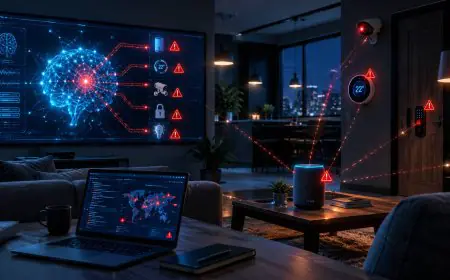
Anthropic says it is seeing "signs of life for AI worms," warning that self-replicating AI agents could eventually spread across poorly secured smart TVs, ovens and cameras, though no fully autonomous AI worm has yet appeared and the capabilities involved have not yet combined.
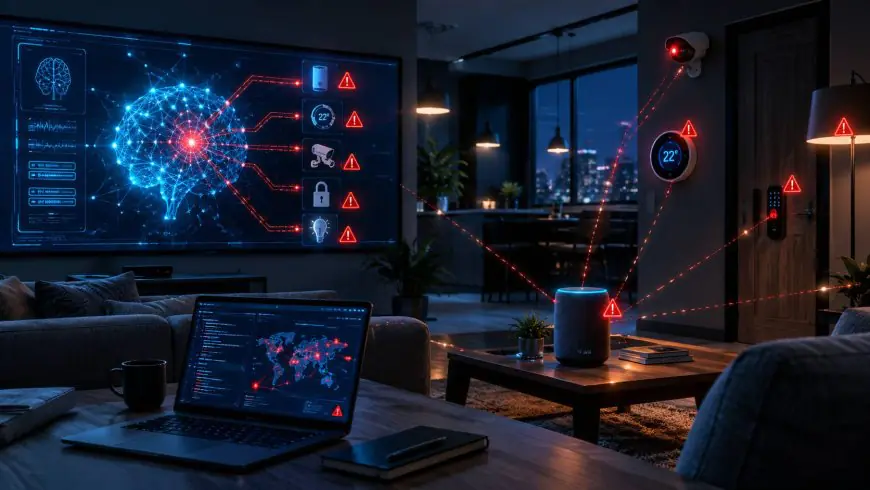
The gadgets in your living room are now part of an AI safety argument. Anthropic has warned that self-replicating AI agents, which it calls "AI worms," could eventually hijack connected devices such as smart TVs, ovens and security cameras and spread without human involvement. Citing the Financial Times, the company said "we're seeing signs of life for AI worms" and compared their possible spread to "digital slime mold."


The claim has clear limits, and Anthropic is explicit about them. No fully autonomous AI worm has appeared in the wild. The warning is that the individual capabilities it requires are advancing quickly and could combine within months. The report, by William Zhou and Daniel Freeman of Anthropic's Frontier Red Team, adds a few details:
- Unlike conventional malware, an AI-driven worm could figure out unfamiliar devices on its own, according to Futurism's summary, and a lightweight model was shown running across 15 smart TV boxes
- Such a threat would have "no centralized point to shut off," the authors wrote, as Cointelegraph reported
- On lightweight home hardware it would likely spread slowly, and the researchers called for stronger system defenses to make replication difficult
Why devices rather than data centers? Cheap connected gadgets are typically poorly secured, rarely updated and increasingly ship with small AI-capable chips, which makes them easy to overlook and hard to patch at scale.
Anthropic's concern is containment: a large, scattered network of weakly protected devices would be harder to monitor and shut down than a system confined to a company's servers.
As Hokanews noted, the warning is about capabilities converging rather than a confirmed outbreak. For households, the useful response is the unglamorous one: keep device firmware updated, replace default passwords, and put cheap smart gadgets on a separate network from phones and laptops. Those habits make any worm, AI-driven or not, work harder to get anywhere.