












































The Global AI Spending Boom Could Trigger Higher U.S. Interest Rates
Global artificial intelligence spending is projected to approach $1 trillion in 2026 as major technology firms rapidly expand AI infrastructure. Economists now warn that the unprecedented surge in AI investment could fuel inflationary pressure in the United States and strengthen the case for future Federal Reserve interest rate hikes.


AI Spending Is Accelerating Faster Than Expected
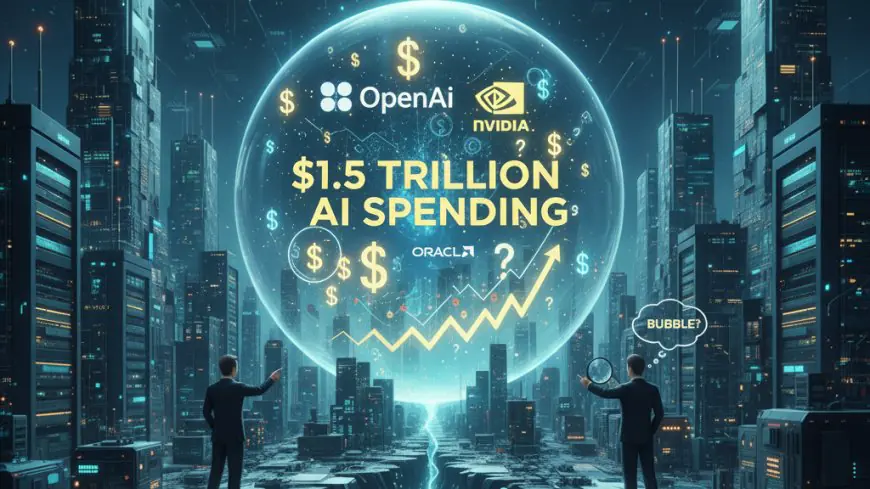
The global artificial intelligence industry is entering a new phase of explosive financial growth, and economists are beginning to warn that the consequences could extend far beyond the technology sector. According to a major macroeconomic report released by the Commonwealth Bank of Australia, worldwide AI capital expenditure is now on track to approach an astonishing $1 trillion in 2026. That figure would represent nearly 1% of global GDP, underlining just how rapidly artificial intelligence is reshaping the modern economy.
The spending surge is being driven largely by U.S. technology hyper-scalers investing heavily in next-generation AI infrastructure. Companies are pouring billions into massive data centers, advanced semiconductor systems, cloud computing networks, and high-performance AI chips capable of supporting increasingly sophisticated generative AI models. What began as a race to dominate AI software is quickly evolving into a full-scale infrastructure battle.
Global Supply Chains Are Seeing Massive Ripple Effects
One of the report’s most significant findings is that roughly 58% of global AI-related capital spending is flowing into international supply chains. Asian electronics manufacturers, semiconductor producers, and industrial hardware suppliers are among the biggest beneficiaries of the AI boom. Countries with strong chip manufacturing ecosystems are seeing rising demand as technology firms rush to secure the computing power needed for AI expansion.
This global investment cycle is creating opportunities across multiple industries, from energy providers supporting AI data centers to logistics companies handling increasingly complex supply networks. Analysts believe the long-term effects could rival previous industrial revolutions, particularly as artificial intelligence becomes deeply integrated into healthcare, finance, education, manufacturing, and enterprise software.
Why Economists Are Watching Inflation Closely
While investors continue celebrating AI-driven growth, economists are paying closer attention to the inflationary risks attached to this unprecedented spending cycle. The report notes that large-scale AI investment is significantly increasing corporate demand in the United States, especially in sectors tied to construction, energy, semiconductors, and cloud infrastructure.
As companies compete aggressively for hardware, talent, electricity, and advanced manufacturing capacity, pricing pressure is beginning to build across several key areas of the economy. Some economists now argue that the Federal Reserve may face stronger justification for future interest rate hikes if AI-related spending continues accelerating throughout the year.
The concern is not simply about technology companies spending money. It is the sheer scale and concentration of investment happening within a relatively short period of time. AI infrastructure projects often require billions of dollars upfront, large volumes of electricity, and extensive supply chain coordination. When multiple hyper-scalers expand simultaneously, the economic impact can spread quickly across domestic and international markets.
The AI Economy Is Reshaping Global Financial Markets
The rapid growth of artificial intelligence spending is also changing how investors evaluate global markets. AI infrastructure companies, semiconductor manufacturers, and cloud computing providers are increasingly being viewed as long-term economic drivers rather than temporary technology trends. This shift is helping fuel major rallies in tech-related stocks while also increasing pressure on governments to modernize digital infrastructure policies.
At the same time, concerns remain about whether the AI investment boom can maintain its current pace without creating financial imbalances. Some analysts warn that overly aggressive spending could eventually strain supply chains, energy systems, and borrowing markets if demand continues outpacing capacity.
Still, most experts agree on one point: artificial intelligence is no longer a niche technology sector. It has become a powerful economic force capable of influencing inflation, interest rates, international trade, and the future direction of global financial markets. As AI spending approaches the trillion-dollar mark, governments, businesses, and investors are preparing for a new economic era shaped heavily by artificial intelligence infrastructure.
For additional market context on global technology investment trends, recent financial analysis from the International Monetary Fund continues to highlight how advanced technologies are increasingly influencing global growth forecasts and macroeconomic policy decisions.