




























BIS Warns AI Investment Boom Could Become the Next Market Bubble
The Bank for International Settlements (BIS) warns that extraordinary AI spending by major technology companies could lead to a severe investment correction if commercial returns fail to meet expectations. The report draws direct comparisons to historical technology bubbles and flags "circular financing" and opaque private credit as systemic risks.
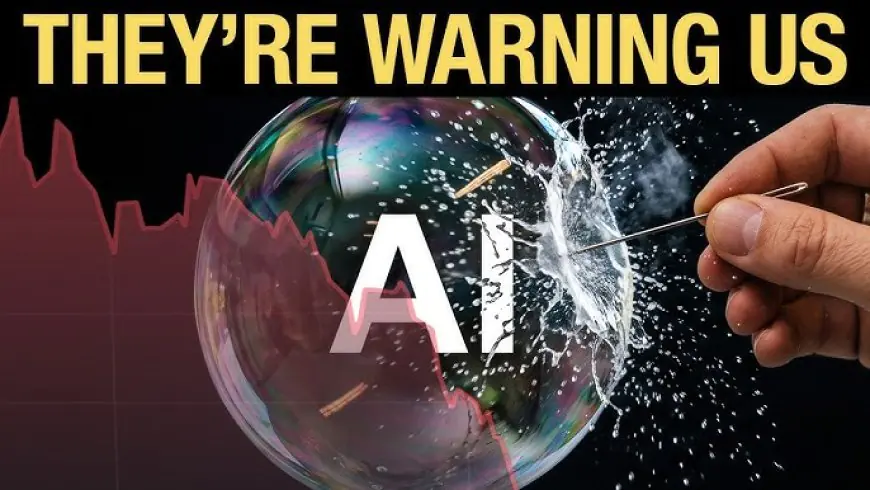
The Bank for International Settlements has issued a stark warning that the AI investment boom could trigger a significant economic correction if expected returns fail to materialize.

In its Annual Economic Report, the Basel-based institution, often called the "central bank of central banks," drew direct parallels between current AI exuberance and historical technology bubbles, including the 1830s canal mania, the 1840s British railway boom, and the late 1990s dot-com crash .
The BIS noted that five major hyperscalers—Alphabet, Amazon, Meta, Microsoft, and Oracle—are projected to spend over $1 trillion on AI-related capital expenditure from 2025 through 2026, with commitments now outpacing earnings and free cash flow.
"Disappointment in returns could trigger a sudden pullback in financing and turn the capex boom into a protracted investment bust, with potential knock-on effects on financial conditions," the report stated .
"There are two extremes where this ends badly: AI disappoints, or AI succeeds too fast. A financing reversal is one. The other is a breakthrough that accelerates adoption, where displacement outruns reskilling and every worker you displace is a consumer you lose." – Sumeet Chabria, CEO of Thoughtlinks
The BIS highlighted a specific vulnerability in how AI infrastructure is being financed.
The report pointed to "circular financing" arrangements, where chipmakers and hyperscalers take equity stakes in AI labs that, in turn, commit to multiyear purchases of chips or computing power from those same investors.
Data center construction is increasingly outsourced to third parties that lease facilities back to hyperscalers under long-term contracts, with the BIS warning that "the terms of such deals are typically poorly disclosed, with risks of the same asset being pledged multiple times".
Private credit has also emerged as a significant exposure. The AI investment bubble risks are amplified by the fact that direct lending funds have quadrupled their lending to AI and IT companies over the past five years, now accounting for approximately 15 percent of their loan books.
The BIS warned that a downturn in AI could trigger losses in private credit that would spread to the banking system, affecting mid-sized companies that depend on this form of financing .
"A major equity-market correction could have larger macroeconomic consequences today than in the past," the report stated, noting that household stock ownership has significantly increased relative to wealth and income over the past decade.
While the BIS acknowledged that AI could ultimately deliver significant productivity gains, it warned that the path to realizing those gains may be disruptive.
As one analyst put it, "The question is not whether AI demand is fake. It is that the speed of any repricing now depends on plumbing most people never look at".
The central bank urged policymakers to extend oversight beyond traditional banking and assess how AI impacts growth, financial stability, and inflation