









































Africa Deepens AI Cooperation With China As Digital Technologies Expand
Artificial intelligence is increasingly part of daily life across Africa, driven by growing China-Africa digital cooperation that extends far beyond simple connectivity. From AI-powered drought and flood warnings in Ethiopia to Chinese-made drones spraying sugarcane fields in South Africa, the technologies are delivering practical services across the continent.


The developments point to a broader shift in digital cooperation between China and Africa, helping deliver practical services from disaster preparedness and healthcare to agriculture, while enabling local professionals to operate, adapt and increasingly innovate with these technologies themselves.
Behind these applications lies years of digital infrastructure development. From 4G towers in remote northern Namibia to fiber backbones stretching across Zimbabwe, from a base station on Mount Kilimanjaro to community broadband in Kenya's Kibera neighborhood, connectivity has steadily expanded across the continent.
Huawei has worked with Namibia's Mobile Telecommunications on Project Buffalo, a rural network expansion aimed at improving 4G connectivity in underserved communities. In Zimbabwe, national internet penetration reached 87.39 percent in the first quarter of 2026, with the national fiber backbone stretching beyond 19,000 kilometers.
"Across Africa, Chinese digital technologies are doing more than connecting places. They are connecting people to knowledge, healthcare, markets and one another, which is a transformation that will ultimately be measured not by infrastructure alone, but by the opportunities it creates for ordinary people." – Humphrey Moshi, economics professor at the University of Dar es Salaam
China has been steadily improving Africa's foundational conditions for AI development by assisting in the construction of fiber-optic networks, cross-border connectivity, and new-generation mobile communication networks.
Chinese open-source large models such as DeepSeek, with their high cost-effectiveness and localization advantages, are winning wide favor among African developers, in contrast to the often hefty licensing fees charged by mainstream Western models. According to Microsoft's Global AI Adoption in 2025, DeepSeek usage in Africa is estimated to be two to four times higher than in other regions.
The impact is tangible across multiple sectors. In Ethiopia, forecasters use the China-developed MAZU platform, Africa's first intelligent meteorological early warning system, to issue drought and flash flood warnings.
In South Africa, AI-assisted tools are helping doctors improve traditional Chinese medicine diagnosis, while Huawei has deployed intelligent systems for local railways, reducing accidents and improving inspection and maintenance efficiency.
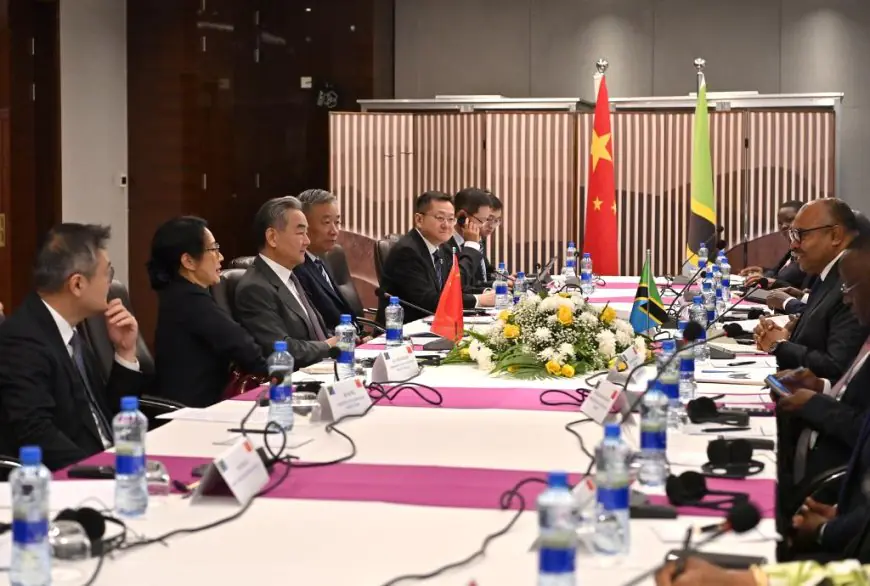
On talent cultivation, China and 26 African countries jointly issued the Action Plan for China-Africa Digital Cooperation and Development, while Chinese initiatives like the Luban Workshop support local digital talent development.
As the China-Africa digital ecosystem continues to expand, the cooperation is increasingly focused on building local capacity and technological sovereignty. UNECA official Robert Lisinge emphasized that Africa does not want to be only a user of AI applications developed elsewhere, but aims to develop applications that reflect its own realities.
With Africa holding 10 of the 29 founding seats in the newly established World Artificial Intelligence Cooperation Organization, the continent is positioning itself as a key player in shaping global AI governance.