




























AWS Just Posted Its Fastest Growth in Nearly Five Years and Amazon Stock Sank Anyway
AWS revenue grew 39% to $46.0 billion, but Amazon's trailing free cash flow swung to negative $42.4 billion on AI spending and shares fell in after-hours trading. Backlog is $578 billion, yet the cash is going out faster than it comes in.
Amazon Web Services just had the quarter its bosses have been begging for. Investors looked at it and sold anyway.


AWS sales rose 39% to $46.0 billion in the third quarter, which Amazon says is the fastest growth in nearly five years, according to the company's earnings release. Cloud operating income hit $17.8 billion, up from $11.4 billion a year earlier. Yet Amazon shares were down about 6% in extended trading, per CNBC's live market blog as of its 9:47 p.m. ET update Thursday. AP put the drop at 7% when results landed, and Axios at 6.5%. After-hours numbers move, so treat all of them as snapshots.
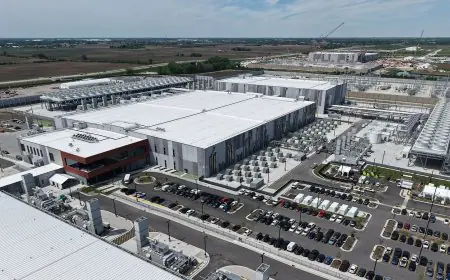
The reason is sitting in the cash flow statement. Amazon reported trailing twelve month free cash flow of negative $42.4 billion, against positive $14.8 billion a year ago. The company blamed a $94.8 billion jump in spending on property and equipment, which it says mostly reflects AI investment.
Look at the quarter alone and the squeeze is plain. The release's cash flow table shows $42.4 billion of operating cash flow in the three months to Sept. 30, and $77.3 billion of purchases of property and equipment. A year earlier that second figure was $35.1 billion. CNBC noted analysts had expected about $58.7 billion, per FactSet. That is a big miss on spending, not on demand.
"Almost as fast as we install capacity, customers are gobbling it up." Andy Jassy, Amazon CEO, on the earnings call
That is Jassy's pitch, and the numbers behind it are real enough. He told analysts AWS backlog stands at $578 billion, up from $496 billion at the end of the second quarter, as reported by Axios. In the release, Amazon says Fortune 500 spending on Bedrock, its AI model service, grew nearly 7x year over year, and total Bedrock token volume grew nearly 17x. AWS also beat the StreetAccount estimate of $45.29 billion, according to CNBC.
Backlog is not cash in the bank, though. It is contracts, and contracts only turn into free cash flow if the data centers get built on budget and the customers keep paying.
The bill keeps growing
Amazon held its 2026 cash capex forecast at about $220 billion. Then Jassy said it expects to "spend meaningfully more in 2027," as CNBC quoted him from the call, adding there is a "clear line of sight to attractive financial returns."
Jassy also projects AWS revenue growth of "over 40%" in both 2027 and 2028, and said he expects AWS to become a $1 trillion revenue business within five to 10 years. Those are projections from the man selling the capacity, not results. Nobody outside Amazon can verify them today, and the company itself warns that its forward-looking statements are "subject to substantial uncertainty."
The rest of the report did not help the mood. CNBC said online store sales rose just 2% to $68.47 billion, short of the $69.68 billion StreetAccount expected, and advertising revenue of $19.64 billion missed a $20.82 billion consensus. Total revenue of $201.94 billion and earnings of $1.89 a share also fell short of LSEG estimates of $202.31 billion and $1.96. Fourth quarter revenue guidance of $240 billion to $247 billion has a midpoint below the $244.5 billion Wall Street wanted, CNBC added.
There is a pattern forming. A day earlier, Alphabet took a beating on the same cash burn worry, and CNBC reported it fell 12% in regular trading Thursday with negative free cash flow of $9.07 billion. The market is no longer paying for AI ambition alone. It wants to see the money come back.
Amazon holds one strong card. Its cloud business is accelerating and its operating margin of 13.9% is the highest in its history, by the company's own account. The open question is how long investors will wait while free cash flow stays deep in the red. Thursday night's answer, in extended trading at least, was not long.