



























Wall Street Lines Up $63 Billion to Buy Broadcom Chips for Anthropic
Bank of America, Blackstone, Citi and Morgan Stanley will finance $63 billion of Broadcom chips for Anthropic, with Broadcom backstopping senior lenders. Moody's has already flagged the risk of repeat deals.
Four of the biggest names in finance just agreed to put up $63 billion so an AI lab can lease chips it will not see until next year. The chipmaker selling those chips has promised to cover the lenders if the hardware loses value. That is the real story buried in Monday's announcement.


Bank of America, Blackstone, Citi and Morgan Stanley said they will finance the purchase of Broadcom AI accelerators and networking gear for Anthropic, according to the joint press release dated October 26. Reuters called it one of the largest debt deals tied to the AI buildout. It landed the same day Anthropic filed for its IPO, a separate story we have already covered.
Anthropic is not the borrower here, and that distinction matters. The banks are funding a newly formed special purpose vehicle. The vehicle buys Broadcom's XPU accelerators and networking hardware, then leases them to Anthropic. Deliveries are expected to start in calendar 2027, as part of a compute capacity agreement Broadcom announced earlier.
The guarantee doing the heavy lifting
The financing is split in two layers. Bank of America, Citi and Morgan Stanley are arranging the first lien portion, which sits first in line for repayment. Blackstone is the sole provider of the committed portion of the second lien, which ranks below it and carries more risk.
Then comes the part that should make you sit up. Broadcom is providing what the release calls residual value support to the SPV, in an amount equivalent to the first lien portion. Reuters described that as effectively a significant guarantee, with Broadcom agreeing to absorb declines in the value of the assets.
The release did not say how big the first lien is. Reuters, citing two sources familiar with the matter, put it at about $43.5 billion, or 69 percent of the total. We could not confirm that figure independently, so treat it as a reported number, not a disclosed one.
Think about what that means in plain terms. AI accelerators are not buildings. They age fast, and newer generations can make older ones look expensive. A lender who takes the senior slice of a chip lease is, in effect, betting on how those chips hold their value. Broadcom's support is meant to take that bet off the senior lenders' plates, up to the stated amount. Broadcom is vouching for its own product, and Wall Street is happy to lend on that basis.
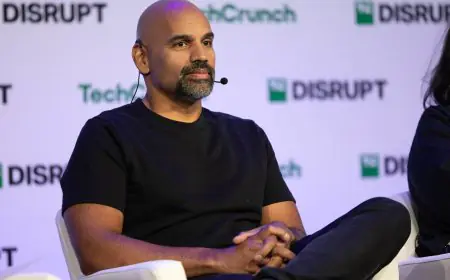
"This validates that there is capital available to finance such growth" Hock Tan, President and CEO of Broadcom
Tan is right that the money is there. Whether the structure is as comfortable as the confidence suggests is a different question, and credit analysts are already asking it. Moody's described Broadcom as one of the strongest large technology companies but warned that risk would increase if multiple transactions were done over a short period to meet the sizable funding needs of frontier AI labs, according to Reuters.
That warning has a precedent attached. Reuters said Apollo and Blackstone had earlier agreed to finance a $35 billion expansion of Anthropic's computing capacity under a prior agreement with Broadcom, with Broadcom's backstop in that deal at up to $29 billion, according to a filing. Now there is a $63 billion sequel. Back in August, we reported that Broadcom was reportedly in early talks with lenders over a far larger financing package. Nothing in the sources we reviewed ties that report to this transaction, so we are not treating them as the same deal.
The bankers were happy to talk up the novelty. Citi's Vis Raghavan said the bank is proud to pioneer innovative structures, and Blackstone's Jon Gray pointed to an enormous opportunity to finance compute capacity at scale. Nobody in the release mentioned what happens if demand for a given chip generation cools before the leases run out.
That is an open question, not a forecast. Broadcom did not respond to Reuters' request for comment. What we do know is that AI is now so expensive to build that it is carved into senior and junior slices, wrapped in a supplier guarantee, and sold as infrastructure. The banks are in. Moody's is watching.