
































Microsoft AI CEO Believes Inference Compute Will Crown the Next Industry Winners
Microsoft AI CEO Mustafa Suleyman warns that the next era of artificial intelligence will be defined by the economics of running models rather than just the intelligence of the models themselves. As compute scarcity reaches a tipping point in 2026, the industry's focus is shifting toward inference efficiency as the ultimate competitive advantage.


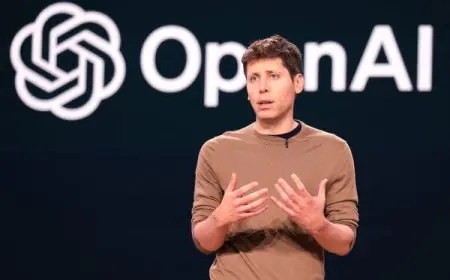
In the high-stakes world of Silicon Valley, the narrative has long been centered on a singular question: who can build the "smartest" large language model? But according to Mustafa Suleyman, the CEO of Microsoft AI, that era is rapidly closing. As we move through 2026, the focus has shifted from the raw intelligence of a model to the brutal economics of running it. Suleyman recently warned that the next two to three years of the AI race will be decided not by those with the most clever algorithms, but by those who can afford to execute them at a global scale.
The Era of Token Rationing
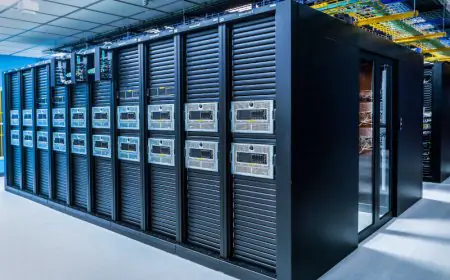
For years, the technology sector has been obsessed with "training compute"—the massive clusters of GPUs used to teach models how to reason. However, in 2026, the bottleneck has moved downstream. We have entered the age of "inference compute," which refers to the processing power required every time a user asks an AI a question or generates a line of code. Suleyman argues that the demand for these "tokens" is now wildly outstripping the world’s supply of silicon and electricity.
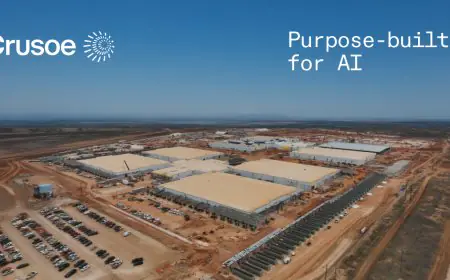
The reality of 2026 is a landscape of scarcity. GPU lead times have stretched to nearly a year, and high-bandwidth memory is effectively sold out through the next four quarters. This means that AI companies can no longer simply throw more hardware at the problem. Instead, they must prioritize which products get access to the limited compute available. This "token rationing" is creating a new hierarchy in the tech world, where only the most profitable applications can justify the cost of high-performance AI.
The Secret Flywheel of High Margins
Suleyman’s thesis centers on what he calls the "inference flywheel." It is a simple but devastating economic cycle that favors incumbents with deep pockets and high-margin products. When a company has a product with a strong profit margin—such as Microsoft 365 Copilot or specialized legal and healthcare software—it can afford to pay for premium inference compute. This allows for lower latency, making the tool feel instantaneous and reliable for the user.
According to research from Deloitte’s 2026 TMT Predictions, inference workloads now account for roughly two-thirds of all AI compute spending. For companies like Microsoft, which reported 15 million paid Copilot seats in early 2026, this volume generates a massive amount of proprietary data. That data is then used to fine-tune models, making them even more efficient and effective, which in turn drives more revenue. It is a compounding advantage that leaves low-margin startups struggling to keep their "flywheels" from stalling.
Custom Silicon and the 3nm Battle
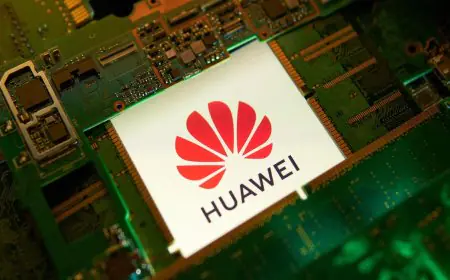
To win this war of economics, Microsoft is no longer relying solely on external chipmakers. Earlier this year, the company introduced the Maia 200, a custom AI accelerator built on a cutting-edge 3-nanometer process. By designing its own chips specifically for inference, Microsoft is attempting to bypass the supply chain gridlock and slash the cost of every token generated.
This move toward vertical integration is becoming the standard for industry leaders. When you own the chip, the software stack, and the data center, you control the margins. For the rest of the industry, the choice is stark: either find a niche with high enough value to pay the "compute tax" or risk being rationed out of existence by the giants who own the infrastructure.
Why Intelligence Alone Is No Longer Enough
The most provocative part of Suleyman’s outlook is the idea that "smartest models" are no longer the primary goal. In a world of limited resources, a model that is 5% smarter but 50% more expensive to run is a liability, not an asset. The industry winners over the next 24 months will be the teams that can deliver "good enough" intelligence at a price point that allows for massive, uninterrupted scale.