






































Highflame Launches ZeroID As The First Open-Source Identity Layer For Autonomous AI Agents
With the release of ZeroID, Highflame has introduced a critical security architecture that provides verifiable identities for AI agents, enabling the secure expansion of multi-agent systems within the global enterprise ecosystem.
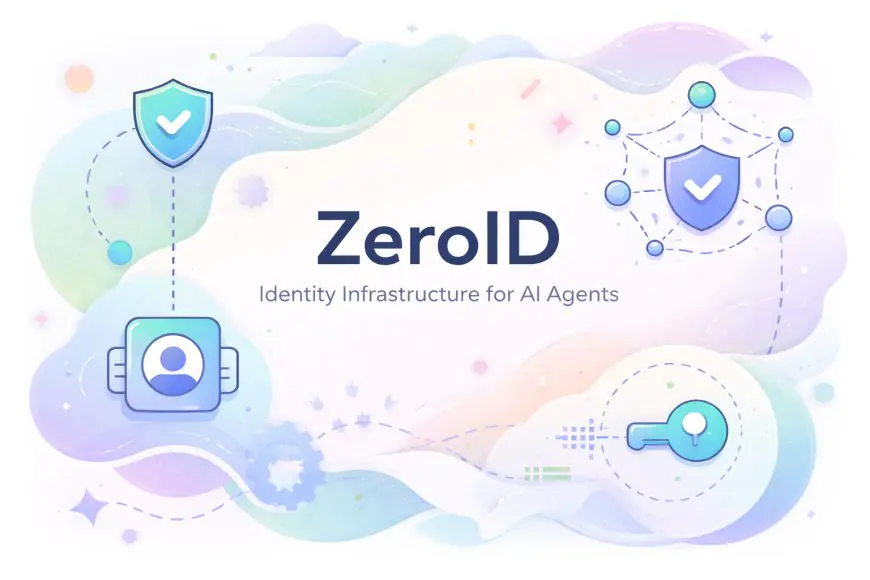

The rapid transition from simple chatbots to fully autonomous AI agents has hit a major roadblock: identity. As these digital workers begin to move money, access sensitive databases, and make independent decisions, the industry is realizing that borrowing human credentials is no longer a viable security strategy. To address this, Highflame has officially launched ZeroID, the first open-source identity platform built specifically for the "agentic era."
ZeroID serves as a dedicated identity layer that allows organizations to treat AI agents as first-class principals rather than "bolted-on" extensions of human accounts. By providing every agent with a cryptographically verifiable identity, the platform ensures that every action taken by an autonomous system can be traced back to its specific origin and authorization chain. This is particularly critical in today's market, where 57% of organizations are already deploying agents for multi-stage enterprise workflows.
The Problem With Shared Service Accounts
Historically, developers have relied on shared service accounts or static API keys to let AI systems interact with other software. While this worked for simple scripts, it creates a massive "blast radius" for autonomous agents. If an agent with broad permissions makes a catastrophic error—or is compromised—there is often no clear record of which specific sub-agent was responsible or who authorized the task. According to recent industry reports, shadow AI incidents can add hundreds of thousands of dollars in breach-related costs due to this lack of visibility.
ZeroID eliminates this "accountability gap" by implementing RFC 8693 token exchange and WIMSE-style identity URIs. When one agent delegates a task to another, ZeroID creates an explicit chain of authority. This means a sub-agent only receives the minimum permissions required for its specific job, and those permissions can be revoked in real-time without affecting the rest of the system.
Key Features Of The ZeroID Platform
As an open-source tool, ZeroID is designed to integrate seamlessly into existing enterprise stacks. Some of its most impactful features include:
- Agent Identity Registry: A central system to register and manage the lifecycle of agents, MCP servers, and autonomous tools.
- On-Behalf-Of (OBO) Delegation: Automatic "scope attenuation" that ensures sub-agents never have more power than the orchestrator that created them.
- Continuous Access Evaluation (CAE): The ability to invalidate an entire chain of agents instantly if a security risk is detected.
- Policy-Based Controls: Governance templates that define an agent's operational envelope, replacing manual consent with automated security guardrails.
Why Open Source Matters For AI Security
The decision to release ZeroID as an open-source project is strategic. "The identity layer for the agentic era is being written right now," says Sharath Rajasekar, Co-Founder and CEO of Highflame. By building in the open, Highflame aims to establish a shared standard that prevents every company from having to "reinvent the wheel" when it comes to agent security. This move aligns with broader industry trends, such as the Cloud Security Alliance's focus on new AI security benchmarks for 2026.
As we move deeper into 2026, the success of enterprise AI will depend less on raw intelligence and more on agency and governance. Without a robust identity foundation, even the smartest models remain a liability. ZeroID represents a necessary shift in the architecture of the modern workforce—one where every digital employee has a verifiable ID card and a clear set of rules to follow.