





































Why the 2026 AI smart glasses revolution is changing everything forever
The era of the smartphone is facing its first real challenger as Google, Meta, and Xreal prepare to launch high-performance AI smart glasses that promise to move our digital lives from our pockets to our eyes.
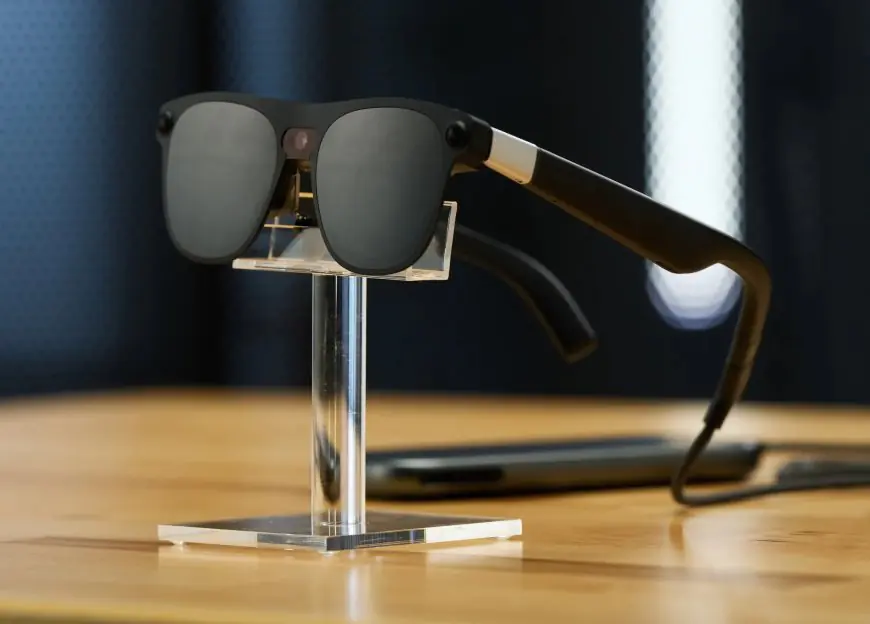


For the better part of two decades, the smartphone has been the undisputed king of personal technology. We carry them everywhere, check them hundreds of times a day, and rely on them for everything from navigation to social validation. But a quiet shift is happening in the research labs of Silicon Valley and the manufacturing hubs of Asia. We are witnessing the birth of a new hardware category that doesn't just complement the phone—it threatens to replace it entirely. AI smart glasses have officially graduated from clunky prototypes to the most commercially significant trend in consumer electronics.
The Google Gemini Factor and the 2026 Deadline
The latest industry tremors come courtesy of Bloomberg, which recently reported that Google is fast-tracking its first pair of Gemini-powered AI glasses for a 2026 release. This isn't just another experimental project like the ill-fated Google Glass of a decade ago. This is a full-scale assault on the wearable market, leveraging the immense power of the Gemini multimodal AI. By putting Google’s most advanced artificial intelligence directly into a frame you wear on your face, the company is betting that "looking" will become the new "searching."
The pressure this puts on the competition cannot be overstated. Meta has already seen surprising success with its Ray-Ban collaboration, but those are largely viewed as "smart-ish" glasses. The upcoming 2026 wave, spearheaded by Google, aims for true augmented reality (AR) where the AI understands the world in real-time. According to recent market analysis from Bloomberg, this move is forcing every major player to accelerate their hardware roadmaps or risk becoming obsolete in the post-smartphone era.
Beyond the Screen Living with Multimodal AI
What makes this category so much more interesting than a smartwatch or a fitness tracker? It is the concept of "live camera understanding." Unlike a phone that requires you to take a photo and upload it to an app, these glasses see what you see, as you see it. This unlocks a suite of features that feel like a superpower. Imagine walking through a market in Tokyo and seeing real-time translations of signs floating in the air, or looking at a complex engine and having a voice assistant guide you through a repair with visual overlays.
The industry is rapidly moving toward a future defined by several key pillars:
- Hands-free Navigation: No more glancing down at a map; your path is highlighted on the sidewalk in front of you.
- Instant Visual Search: See a pair of shoes or a unique building and get instant information without typing a single word.
- Contextual AI Assistants: A "whisper in your ear" that reminds you of a person's name at a party or summarizes a long document you are reading.
The Brands Fighting for Your Face
While Google is making headlines with its 2026 timeline, they aren't the only ones in the race. Meta Platforms is currently the leader in consumer mindshare. Mark Zuckerberg has been vocal about his "Orion" project, which seeks to blend high-end AR with everyday wearability. Then there is Xreal, the dark horse that has been consistently winning over tech enthusiasts with glasses that offer incredible display quality for media consumption and productivity.
The struggle for these brands isn't just about the software; it’s about the "fashion hurdle." No one wants to look like a cyborg. The winner of this race will be the company that can hide sophisticated sensors, batteries, and processors inside a frame that looks like a classic pair of Wayfarers or Aviators. As noted in a deep dive by The Verge, the challenge lies in balancing heat dissipation with aesthetic appeal.
The Verdict Is the Smartphone Dying?
We are not going to throw our iPhones and Pixels in the trash next year. However, we are entering a transitional phase. In the same way that the laptop became a "work device" while the phone became the "everywhere device," the smartphone is poised to become a pocket-bound processor that powers the display on your face. The 2026 arrival of Gemini-powered glasses marks the official start of the ambient computing age. If you are a brand manager, a developer, or just a tech lover, this is the category to watch. The screen is moving closer to our eyes, and the world is about to get a lot more digital.