





































Big Tech Plans To Justify a $630 Billion Dollar AI infrastructure Bill
Investors are increasingly skeptical as Big Tech’s collective AI capital expenditure is projected to hit a staggering $630 billion in 2026. While hyperscalers like Amazon, Microsoft, and Google are doubling down on data center builds and custom silicon, the market is starting to ask a difficult question: Can the physical world keep up with the digital spending?
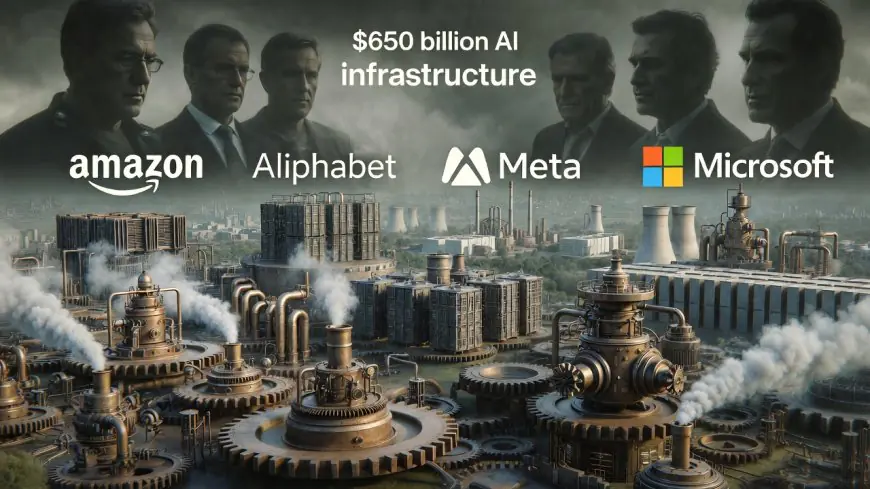


In the high-stakes world of Silicon Valley, the numbers for 2026 have officially moved from "ambitious" to "astronomical." A new wave of financial reporting reveals that the world's largest technology companies—often called the hyperscalers—are on track to spend a combined $630 billion on artificial intelligence infrastructure this year alone. To put that in perspective, that is roughly the same as the entire GDP of Argentina. But as these checks are signed, a cold sweat is breaking out on Wall Street.
For the last two years, investors were happy to cheer on every billion-dollar GPU cluster. In 2026, however, the narrative has shifted. The central question is no longer whether these companies should build the infrastructure, but whether they can actually deploy it fast enough to generate the returns they’ve promised. We are currently witnessing a massive friction point where digital ambition meets the physical limits of power grids, land availability, and cooling technology.
The Great Infrastructure Pivot
The scale of this "AI debt binge" is most visible in the recent moves of Amazon and Alphabet. Amazon has projected a mind-boggling $200 billion in capital expenditure for its AWS division, while Alphabet has guided for upwards of $185 billion. These aren't just software companies anymore; they have essentially transformed into global utilities. To fund this, many are pivoting to the bond markets. Alphabet recently executed a landmark $32 billion bond sale, including 100-year bonds specifically to fund long-term energy and cooling projects.
This pivot is a response to a "prisoner's dilemma" in the cloud market. If a company like Microsoft slows down its build-out, it risks losing its enterprise customers to a competitor that has the "compute" available right now. This has led to a situation where global tech leaders are spending at a rate that far exceeds their current AI-driven revenue, betting entirely on the future "agentic" economy.
Why Investors are Reaching for the Panic Button
The market's patience began to wear thin in early February 2026, following a series of earnings calls that saw massive sell-offs. Despite reporting healthy profits, both Amazon and Microsoft saw their stocks dip by 11% as they unveiled their unprecedented 2026 spending forecasts. The concern isn't that the demand for AI isn't there—it's that the supply chain for data centers is fundamentally broken.
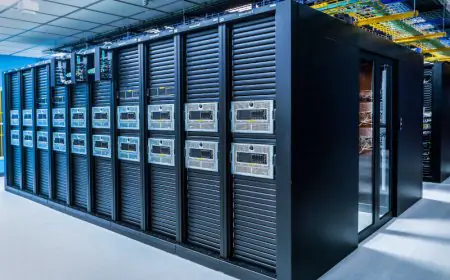
According to recent analysis from BloombergNEF, there is currently over 23 gigawatts of data center capacity under construction globally, but the lead times for power substations and high-density cooling systems have stretched to nearly 18 months. Investors fear a "CapEx hangover" where companies are paying for the hardware and the debt today, but won't be able to turn the lights on in these facilities until late 2027 or beyond.
The Real Bottleneck: Power and Physics
It turns out that while code is infinite, electricity is very much a finite resource. In 2026, the primary constraint on AI growth isn't the "smartness" of the models, but the capacity of the local power grid. Many of the planned "AI Superclusters" require hundreds of megawatts of power—enough to fuel a medium-sized city. This has forced Big Tech to become energy developers, with companies like Oracle and Meta investing directly in modular nuclear reactors and massive solar farms just to ensure their data centers don't go dark.
For the first time in the AI era, being the smartest person in the room matters less than having the most efficient cooling system in the basement. 2026 is the year Big Tech has to prove that its multi-billion dollar bet on the "industrial backbone" of AI is more than just a very expensive pile of silicon.