



































DeepSeek V4 Running On Huawei Chips Reshapes The Global AI Race
DeepSeek is reportedly optimizing its upcoming V4 model to run natively on Huawei’s Ascend silicon, a move that signals China’s accelerating shift toward hardware independence and a direct challenge to Western semiconductor dominance in the AI sector.
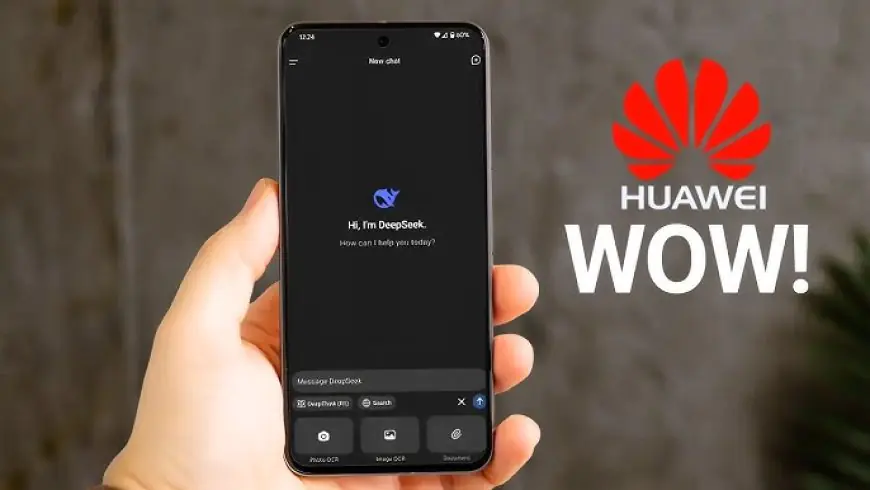


The global AI arms race has just taken a turn that many Western analysts hoped was still years away. In a development that is sending ripples through Silicon Valley and the halls of Washington, reports are surfacing that DeepSeek—the breakout star of the Chinese AI scene—is preparing its V4 model to run natively on Huawei’s Ascend architecture. This isn't just a story about a new software update; it’s a story about the decoupling of the world’s two largest technology ecosystems and the birth of a genuine "Plan B" for high-performance AI hardware.
For the last two years, the narrative has been dominated by NVIDIA’s near-monopoly on the chips required to train and run frontier-level models. While US export controls have sought to limit China’s access to the highest-end H100 and B200 GPUs, the local response has been a frantic push toward self-sufficiency. DeepSeek, known for its incredible efficiency and "Mix-of-Experts" (MoE) architecture, appears to be the first major lab to successfully bridge the gap between cutting-edge AI logic and homegrown Chinese silicon.
The Software Bridge Breaking the Hardware Bottleneck
The real challenge in moving away from NVIDIA hasn’t just been the hardware itself, but the software ecosystem—specifically CUDA—that developers have relied on for over a decade. Huawei has been working tirelessly on its own alternative, the CANN (Compute Architecture for Neural Networks) stack. The report that DeepSeek V4 is being optimized for Huawei’s latest Ascend 910C and 910D chips suggests that the software friction that previously hampered Chinese hardware is finally being smoothed out.
DeepSeek’s engineering team has a reputation for being "hardware whisperers." They have consistently proven that they can squeeze more performance out of fewer resources than their peers in the West. By tailoring the V4 architecture specifically to the unique memory and interconnect structures of Huawei silicon, they are effectively bypassing the need for sanctioned Western chips. If V4 can match the benchmarks of its Western counterparts while running on domestic chips, the strategic value of current export bans will be significantly diminished.
Geopolitical Stakes and Market Impact
This development is a massive win for Beijing’s goal of semiconductor independence. For months, the "China-side" AI hardware race was seen as a desperate scramble to find workarounds. Now, it looks like a legitimate competitive ecosystem. According to reporting from the South China Morning Post, the demand for Huawei’s Ascend chips has skyrocketed among Chinese cloud providers who are tired of the uncertainty surrounding Western supply chains.
The broader market implications are staggering. If DeepSeek V4 proves that high-level inference and training can happen at scale without a single NVIDIA chip in the rack, it creates a blueprint for other non-Western nations to follow. We are witnessing the fragmentation of the global AI stack. Instead of one unified "world AI," we are moving toward a bifurcated reality: one powered by CUDA and NVIDIA, and another powered by CANN and Huawei. The economic "moat" that once protected Western AI leadership is starting to look a lot more like a narrow stream.
What DeepSeek V4 Means for the Future of Infrastructure
As we look toward the official launch of V4 later in 2026, the technical community is watching the "Compute-to-Token" ratio closely. DeepSeek has always prioritized cost-effectiveness. Running on Huawei chips might not just be a necessity—it might actually be a competitive advantage in terms of power consumption and cost-per-query within the Chinese market.
The strategic roadmap for this partnership likely includes:
- Native Optimization: Rewriting core kernels to leverage Huawei’s Da Vinci NPU architecture directly.
- Interconnect Scaling: Developing new methods for massive model parallelism across thousands of Ascend nodes.
- Ecosystem Locking: Creating a unified software-hardware loop that makes it easier for other Chinese labs to port their models to domestic chips.
Ultimately, the DeepSeek and Huawei partnership is a signal to the world that the era of "one chip to rule them all" is coming to an end. While NVIDIA remains the king of the mountain for now, the mountain itself is splitting in two. As V4 prepares for its debut, the question for global enterprises is no longer just "Which model should we use?" but "Which hardware ecosystem are we willing to bet on?" In the high-stakes game of 2026 AI geopolitics, the silicon has never been more political.