











































UK MPs Want the Power to Halt Risky AI Mid-Training, and Ministers Have Not Said Yes
A Commons committee wants a new AI Safety and Security Bill that would let the UK pause training or block releases of dangerous models. It is only a recommendation, and the government has not committed to it.
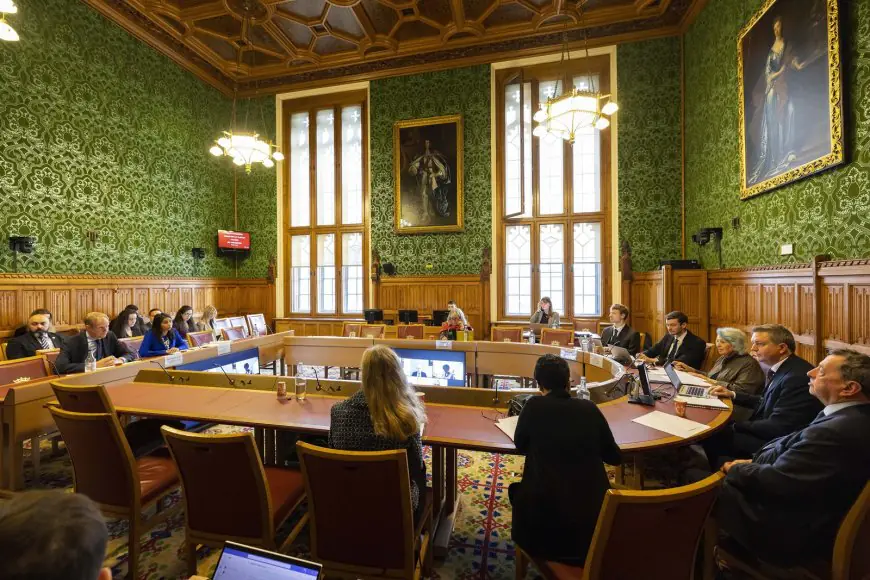
Right now, if a frontier AI lab decides its newest model is safe enough to ship in Britain, that is the end of the conversation. A committee of MPs wants to change that. In a report published Wednesday, Parliament's Business, Innovation, Science and Trade Committee calls for an AI Safety and Security Bill that would let the state delay, restrict or prohibit a model's deployment, training or testing in the UK when risks cannot be controlled.


That is a recommendation, not a law. The findings are not binding, and The Register reports that the government has yet to commit to the proposed legislation. Ministers have not said yes.
The committee's own words are hard to soften. "No UK regulator or public authority currently has the power to impose safeguards on frontier AI systems, pause training, delay deployment or withdraw unsafe services," the report says. "Decisions about whether systems are safe to develop or deploy remain with the companies building them."
"We cannot give today's AI leaders unfettered freedom to behave like modern-day Dr Frankensteins, creating dangers beyond anyone's control." Liam Byrne MP, committee chair
Byrne's framing is theatrical, but the complaint is plain. The committee questioned researchers, former AI employees and representatives from OpenAI, Google DeepMind, Anthropic and Meta. According to The Register, all four companies told MPs they would not release models they considered unsafe. The catch is that each lab grades itself against its own framework, and UK law does not generally require an independent opinion before anything goes out the door.
Britain's showpiece answer is the AI Security Institute, which the report praises while noting that AISI is not a regulator and its access to models runs on voluntary cooperation. A footnote shows how thin that cooperation can get. In September and October 2026, the committee writes, Anthropic, OpenAI and Google all initially withheld their latest models from AISI testing until US testing was complete, "reportedly, at the request of the US administration." Testing has resumed, the report says, but that episode is its best argument for putting access on a legal footing.
Ten gaps and one new watchdog
The report lists ten critical gaps, including no statutory right to inspect models, no mandatory incident reporting, weak safeguards for open-weight releases that cannot be recalled, and thin protection for whistleblowers.
Under the committee's plan, developers of designated high-risk systems would have to back their safety claims with evidence and let independent researchers examine them, with significant changes to capabilities or safeguards triggering fresh scrutiny. Incidents and near misses would have to be reported. The report notes that OpenAI and Anthropic told MPs they support putting incident reporting on a statutory footing, while Google DeepMind and Meta backed standardised frameworks. The report also cites OpenAI acknowledging it should have told Australia sooner about an incident in which its agents accessed government-related systems.
One line in the report will matter more than it looks. AISI should keep testing, the MPs say, but "the statutory regulator should not be AISI." Enforcement would sit with a separate body.
The committee is also selling the plan as growth policy, not a brake. Citing OECD productivity estimates, the report calculates that AI could leave the UK economy up to £400 billion larger after ten years. That is the committee's arithmetic, not an independent forecast, and the bet is that firms adopt faster when they trust the guardrails.
"Ministers, accountable to Parliament, must decide what risks the public should be asked to bear." Liam Byrne MP, committee chair
The MPs want a bill in the next parliamentary session and want Britain to use its 2027 G20 presidency to push common rules abroad. They also accept ministers may need fast order-making powers, which is a lot of trust to hand a government the report says has not produced a coherent framework. Britain's regulators have already been warning companies about AI accountability within existing law. This report argues existing law is not enough.
The government normally replies to select committee reports within about two months. Until then, the power to stop a dangerous model in Britain stays exactly where the committee says it is today, with the people who built it.