












































How Industrial AI Is Transforming Tire Engineering With Faster Analysis
Dunlop and Fujitsu have unveiled an AI-powered surrogate model capable of reducing tire structural analysis time by 90%, cutting processing time from 45 minutes to just 5 minutes. The breakthrough could accelerate product development cycles and pave the way for broader adoption of AI-driven engineering simulations across manufacturing industries.
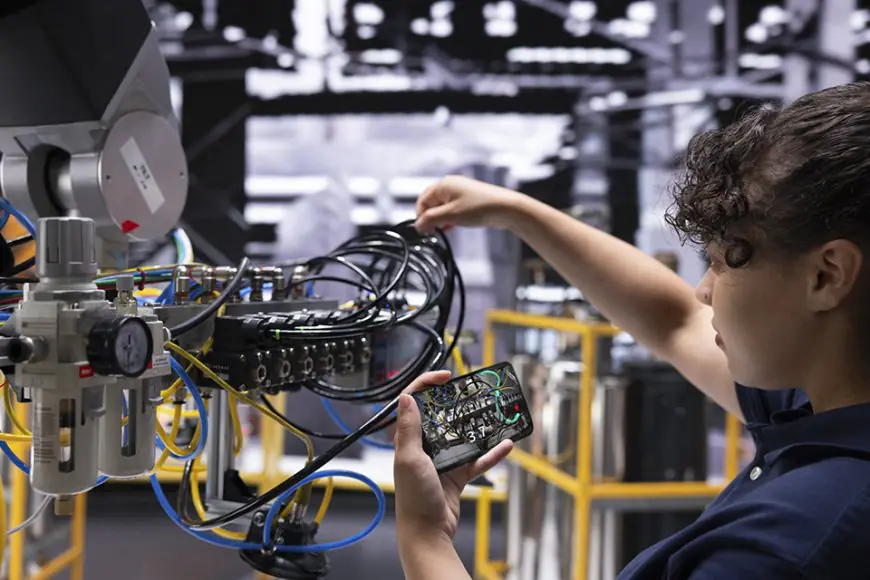


Artificial intelligence continues to reshape industries far beyond chatbots and content generation, and the latest breakthrough from Dunlop and Fujitsu highlights the growing impact of AI on engineering and manufacturing. The two companies have announced the successful development of an AI surrogate model that dramatically reduces tire structural analysis time by 90%, shrinking a process that traditionally required 45 minutes down to just 5 minutes.
The achievement represents a significant advancement in industrial AI, where speed and accuracy can directly influence product development timelines, manufacturing costs, and overall competitiveness. Structural analysis plays a critical role in tire design, helping engineers evaluate how tires respond to pressure, stress, load distribution, and real-world driving conditions. These simulations are essential for ensuring safety, durability, and performance before products reach the market.
Traditionally, engineers have relied on computationally intensive simulation methods that require substantial processing power and lengthy analysis periods. While highly accurate, these approaches can slow development cycles, particularly when multiple design iterations are required. The newly developed AI surrogate model addresses this challenge by learning from existing simulation data and generating highly accurate predictions in a fraction of the time.
The reduction in analysis time could have far-reaching implications for the automotive and manufacturing sectors. Faster simulations enable engineers to test more design variations, identify performance improvements more quickly, and accelerate innovation. In industries where product development speed often determines market success, reducing analysis times from nearly an hour to just minutes can provide a meaningful competitive advantage.
Beyond efficiency gains, the collaboration demonstrates how AI is increasingly being integrated into specialized industrial workflows. Rather than replacing engineers, technologies such as surrogate models serve as powerful decision-support tools that allow technical teams to focus on innovation and optimization. This trend reflects a broader movement toward AI-assisted engineering, where machine learning helps streamline complex calculations and simulations.
The companies have also revealed plans to conduct additional testing using Fujitsu's upcoming MONAKA Arm-based CPU later this year. The processor has attracted attention for its focus on high-performance computing and energy efficiency, making it a potentially valuable platform for next-generation AI workloads and advanced engineering applications. More information about Fujitsu's technology initiatives can be found on the official Fujitsu website.
Industry experts view surrogate modeling as one of the most promising applications of AI in engineering because it bridges the gap between computational accuracy and operational efficiency. As manufacturing organizations continue their digital transformation efforts, AI-driven simulation technologies are expected to become increasingly important across sectors including automotive, aerospace, energy, and industrial equipment production.
The Dunlop-Fujitsu collaboration serves as another example of how artificial intelligence is moving deeper into core industrial processes. While consumer-facing AI tools often dominate headlines, breakthroughs like this demonstrate the technology's potential to deliver measurable business value behind the scenes. As testing progresses and deployment expands, AI-powered engineering solutions could fundamentally change how products are designed, analyzed, and brought to market in the years ahead. Additional insights into emerging industrial AI trends are available through the World Economic Forum.