






































Meta Is Rewriting Internal Code To Build An AI Native Infrastructure
Meta Platforms CEO Mark Zuckerberg is reportedly directing engineering teams to fundamentally restructure the company’s internal codebases, shifting from human-centric software design to an AI-native architecture where machines can write, debug, and maintain systems autonomously.


The tech world is well-acquainted with Mark Zuckerberg’s penchant for "all-in" pivots. From the aggressive shift to mobile in the early 2010s to the multi-billion dollar bet on the Metaverse, the Meta CEO has never been one to shy away from radical restructuring. However, the latest directive circulating within the halls of Menlo Park might be the most consequential yet. According to internal reports, Meta is now pushing its engineers to rewrite and restructure vast portions of its internal codebases specifically to make them legible and maintainable by artificial intelligence.
This move marks a definitive departure from the "Move Fast and Break Things" era of human-centric programming. For decades, software was written by humans, for humans. Code was structured around human logic, idiosyncratic naming conventions, and documentation meant for a pair of human eyes. But as Meta prepares for a future dominated by its Llama family of models, the company has realized that its legacy code is often a labyrinth that even the most advanced AI struggles to navigate efficiently. By shifting to an AI-native infrastructure, Meta is essentially teaching its software to speak the same language as the agents that will soon be managing it.
The Death of Technical Debt Through AI
Every tech giant grapples with technical debt—the cost of reworking legacy code that was built for a different era. At Meta, this debt is a significant friction point for the deployment of autonomous coding agents. By asking engineers to rewrite codebases for AI-first development, Zuckerberg is aiming to eliminate this friction. The goal is to create a "clean" environment where AI can not only suggest snippets of code but can actually understand the entire architectural intent of a system.
Industry analysts suggest that this transition involves standardizing internal APIs, simplifying complex dependency trees, and adopting a more modular, "micro-service" approach that aligns with how Large Language Models process information. When code is structured this way, an AI agent can perform a system-wide audit or a security patch in seconds—a task that would traditionally take a team of human engineers weeks to coordinate. You can see more about Meta's technological roadmap on the Meta Newsroom, where they frequently outline their shift toward open-source AI leadership.
Beyond the Chatbot Into AI Native Engineering
This strategy signals that Meta is moving far beyond simple AI "copilots." While most companies are satisfied with tools that help engineers type faster, Meta is building a world where the AI is the lead architect. In this new paradigm, the role of the human engineer shifts from "writer" to "editor" and "orchestrator." This is a necessary evolution if the company hopes to maintain its massive global infrastructure with the same level of agility as a startup.
The implications for the broader software industry are massive. If Meta succeeds in proving that an AI-native codebase significantly lowers operational costs and increases deployment speed, every other enterprise will be forced to follow suit. We are likely looking at a massive global wave of "refactoring" where companies across the Fortune 500 begin auditing their legacy systems to ensure they are "AI-ready." As noted by experts at GitHub, the transition to AI-integrated development is already fundamentally changing the lifecycle of software creation.
The Human Element in an Automated Stack
Naturally, this shift raises questions about the future of the engineering profession. If the code is written for AI to understand, what happens to the human developers? Internal sentiment at Meta suggests a mix of excitement and trepidation. On one hand, the "drudge work" of maintaining old code could disappear. On the other, the skill set required to thrive at Meta is changing overnight. Engineers are now being incentivized to think in terms of "system prompting" and "architectural guardrails" rather than just syntax and logic.
The strategic pillars of Meta’s new AI-first push include:
- Universal Standardized Documentation: Ensuring every line of code is accompanied by metadata that AI agents can ingest for context.
- Automated Refactoring Pipelines: Deploying internal models to constantly "clean" and optimize code as it is written.
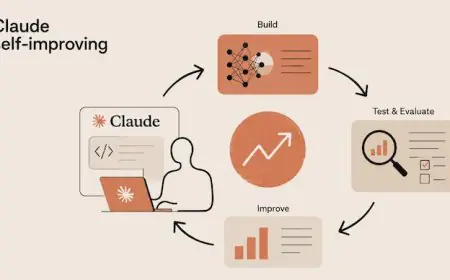
- Self-Healing Systems: Building infrastructure that can identify its own bugs and write its own patches without human intervention.
The success of this pivot will be measured by Meta’s ability to ship products faster than its competitors. Zuckerberg is betting that by making his company’s "brain" more accessible to AI, he can outpace the entire industry. It is a bold, high-stakes gambit that confirms one thing: the era of human-only software development is coming to a very rapid close. Meta isn't just using AI to build features; it is using AI to rebuild itself from the ground up.