

























How Microsoft Testing Advanced Autonomous AI Agents For 365 Copilot Will Redefine Work
Microsoft is reportedly testing "OpenClaw-like" autonomous AI agents within its 365 Copilot ecosystem. This strategic pivot marks a transition from passive AI assistance to active task execution, allowing the software to navigate applications and complete complex workflows without step-by-step human intervention.
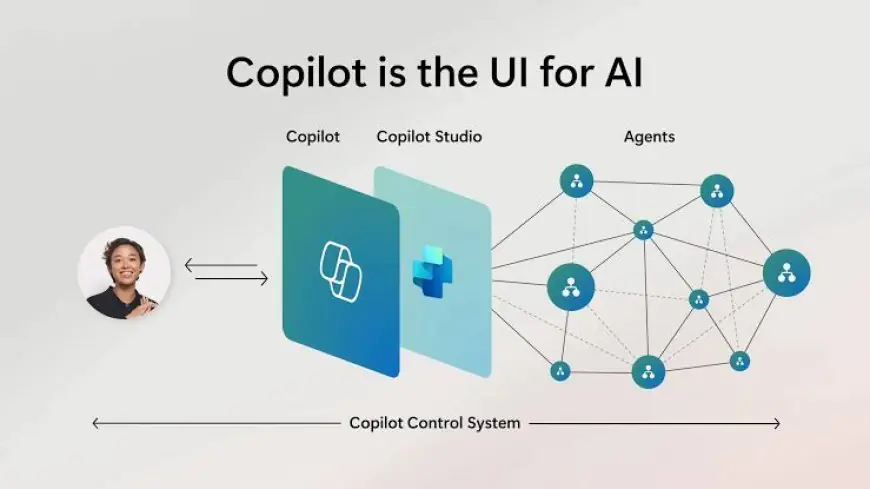


The era of the "AI assistant" is rapidly evolving into the era of the "AI coworker." According to new reports from The Verge, Microsoft has begun internal testing of a highly advanced generation of autonomous agents designed to live within the 365 Copilot suite. These agents are reportedly modeled after the "OpenClaw" architecture—a framework that emphasizes computer-use capabilities, allowing the AI to "see" and interact with software interfaces just as a human would. This development signals a massive shift in how we view productivity software, moving from tools that suggest ideas to agents that actually execute them.
For the past year, Copilot has functioned primarily as a high-level consultant, drafting emails or summarizing meeting transcripts. However, the new "OpenClaw-like" bots represent a fundamental architectural change. Instead of waiting for a prompt to generate text, these agents are capable of autonomous task execution. This means an agent could theoretically be told to "onboard the new hire," and it would independently navigate through Outlook to send a welcome kit, update the team’s SharePoint directory, and set up a multi-step training schedule in Teams—all without the user needing to touch a single menu.
The Rise Of Computer Use Capabilities
The core of this breakthrough is the concept of "computer use." While traditional AI interacts with software through APIs (Application Programming Interfaces), "OpenClaw" style agents can observe a virtual desktop, identify buttons, and click through workflows. This allows them to bridge the gap between different apps that might not have perfect native integrations. Microsoft is effectively teaching Copilot to move its own mouse and keyboard, creating a level of agency that was previously the stuff of science fiction.
As detailed in recent reporting on the future of agentic AI, the significance of this move cannot be overstated. By giving Copilot the ability to act autonomously, Microsoft is addressing the "last mile" problem of AI productivity. Many users find that while AI can help them think, they still spend hours on the manual labor of data entry and cross-platform synchronization. These new agents are designed to take that physical digital labor off the human's plate entirely.
Key Features Of The New Autonomous Agents
The internal testing phase is reportedly focusing on several high-impact workflows that require cross-app intelligence. Some of the anticipated features include:
- Multi-App Orchestration: The ability to pull data from an Excel sheet and use it to populate a PowerPoint deck and a draft client email simultaneously.
- Persistent Background Tasks: Agents that can monitor a project in Planner and automatically follow up with team members via Teams if a deadline is approaching.
- Autonomous Problem Solving: If an agent hits a permission error while moving a file, it can check the organization’s directory to find the right admin and request access on the user’s behalf.
The Balance Of Security And Autonomy
Of course, giving an AI agent the "keys to the car" raises significant questions about security and governance. Microsoft is reportedly leaning heavily on its existing Microsoft Graph infrastructure to ensure these agents operate within strict guardrails. Every action taken by an autonomous bot is logged, and users will likely have "kill-switch" capabilities to stop a runaway process. This "human-in-the-loop" oversight is critical for enterprise adoption, where a simple error in an automated workflow could have major financial or legal implications.
This focus on enterprise-grade reliability is what Microsoft hopes will separate its agents from open-source alternatives like the original OpenClaw framework. According to the official Microsoft 365 roadmap updates, the company is prioritizing "governed autonomy"—ensuring that while the bots are faster than humans, they are also more compliant with corporate data policies. This allows organizations to scale their output without increasing their risk profile.
What This Means For The Future Workforce
As these agents move out of testing and into general availability later in 2026, the very definition of a "knowledge worker" will change. We are moving toward a world where the primary skill isn't knowing how to use a piece of software, but knowing how to manage an agent that uses it for you. This transition marks the end of the AI experimentation phase and the beginning of the AI-integrated economy.
For Microsoft, the goal is clear: to ensure that 365 Copilot isn't just a feature on the side of your screen, but the invisible engine that runs your entire workday. If the testing of these "OpenClaw" agents is successful, the humble office suite will have evolved into a fully autonomous digital workforce, forever changing the economics of productivity.