






































How NVIDIA and Microsoft Push AI PCs Into the Mainstream
NVIDIA and Microsoft are accelerating the shift toward AI-native personal computers, introducing new technologies designed to run intelligent agents directly on consumer devices rather than relying solely on the cloud.
The AI PC Era Officially Begins
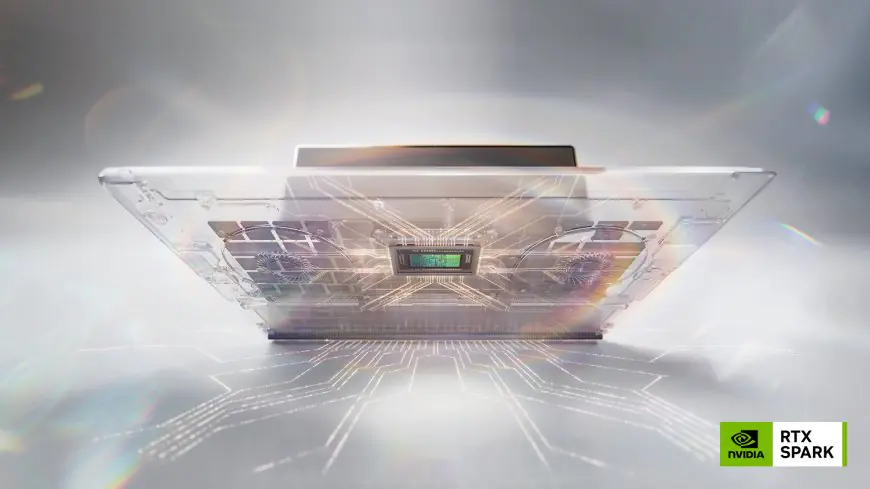
For years, the promise of AI on personal computers has been just that: a promise. Cloud-based assistants like ChatGPT and Copilot have been useful, but they require an internet connection and raise persistent privacy concerns. That is changing. At NVIDIA GTC Taipei, Microsoft and NVIDIA unveiled the RTX Spark, a new system-on-a-chip designed to bring a petaflop of AI performance directly to Windows PCs. The message was clear: the future of personal computing is not in the cloud, but on your desk. The two companies are betting that local AI agents—capable of running complex models without sending data to the cloud—will define the next era of computing.


"For forty years, you launched apps. Click. Type. With RTX Spark and Microsoft Windows, you ask—and the PC does the work." – Jensen Huang, CEO of NVIDIA
What RTX Spark Brings to the Table
The new platform is designed to run demanding AI workloads locally. It combines up to 20 Arm-based CPU cores, 6,144 Blackwell RTX cores, and up to 128GB of unified memory. The hardware is purpose-built for the new wave of AI agents, enabling them to reason over large contexts without round-tripping to the cloud. This shift is significant for developers, creators, and power users who need low latency and data privacy. The Microsoft Windows Blog post announcing the platform highlights key features, including workload profile scheduling and optimized power management, which ensure the system performs efficiently across all cores.
Who Needs This Much Local AI Power
While the hardware is impressive, analysts suggest that the initial market for RTX Spark may be specialist users rather than the general enterprise. Here is a breakdown of the likely early adopters:
- Software developers – Running local AI agents for coding, debugging, and testing without cloud latency
- AI engineers and data scientists – Training and refining models on-device for faster iteration cycles
- Creative professionals – Editing 12K video and rendering complex 3D scenes with high performance
- Security-sensitive teams – Keeping sensitive data on-premises rather than sending it to the cloud
Analysts at Futurum Research project that the AI PC market could grow at a compound annual rate of about 38% between 2025 and 2030, though adoption may slow in 2026 after a Windows 10 refresh cycle. This suggests that while RTX Spark is a powerful platform, its impact may initially be felt more in premium and specialist systems than in broad corporate fleets.
A Platform for the Agentic Era
Beyond the hardware, the partnership is a strategic push for "agentic AI." Microsoft is optimizing Windows to support agents with OS-enforced identity, containment, and security features. NVIDIA is bringing OpenShell to Windows, enabling developers to build secure agents that can run locally . As noted in a Bloomberg analysis of the partnership, this is not just about better hardware. It is about changing the fundamental relationship between users and their PCs. The goal is to create a system where users can simply ask their computer to perform tasks—and it does them.
As Microsoft and NVIDIA push this vision forward, the question is whether mainstream users will embrace an AI-native PC. A Computerworld analysis suggests the platform could split the market, with mainstream AI PCs remaining focused on productivity while premium systems like those powered by RTX Spark target power users. The first devices from ASUS, Dell, HP, Lenovo, MSI, and Microsoft Surface are expected to arrive in fall 2026.