

























NVIDIA, Stellantis, and Accenture Partner for "Physical AI"
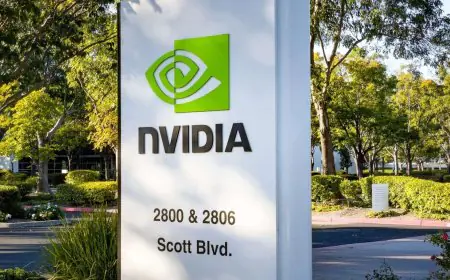
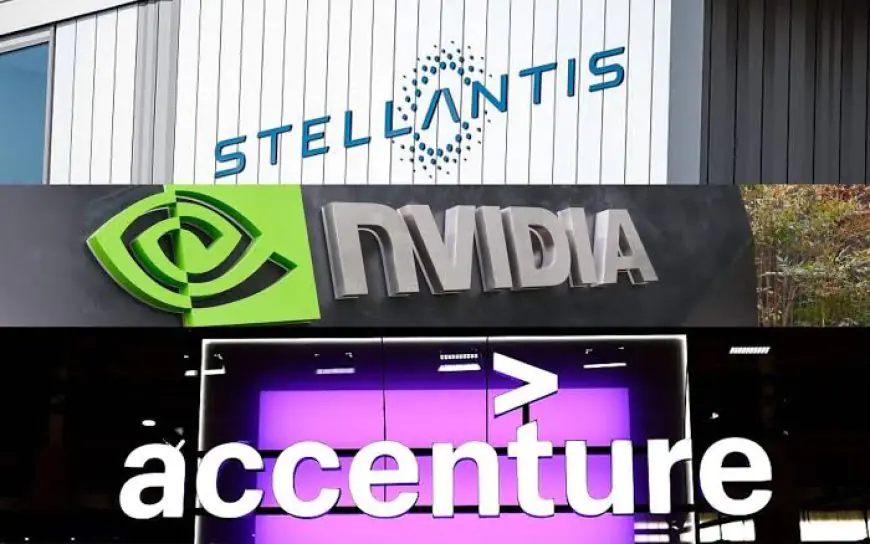
Stellantis has partnered with NVIDIA and Accenture to deploy AI-powered digital twins across its manufacturing operations worldwide. Using NVIDIA Omniverse technology, the collaboration aims to create autonomous factory environments capable of improving efficiency, reducing downtime, and accelerating the rise of Physical AI in industrial production.


Stellantis And NVIDIA Push Manufacturing Into The Physical AI Era
The future of industrial manufacturing is rapidly evolving as automotive giant Stellantis announced a major partnership with NVIDIA and Accenture to deploy AI-powered digital twins across its global factory network. The initiative represents one of the clearest signs yet that so-called “Physical AI” is moving from concept to large-scale industrial reality.
At the center of the collaboration is NVIDIA Omniverse, a platform designed to create real-time virtual replicas of physical environments. By combining artificial intelligence, simulation technology, and live operational data, the companies aim to build autonomous manufacturing systems capable of optimizing production, predicting failures, and improving factory efficiency at massive scale.
What Physical AI Means For Modern Industry
Unlike traditional software-based AI systems that focus mainly on chatbots, analytics, or digital automation, Physical AI connects artificial intelligence directly with real-world machines, robotics, sensors, and industrial operations. In manufacturing, this allows AI systems to monitor and coordinate physical processes in real time.
The Stellantis initiative uses digital twins to simulate entire manufacturing facilities virtually before changes are implemented in the real world. Engineers can test workflows, identify inefficiencies, and predict equipment failures using AI-driven simulations without interrupting ongoing production lines.
NVIDIA Omniverse Is Becoming A Core Industrial AI Platform
NVIDIA has increasingly positioned Omniverse as a foundational platform for the next generation of industrial automation and AI-powered simulation. The technology enables companies to combine robotics, machine learning, computer vision, and operational data inside immersive digital environments.
For manufacturers, this creates opportunities to improve production speed, reduce downtime, optimize supply chains, and lower operational costs. Analysts say digital twin systems may become one of the most important enterprise AI applications over the next decade as industries pursue smarter and more autonomous operations.
- Stellantis partnered with NVIDIA and Accenture on AI manufacturing
- The initiative uses NVIDIA Omniverse digital twin technology
- Factories will simulate operations in real time using AI
- The project aims to improve efficiency and reduce downtime
- Physical AI is expanding into large-scale industrial environments
Why Automotive Manufacturing Is Adopting AI Faster
The automotive industry has become one of the leading adopters of advanced AI and automation technologies because of its highly complex production systems and global supply chains. Modern vehicle manufacturing requires coordination between robotics, logistics networks, quality control systems, and thousands of interconnected operational processes.
AI-driven digital twins offer manufacturers the ability to model these systems continuously while making real-time adjustments based on changing production conditions. This can improve everything from assembly line efficiency to energy consumption and predictive maintenance scheduling.
Accenture Role Highlights Enterprise AI Expansion
Accenture’s involvement in the partnership also reflects the growing role consulting and enterprise technology firms are playing in large-scale AI transformation projects. As businesses adopt increasingly advanced AI systems, many organizations require support integrating AI into existing operations and infrastructure.
Consulting firms are becoming critical partners in helping enterprises deploy AI responsibly while aligning automation technologies with business strategy, workforce adaptation, and operational goals. The rise of Physical AI is expected to create new demand for expertise in industrial automation, simulation engineering, and AI governance.
Digital Twins Could Reshape Global Manufacturing
Industry analysts believe digital twin technology may fundamentally reshape how factories operate over the next decade. Instead of relying heavily on reactive maintenance and manual oversight, AI-powered manufacturing systems could eventually manage large portions of industrial operations autonomously.
As AI systems become more capable of understanding and interacting with physical environments, industries ranging from automotive manufacturing to aerospace, logistics, and energy production are expected to accelerate investments in real-time simulation technologies. Additional information about industrial AI and Omniverse technologies can be explored through the official Accenture platform.