



































Jury Rules Against Elon Musk in OpenAI Feud
A federal jury in Oakland, California, ruled in favor of OpenAI and CEO Sam Altman, dismissing Elon Musk’s lawsuit over the company’s transition from a nonprofit organization to a commercially driven AI powerhouse. The decision represents a major legal and strategic victory for OpenAI as speculation grows around a potential future IPO.
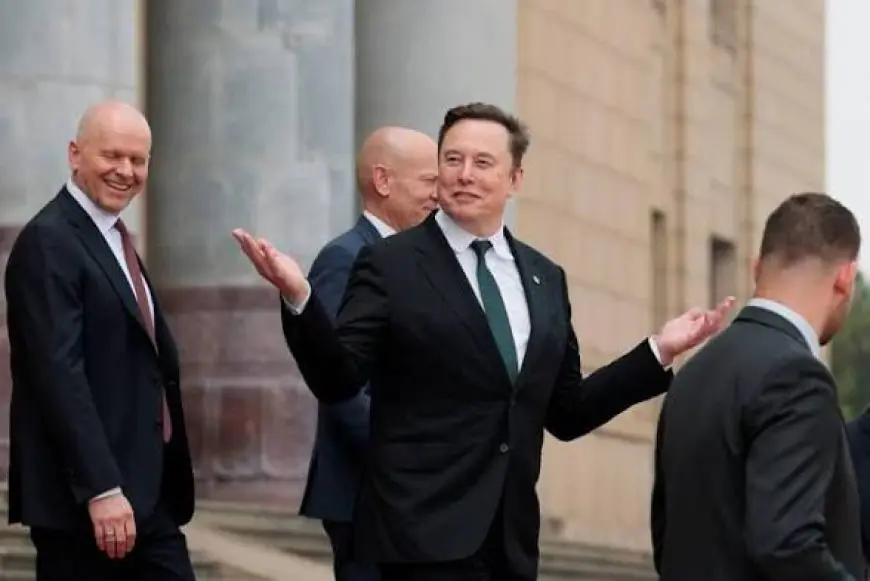


OpenAI Secures Major Courtroom Victory Against Elon Musk
The long-running legal battle between Elon Musk and OpenAI has officially ended in a major victory for the artificial intelligence company and its CEO, Sam Altman. A federal jury in Oakland, California, ruled in favor of OpenAI, dismissing Musk’s claims regarding the company’s controversial evolution from a nonprofit research organization into one of the most commercially influential AI firms in the world.
The jury determined that Musk waited too long to formally pursue his legal claims, significantly weakening his argument that OpenAI violated its founding principles. The ruling now clears a major legal cloud hanging over the company at a time when OpenAI is rapidly expanding its enterprise influence, infrastructure investments, and global AI partnerships.
The Lawsuit Focused On OpenAI Original Mission
Musk, one of OpenAI’s original co-founders, argued that the organization abandoned its original nonprofit mission in pursuit of commercial dominance and financial gain. His legal team claimed the company shifted away from its commitment to open and broadly beneficial artificial intelligence development.
Attorneys representing OpenAI strongly rejected those allegations throughout the trial, arguing that the company’s evolution was necessary to compete in an increasingly expensive and highly competitive AI landscape. OpenAI maintained that building advanced AI systems requires enormous levels of computing infrastructure, talent acquisition, research investment, and operational scale.
Why The Verdict Matters For The AI Industry
The decision is being viewed as more than just a courtroom victory. Industry analysts believe the ruling could have lasting implications for how future AI companies are structured, funded, and governed. As artificial intelligence development becomes increasingly capital intensive, the case highlighted growing tensions between nonprofit ideals and the commercial realities of modern AI competition.
Many technology leaders have argued that building frontier AI systems now requires billions of dollars in infrastructure spending, making purely nonprofit development models difficult to sustain at global scale. The verdict may strengthen the position of companies seeking more flexible corporate structures while pursuing aggressive AI expansion strategies.
- The federal jury ruled in favor of OpenAI and Sam Altman
- Elon Musk’s lawsuit against the company was dismissed
- The jury found Musk delayed filing his claims
- The case focused on OpenAI’s nonprofit origins
- The ruling could influence future AI governance models
OpenAI Gains Momentum As IPO Speculation Grows
The courtroom victory arrives at a critical moment for OpenAI as speculation continues growing around a potential future public offering. Investors and industry observers have increasingly discussed the possibility of an eventual OpenAI IPO due to the company’s rapid growth, enterprise adoption, and expanding influence across global technology markets.
OpenAI has become one of the most dominant forces in artificial intelligence through its generative AI platforms, enterprise partnerships, developer ecosystems, and infrastructure collaborations. The company’s products are now deeply integrated into business operations, education, productivity tools, and cloud computing environments worldwide.
The AI Race Is Becoming Increasingly Competitive
The lawsuit also underscored how intensely competitive the AI industry has become. Major technology companies are racing to secure leadership positions in generative AI, autonomous systems, enterprise AI services, and next-generation infrastructure development.
Competition between companies such as OpenAI, Google, Anthropic, Meta, Microsoft, and xAI is accelerating investment across the sector, particularly in cloud infrastructure, advanced semiconductors, AI agents, and large language model development. Legal disputes surrounding governance, ownership, and ethical responsibility are increasingly becoming part of the broader AI landscape.
The Verdict May Shape Future AI Governance Debates
While the legal battle between Musk and OpenAI has concluded, the broader questions raised during the trial are unlikely to disappear. Debates around transparency, commercialization, public accountability, and AI safety are expected to intensify as advanced AI systems become more deeply integrated into global economies and daily life.
The ruling nevertheless represents a decisive moment for OpenAI, strengthening the company’s position during one of the most important growth periods in its history. More information about OpenAI’s ongoing AI initiatives and enterprise developments can be found through the official OpenAI platform and its Newsroom.