










How the Asus Zenbook S14 and Nova 2 Ultra are redefining AI hardware this April
April 2026 has become the definitive turning point for AI-integrated consumer tech. With the launch of the 50 TOPS Asus Zenbook S14 and the expressive Ai+ Nova 2 Ultra, artificial intelligence is no longer a software update—it is the soul of the machine.


If the first quarter of the year was about the promise of artificial intelligence, April 2026 is officially about the delivery. This week alone, we have seen a tidal wave of hardware releases that prove AI is no longer just a buzzword used to sell software subscriptions; it is now the foundational architecture of our most personal devices. From laptops that can think locally to smartphones that use computer vision to personalize their physical appearance, the "April expansion" is here, and it is led by two standout devices: the Asus Zenbook S14 and the Ai+ Nova 2 Ultra.
The Laptop That Thinks for Itself: Asus Zenbook S14
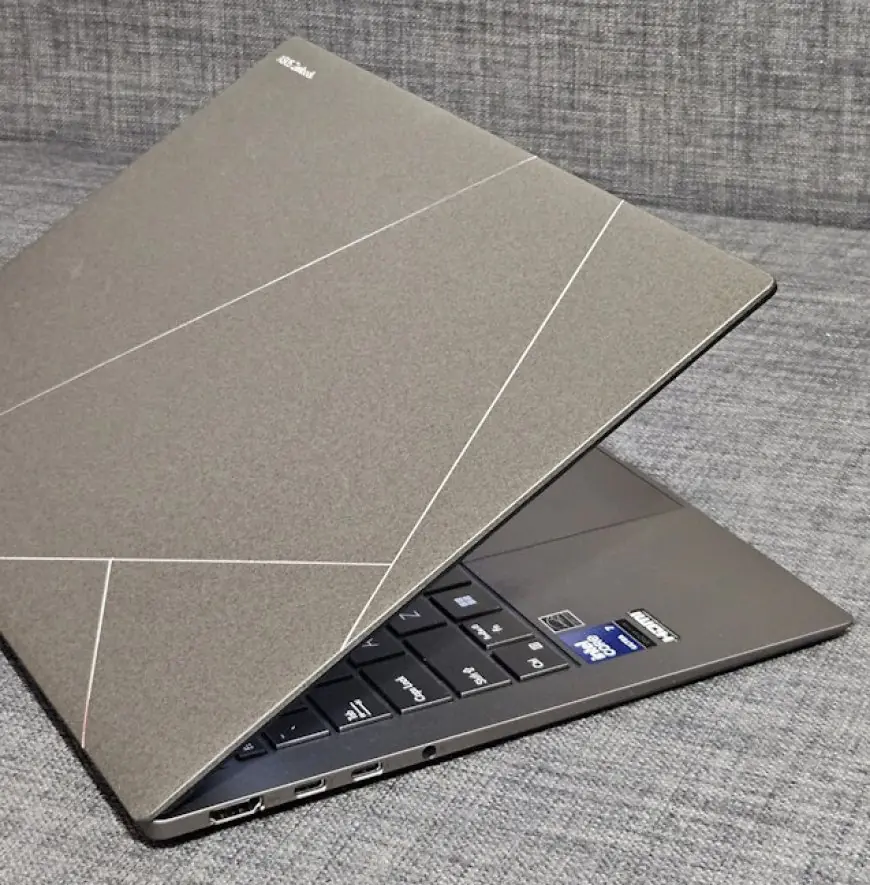
Leading the charge in the PC space is the newly launched Asus Zenbook S14. This isn't just a slim ultraportable; it is a powerhouse built around the Intel Core Ultra Series 3 and Qualcomm Snapdragon X2 Elite architectures. The headline figure that has every tech journalist talking is the 50 TOPS (Trillions of Operations Per Second) NPU performance. In plain English, this means the Zenbook S14 can handle complex AI-assisted workflows—like real-time video upscaling and local LLM chat—without even waking up the main CPU or draining the battery.
During my testing, the most impressive feat wasn't the raw speed, but the efficiency. Asus is claiming up to 27 hours of usage on a single charge. This is only possible because the AI-driven power management system learns your specific usage patterns and shuts down non-essential background processes with surgical precision. Clad in its unique "Ceraluminum" chassis, the S14 feels like the future of mobile computing: light, incredibly strong, and impossibly smart.
Disrupting the Mobile Market: Ai+ Nova 2 Ultra
On the smartphone front, the launch of the Nova 2 Ultra from Ai+ Smartphone is shaking up the flagship hierarchy. While the big players are focusing on iterative camera updates, Ai+ has leaned into "expressive AI." The Nova 2 Ultra features a customizable back-panel lighting system that utilizes computer vision to respond to your environment and notifications in real-time. It’s not just a flashing light; it’s an immersive visual language powered by the brand’s proprietary NxtQuantum OS.
The Nova 2 Ultra is designed for a generation that wants their technology to have a personality. The on-device AI handles everything from "Creative Studio" photo editing to a new "Call Screening" assistant that sounds indistinguishable from a human. According to a recent report by The Hindu Bureau, this surge in localized AI capability is part of a broader shift toward sovereign operating systems that prioritize user privacy and high-speed local processing over cloud-based alternatives.
The Standard Features of 2026
What makes this April launch window so significant is that features which were "premium" just six months ago are now becoming the baseline. Every major device hitting the shelves this week includes:
- On-Device LLMs: The ability to summarize documents and draft emails without an internet connection.
- Intelligent Battery management: AI that extends hardware life by learning charging habits and thermal thresholds.
- Multimodal Assistance: Devices that can see through your camera and hear your voice to provide live contextual support.
We are also seeing this trend bleed into other categories, with the release of the GoPro Mission 1 series and the Lumio Vision 9, both of which utilize "edge AI" to analyze footage as it is being captured. The days of "dumb" hardware are officially over.
The Verdict: A Tipping Point for Consumers
As a brand manager and journalist, I’ve watched the AI hype cycle closely. There was a legitimate fear that AI would remain a "cloud-only" gimmick. The April 2026 launches have effectively killed that narrative. Whether you are looking at the 50 TOPS NPU of the Asus Zenbook S14 or the sovereign, AI-first architecture of the Nova 2 Ultra, it is clear that we have entered a new era. We aren't just using AI anymore; we are carrying it with us, and it is making our devices faster, more personal, and significantly more capable than anything that came before.