





























Las Vegas Deploys AI-Powered Smart Signals to Protect Pedestrians in Historic Fremont Corridor
City officials in Las Vegas have launched a high-tech pilot program utilizing artificial intelligence to monitor and protect pedestrians at 16 high-traffic intersections. Funded by a $1.4 million federal grant, the system uses edge-based sensors to adjust traffic signals in real-time, aiming to eliminate "near-miss" accidents in the city’s most crowded tourist zones.


The Neon Jungle Gets a Digital Guardian
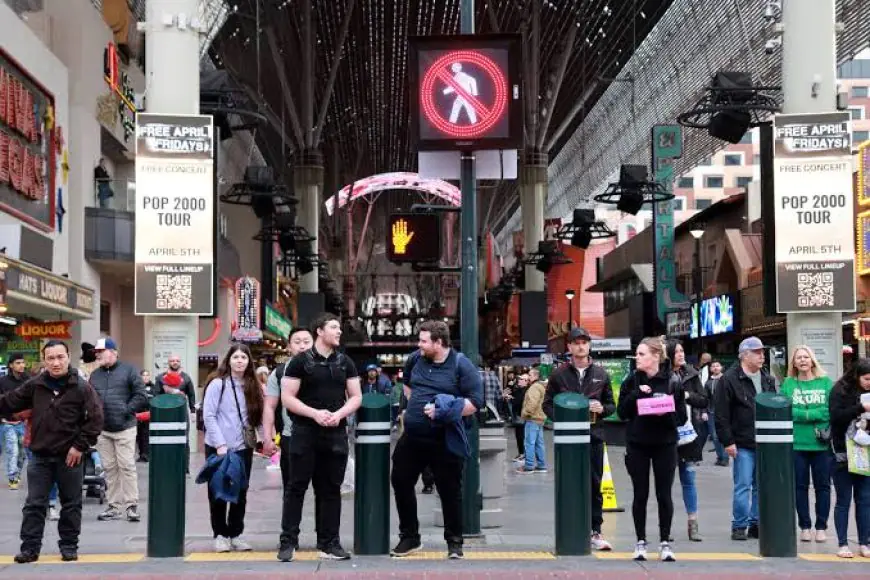
Las Vegas is a city defined by its chaos—a swirling mix of 26 million annual tourists, flashing lights, and heavy traffic. But beneath the glittering canopy of the Fremont Street Experience, a quieter revolution is taking place. As of February 2026, the City of Las Vegas has officially activated a pilot program that turns standard traffic lights into "smart signals" capable of seeing, thinking, and reacting to the humans walking beneath them.
The initiative, part of the city’s broader Vision Zero push to eliminate traffic fatalities, targets one of the most dangerous intersections for pedestrians in Nevada. By embedding artificial intelligence directly into the urban fabric, city leaders are betting that code can do what traditional signage hasn't: prevent accidents before they happen.
How "Smart Signals" Prevent Near-Misses
The technology behind the pilot isn't just about recording footage; it’s about real-time interpretation. Using a $1.4 million grant from the federal Bipartisan Infrastructure Law, the city has equipped 16 intersections with advanced edge-based sensors. Unlike traditional cameras that simply feed a video stream to a central office, these AI units process data locally to make split-second decisions.
When the system detects a large crowd waiting to cross or a person with limited mobility who may need extra time, it can automatically extend the "walk" signal. Conversely, if a pedestrian steps into the street unexpectedly, the AI can trigger flashing beacons to alert oncoming drivers. Key features of the new system include:
- Predictive Analytics: Identifying "near-miss" patterns where vehicles and pedestrians almost collide, allowing engineers to redesign intersections before a tragedy occurs.
- Adaptive Timing: Adjusting signal durations based on real-time pedestrian volume, reducing "jaywalking" caused by long wait times.
- Inclusive Accessibility: Future integrations may allow people with disabilities to trigger longer crossing windows via government-issued cards or mobile apps.
According to reports from city procurement meetings, the goal is to create a "living laboratory" downtown that provides the data necessary to scale the technology across the entire Las Vegas Valley.
Privacy in the Age of Physical AI
In a city where "what happens here stays here," privacy was a significant hurdle for the project. To calm public concern, city engineers have stressed that the system uses passive detection. The sensors do not record or store personal video footage; instead, they convert visual data into anonymous "blobs" and metadata. Once the traffic signal is adjusted, the data is typically deleted or anonymized for long-term engineering study.
This move toward "Physical AI"—the term for AI that interacts with the real world rather than just digital screens—was a major theme at CES 2026 in Las Vegas earlier this year. The pedestrian safety pilot serves as one of the first major municipal applications of these technologies since the conference shuttered its doors.
A Blueprint for the Smart City of 2030
Las Vegas isn't alone in this pursuit, but its unique density makes it the perfect testing ground. If the Fremont Street pilot successfully reduces the rate of pedestrian strikes—which have seen a troubling uptick in Southern Nevada recently—it could become the gold standard for urban centers worldwide.
For now, the project remains in its "live lab" phase. As the 2026 tourism season ramps up, the AI will be put to its ultimate test: managing the unpredictable movements of millions of visitors under the desert sun. If it succeeds, the "Neon City" might just become the safest place in America to cross the street.