
































Meta Prices Muse Ember at a Dime per Million Tokens to Do the Grunt Work for AI Agents
Meta says its new Muse Ember model beats Claude Haiku 5.5 and GPT-6 Luna on intelligence per dollar at $0.10 per million input tokens, though its own charts show Haiku still winning on mergeable code.

Meta wants to be the cheapest labor in the agent economy. Meta Superintelligence Labs on Monday released Muse Ember, which it calls its smallest and most efficient model, and priced it at $0.10 per million input tokens and $0.50 per million output tokens. Cached input drops to $0.004 per million. This is not a flagship. It is a bid for the boring middle of agent work.

Meta says in its announcement that Ember is "designed for complex reasoning execution and the work agents repeat all day: tool calls, coding subtasks, routing, extraction, and long document parsing." The model is live now as muse-ember-1.0 on the Meta Model API and Muse Code, with a 1M-token context window, up to 512K output tokens and support for the Responses API.
The division of labor is spelled out in one line from Meta: "Muse Wonder plans, Muse Ember handles the volume." TechCrunch describes a support setup where a heavier model sets the rules and a lighter one applies them across tens of thousands of cases. Meta says Ember is the first model trained using Muse Wonder Full.
The bang for the buck claim, read closely
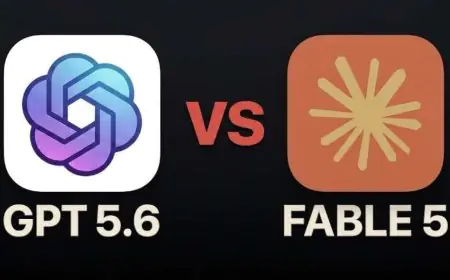
The headline pitch is value. Meta says Ember delivers "more intelligence per dollar" than Anthropic's Claude Haiku 5.5 or OpenAI's GPT-6 Luna "at any reasoning setting," and that it matches Haiku's best score at about a third of the cost. It also claims a spot on the efficiency frontier of the full Artificial Analysis leaderboard, where, in Meta's words, "no model scores higher for less per task."
The chart deserves a second look. On Meta's chart of Artificial Analysis results, Ember at max reasoning scores 35.8 at $0.136 per task, while Haiku 5.5 at max scores 36.2 at $0.411. Both round to 36 on the index, which is where the "matches" comes from. The cost gap is real by Meta's numbers. The tie is rounding. One caption on the chart also notes that Ember's costs are "estimates at proposed pricing," while another says list pricing, so the dollar figures carry a small asterisk.
Ember does not sweep the table either. On FrontierCode 2.0-AA, which Meta describes as real engineering tasks judged on mergeability, Haiku 5.5 scores 34.9 to Ember's 27.2. Several of the wins Meta highlights come from its own evaluation suite rather than Artificial Analysis, including Agents' Last Exam (a Linux subset), OSWorld 2.1 and the Personal Superintelligence Index, an internal composite of eight tests. The Terminal-Bench 4.0 comparison runs each model in a different harness: mini-swe-agent for Ember, Claude Code for Haiku and Codex for Luna. Where Artificial Analysis runs the test, the margins can be big. Meta reports Ember at 37.8 on AutomationBench-AA against 20.2 for Luna and 13.9 for Haiku.
The speed claims come from partners quoted in Meta's post, not from its charts.
"What stood out in our testing was speed. Muse Ember ran up to 30% faster at the tail than the comparable model we tested, and it handled broad, multi-repo investigation tasks well." Dane Knecht, CTO, Cloudflare
The awkward comparison sits inside Meta's own lineup. By Meta's figures, Muse Spark 1.3 lists at $1.25 input and $4.25 output per million tokens and scores 37 on the index to Ember's 36, yet costs $2.39 per task against $0.14. That is a steep price for one index point.
TechCrunch notes that at 10 cents per million input tokens, Ember is cost competitive with open models such as DeepSeek V4.1 Flash and GLM 5.3 Flash. Meta adds that Ember handles text, images, audio and video natively, so agents need no separate model for screenshots or meeting recordings.
Ember is the fourth Muse-branded model, according to TechCrunch, after Spark in April, its open-source twin Glimmer in August and the Wonder frontier model in October. It lands as the consumer Muse Agent keeps adding features. On safety, Meta says Ember stayed below the high-risk thresholds of its Meta Superintelligence Scaling Framework and was tested against instructions hidden in web pages, documents and tool outputs. Meta also says it has "even more efficient models in training." For rivals selling small models at premium prices, that reads less like a teaser and more like a warning.