



































The Three-Frontier Benchmark Problem: When K3, Fable 5, and Sol Are Separated by Three Points — and Five Thousand Dollars
Three models occupy the top of the Artificial Analysis Intelligence Index. Claude Fable 5 leads at 59.9, GPT-5.6 Sol sits at 58.9, and Kimi K3 trails by just 2.8 points at 57.1. The capability gap is negligible. The price gap: Claude Fable 5 cost $5,630 to complete the benchmark suite, GPT-5.6 Sol cost $2,824, and Kimi K3 came in at $2,690.
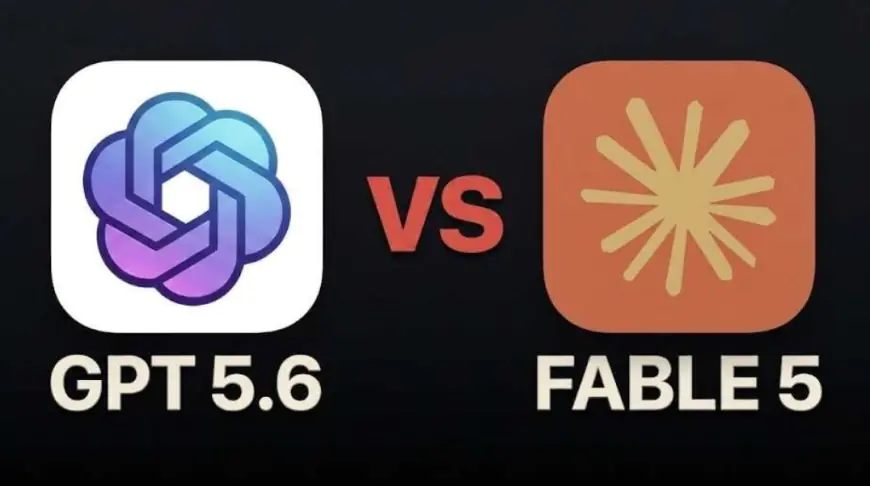
Fable 5 Tops the Charts — But Not Everyone's Wallet
The Artificial Analysis Intelligence Index v4.1 is the single scorecard most engineering teams reference when choosing a frontier model. As of late July 2026, it combines nine evaluations spanning agentic work, coding, scientific reasoning, and general-language capability.


The top three, by model-family best setting, are:
- Claude Fable 5 (Anthropic): 59.9 — $10 per million input tokens, $50 per million output
- GPT-5.6 Sol (OpenAI): 58.9 — $5 per million input, $30 per million output
- Kimi K3 (Moonshot AI): 57.1 — $3 per million input, $15 per million output
Two points separate the leader from the challenger. The cost-per-task gap tells a very different story.
Where the Money Goes
Artificial Analysis ran the same benchmark suite across all three models and reported the total evaluation cost. Claude Fable 5 consumed 87 million output tokens at a cost of $5,630. GPT-5.6 Sol used 70 million output tokens at $2,824. Kimi K3 used 130 million tokens — nearly double Sol's count — yet landed at just $2,690, slightly cheaper than the OpenAI model.
The headline isn't that K3 is cheaper at the token level. It already was, by a wide margin. The headline is that K3 is cheaper at the task level, even after burning through almost twice as many output tokens as Sol to complete the same work.
OpenAI isn't sitting still, either. The GPT-5.6 family ships in three tiers: Sol, Terra ($2.50/$15), and Luna ($1/$6). On deep software engineering tasks, Luna delivers roughly 24 benchmark points per API dollar, compared with 3.2 for Fable 5 and 4.5 for Claude Opus 4.8. If the workload is high-volume coding rather than one-shot architecture, Luna at $1 per million tokens is hard to argue against.
What the Scores Hide
The composite number smooths over real distinctions. Kimi K3 edges out Sol on Terminal-Bench by 0.3 percentage points (88.3 vs. 88.8) and outperforms Fable 5 by 3.7 points. On SWE Marathon — Moonshot's agent benchmark for long-horizon repository work — K3 scores 42.0 against Fable's 35.0 and Sol's 39.0, under its own harness. These are vendor-reported figures; independent reproduction has not yet landed on the major public leaderboards.
Fable 5 still holds the SWE-Bench Pro crown at 80%, a 15-point advantage over Sol's 64.6%. OpenAI has argued the benchmark itself is flawed. Until a replacement exists, though, the number stands — and for teams whose daily work is repo-level code generation in unfamiliar codebases, Fable 5 remains the reference point.
Kimi K3, meanwhile, has a different character. It's unusually verbose — 130 million tokens versus Sol's 70 million on the same suite. Generation discipline and cache design matter more with this model than with either of its rivals, because undisciplined prompting will erase the list-price advantage in a hurry.
The Open-Weight Variable
Kimi K3 is downloadable as open weights under a custom licence — a structural difference that doesn't show up on any benchmark. Engineering teams can run it on their own hardware, modify it, and audit it. The licence adds conditions for large-scale Model-as-a-Service deployments, but the bulk of commercial users pass through unimpeded.
That option doesn't exist for Fable 5 or GPT-5.6 Sol. You buy them on someone else's terms, at someone else's API — and when the price moves, you move with it.
The Routing Conversation
This isn't a one-model-fits-all result. The emerging pattern among teams running multiple frontier models simultaneously looks something like this:
- Fable 5 for architecture discussions, open-ended technical planning, and any task where SWE-Bench Pro matters
- Sol for persistent engineering execution, browse-heavy workflows, and cybersecurity
- K3 for long-context document work, multimodal tasks, and any deployment where self-hosting is a requirement rather than an option
- Luna for high-volume coding pipelines where cost-per-task dominates
The frontier, in other words, has split. No lab swept the board.
Sources: Artificial Analysis Intelligence Index v4.1 (artificialanalysis.ai); Moonshot AI Kimi K3 launch materials and official model card; OpenAI GPT-5.6 product announcement; Anthropic Claude Fable 5 product page.