

























Nvidia Puts $3 Billion Into Meta, the Customer Buying Its Chips
Nvidia is putting $3 billion into Meta's stock offering, and Meta says it will deploy more Vera Rubin hardware in return. The AI money loop between supplier and customer just got a lot tighter.
A day after Meta asked the market for tens of billions of dollars to pay for AI, a $3 billion check is coming from the company that sells it the chips. Nvidia said it will put $3 billion into Meta's equity offering, subject to closing. In the same announcement, Meta said it intends to deploy more Nvidia hardware.


Read that again. The supplier is buying a stake in the customer, and the customer is promising to spend more with the supplier. Nobody is hiding it. Both halves sit in one Nvidia press release dated October 26.
The backdrop is Meta's giant equity raise, which we covered when Meta put up to $95 billion in stock on the table and Nvidia, AMD and Broadcom said they were only interested in buying up to $5 billion of it. That interest was explicitly nonbinding. Now Nvidia has put a number on its share, and it accounts for most of that $5 billion.
The terms are still a little fuzzy. Nvidia's release says only that it will invest in "Meta's equity offering". The original indication of interest covered Class A common stock at the same price as everyone else. Meta has since priced that common stock at $625 a share and upsized it to $25 billion from $22.5 billion, with closing expected October 29. Neither company has said exactly how many shares Nvidia is taking or which tranche they come from.
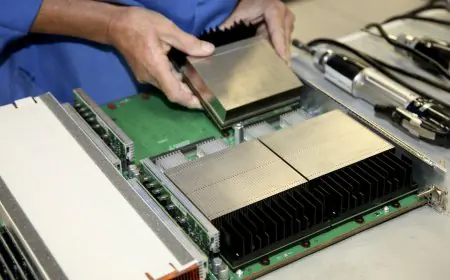
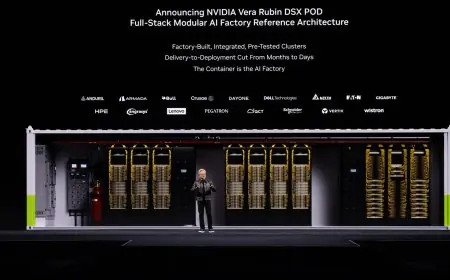
What Meta gives back is clearer. It plans to expand its deployment of Nvidia's Vera Rubin systems and Vera CPUs for what the companies call next generation AI agents. It will also deploy Spectrum-X Ethernet networking and BlueField-4. The two are widening their work on Muse, the consumer AI agent Meta launched last month, and the Muse family of models, tuning training and inference to cut total cost of ownership. They will also "consider" using Nvidia's OpenShell security architecture and its Sentry tool for monitoring how agents behave.
"This changes how we use computers, from operating applications to working with intelligent agents." Jensen Huang, founder and CEO of Nvidia
Zuckerberg kept his line short. "Muse is how we bring personal superintelligence to everyone," he said.
The loop gets tighter
Reuters noted that the chipmakers' interest in the raise adds to concerns about an increasingly circular flow of capital in AI, with suppliers helping to finance one of their biggest customers. Nvidia's $3 billion turns that from interest into a commitment.
Nvidia has been here before. CNBC counts stakes in OpenAI, Anthropic, Intel and xAI, and says the chipmaker has joined 121 investment rounds so far this year, according to Dealroom, up from 13 in 2022. In August, when Nvidia rolled out a financing framework with big asset managers to help customers buy its products, Huang insisted "the demand is real." Wall Street was split. Mizuho traders told clients they were "not sure this does much to quiet the growing concerns around circular financing," while Bank of America's Vivek Arya called it a pivot away from vendor financing.
None of this means anything improper is going on. Meta is a real buyer with real cash pressures to match its ambitions. Reuters reported the company burned $2.12 billion in free cash flow in the third quarter, its first negative quarter in more than a decade, and it has raised the low end of its 2026 capital spending forecast to $135 billion to $145 billion. Selling stock to a deep pocketed partner is a rational move.
"We expect investors to continue to question the financing and potential for future capital raises." William Blair analysts
The question for investors is simple to state and hard to answer. When the biggest seller of AI chips helps fund its customers, how much of that demand is independent? For now, $3 billion is small next to Meta's spending plans, roughly 2% of the low end of this year's capex forecast. It is still a signal. Both stocks were flat in premarket trading Tuesday, so the market is not panicking. It is watching the money go round.