




































Alphabet Suffers Worst Day Since Its IPO as AI Cash Burn Spooks Wall Street
Alphabet shares fell 12.64% on Thursday, the biggest one-day drop since Google went public in 2004, after negative free cash flow and a search ad miss. Microsoft barely moved, and investors seem to be sorting AI spenders by who can pay for it.
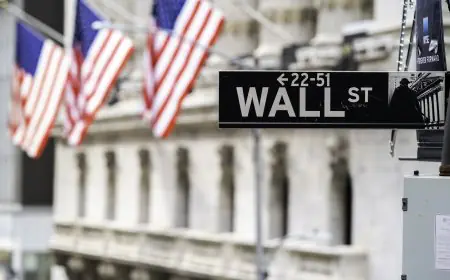
Wall Street just told Alphabet that growth is not enough. Shares of the Google parent closed Thursday at $283.82, down 12.64% from $324.89 the day before, according to Reuters and WSJ market data. NBC News called it the stock's worst one-day drop ever. CNBC said it was the biggest fall since Google went public in 2004, beating the 11.63% plunge of March 2020.


The money lost is just as eye-watering. NBC News put the wipeout at about $500 billion, which it ranked as the second-largest one-day loss in US market history, behind only Nvidia's roughly $589 billion drop in January 2025. Yahoo Finance counted $482 billion by its own calculation. Alphabet was worth $3.47 trillion, NBC reported, so this was a brutal haircut, not a collapse of the company.
The trigger was a quarter that looked fine on the surface. In its earnings release on Wednesday, Alphabet reported revenue up 25% to $127.6 billion and Google Cloud revenue up 103% to $30.7 billion. CEO Sundar Pichai said search query growth was the highest in five years and the Gemini app hit one billion users.
Investors fixated on two other lines. Free cash flow came in at negative $9.07 billion, against the $2.7 billion analysts expected, CNBC reported. And search advertising grew 12% to $63.35 billion, short of the 14.7% growth Reuters said analysts wanted.
Alphabet kept its capital spending guidance at $195 billion to $205 billion for the year. CFO Anat Ashkenazi told analysts that capital expenditure will rise significantly in 2027, per Reuters. NBC News added that Alphabet has committed to more than $1 trillion in multiyear spending agreements for infrastructure, energy and leases.
"Alphabet and Microsoft were night and day." Melissa Otto, head of research at S&P Global Visible Alpha
Otto's comparison is the heart of this story. Reuters reported that Alphabet put 121.4% of its operating cash flow into capital spending in the September quarter, against 68% for Microsoft, excluding finance leases. Microsoft posted free cash flow of $18.6 billion, down 27% from a year earlier but positive, and Azure grew 48%. Its stock ended Thursday down 0.16%, per Reuters.
Oracle got the same reward on Wednesday. Reuters said it finished nearly 11% higher after it said it would cap external financing and expected positive cash flow in the second half of fiscal 2028.
My read is that the market has changed the question. For two years, the pitch was spend now and prove it later. Investors are now asking who can pay for the build-out without leaning on debt, and they are punishing the ones who can't answer. Meta got an early taste last week, when Reuters said cash burn overshadowed strong revenue growth, a theme we covered in our look at why AI stocks are falling.
Search is the nervous part. Philipp Schindler, Alphabet's chief business officer, said the shortfall was partly down to lower monetization in AI Mode, and that Google is now scaling ads in AI Overviews and AI Mode, including internationally. JPMorgan analysts called the slowdown in search steeper than expected, per NBC News. Ben Barringer of Quilter Cheviot told CNBC the results were "fairly messy" and the earnings call "poorly handled." Otto said the miss may lead investors to question whether AI is taking some share from Google Search. That is a worry, not a finding, and Pichai says query growth is at a five-year high.
There is a bull case, and it comes from people who own the stock. Jeremy Saltzberg of Check Capital told Reuters the spending is a "sport of kings" where anyone without $150 billion to spend next year should not bother showing up. Scott Devitt of Rosenblatt Securities told CNBC he does not see a sea change.
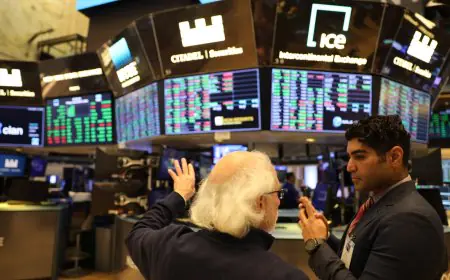
The pain spread. The Nasdaq Composite closed down 1.37% and semiconductor stocks fell 1.4%, per Reuters. Reuters also reported Amazon fell 6.5% in extended trading after a disappointing holiday-quarter forecast. Whether Thursday marks a turning point or a one-day overreaction is still an open question.