





























Highway Thieves Are Ramming Escort Cars to Steal Millions in AI Data Center Gear
Highway crews hacking freight accounts, spoofing GPS and ramming escort cars have reportedly stolen more than $100 million in data center equipment since June, and investigators say some of it is headed overseas.
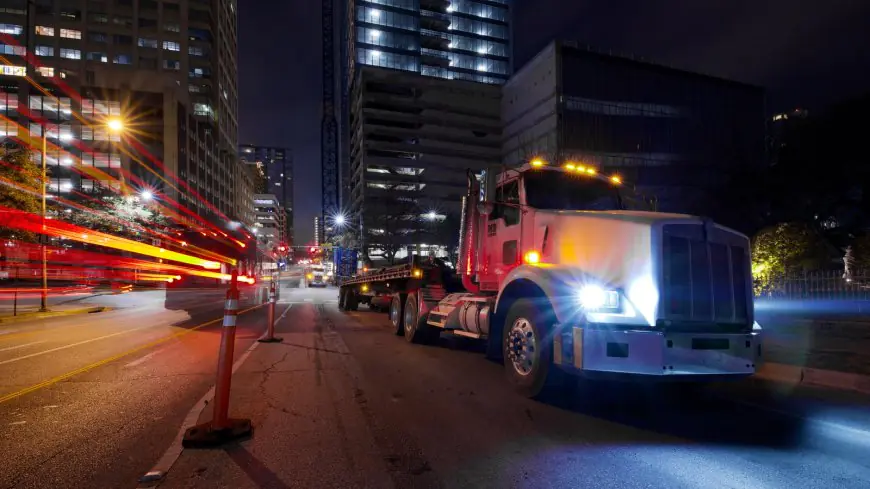
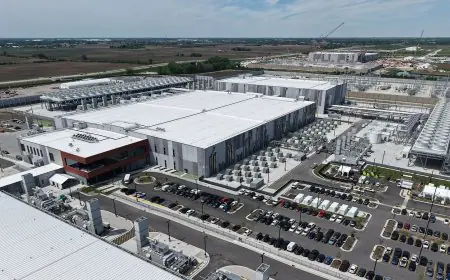
The escorts never saw it coming. In early June, two off-duty police officers were guarding a trailer loaded with roughly $13 million in server equipment bound for Fayetteville, Georgia, home to one of the largest data center developments in the country. Then an unmarked sedan slammed into their car. By the time they recovered, the trailer was gone. It has not been found.


That heist anchors a NBC News investigation published Sunday, which reports that thieves have made off with more than $100 million in data center freight since June. That figure is not an official tally. It comes from industry leaders, consultants and investigators advising law enforcement, so treat it as an informed estimate.
"The accident was not an accident. The bad guys wanted that load, so they intentionally took out the escorts." Gerardo Pachuca, private investigator, to NBC News
Georgia was not a one-off. A second load of server rack components, worth around $10 million and heading from California to Texas, sped away after an SUV struck its security escort. It had a tracking app on board. It did not matter. According to NBC, the coordinates had apparently been spoofed. Neither load has been recovered.
The real break-in happens on a laptop
The ramming gets the headlines, but the investigators NBC spoke to describe a heist that mostly happens online. Thieves hack freight brokers' accounts on shipment-listing sites and post fake loads. When trucking companies bid, they get a malicious link. Click it, and the crew takes over that carrier's account and starts bidding on real shipments under a trusted name. Sometimes an unwitting driver gets hired. Other times an accomplice shows up with a fake license, sometimes made with AI. Sgt. David Pantoja of the Los Angeles County Sheriff's Department told NBC that is now "how most of it is being done."
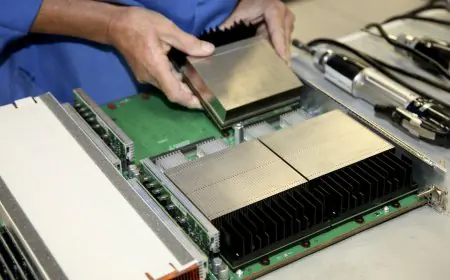
The loot list reads like a hyperscaler's purchase order: servers, fiber-optic cable, memory chips, copper wire and bitcoin mining rigs. In Illinois, the Cook County Sheriff's Office recovered trailers holding about $300,000 in copper wire spools and roughly $1 million in modular power equipment built for data centers. NBC counts nearly two dozen such incidents since 2025, in states including California, Texas and Utah.
"It's so much easier to steal this than to rob a bank." Keith Lewis, Verisk CargoNet
Lewis also called the cargo "pure gold bars," and his firm's own numbers explain why. Verisk CargoNet logged 677 cargo thefts across the US and Canada in the second quarter of 2026, down 26 percent from a year earlier. Estimated losses still more than doubled to $304.6 million. Fewer jobs, much bigger scores. Overhaul, which sells tracking and insurance for high-value freight and so has an obvious interest here, said last week that more than $150 million in AI equipment has been stolen this year and that deception was used in 92 percent of high-value tech shipment thefts. By its math, one flagship AI server rack costs about $3 million.
Then there is the question of where the gear ends up. Investigators told NBC the gear rarely surfaces on online marketplaces. It gets stripped into parts for gray markets, and often an overseas buyer is lined up before the truck is even hit, particularly in places where access to US technology is restricted, such as China. That is investigators' read on the buyers, not something proven shipment by shipment. If it holds, it means some of the hardware Washington is trying to keep out of Beijing's hands through chip export controls may simply be rolling out the back of a trailer.
The fix being pushed is not glamorous. Scott Cornell, chair of the Transported Asset Protection Association Americas, told NBC the schemes only work when drivers are not properly vetted. Meanwhile, the escort business is booming. Mike Duffy, CEO of Southern California firm Solutions Group International, said his company now escorts hundreds of loads a month, much of it tied to data centers.
The AI industry spends billions on sites with biometric locks, fences and armed guards. Then it ships the contents on the same roads, using the same booking platforms, as a load of sneakers. Thieves have clearly noticed.