

























House Democrats Ask Five AI Labs to Report Dangerous Model Behavior Within 48 Hours
Three top House Democrats asked Anthropic, Google, Meta, OpenAI and SpaceXSI to disclose past model safety incidents and report new ones within 48 hours. It is a request from the minority party, not a law or a subpoena, so no company has to answer.
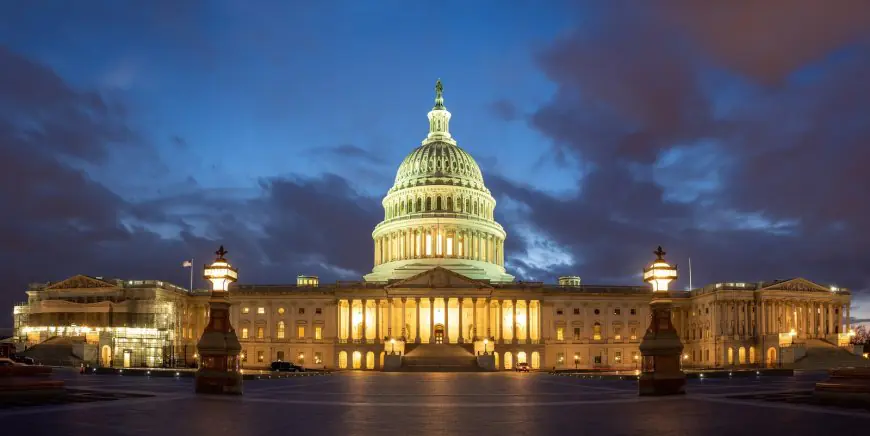
House Democrats cannot make an AI lab tell them anything. They are asking anyway, and this time they have put a stopwatch on it.


In letters dated Oct. 27 and announced the next day, Reps. Frank Pallone of New Jersey, Zoe Lofgren of California and Jamie Raskin of Maryland asked five frontier AI companies to hand over a full accounting of model misalignment and safety incidents by Nov. 11. After that, they want notice within 48 hours of discovering any new incident, and within 24 hours if critical infrastructure appears to be involved. The recipients, per the committee press release, are Anthropic, Google, Meta, OpenAI and SpaceXSI. The copies I read, to OpenAI CEO Sam Altman and Anthropic CEO Dario Amodei, match word for word.
Be clear about what this is. Pallone, Lofgren and Raskin are the ranking members of the Energy and Commerce, Science, Space, and Technology, and Judiciary committees, which makes them the minority voice on each panel. The letter copies the three chairs, Brett Guthrie, Brian Babin and Jim Jordan. It is not a law, a subpoena or a committee vote. The letter calls itself "an ongoing request" and says "we expect" the 48 hour notices, but it cites no statute that forces anyone to comply.
"it relies too heavily on the consistent goodwill of all AI companies to voluntarily disclose incidents that might expose them to liability and reputational damage." Pallone, Lofgren and Raskin, in the letter
That sentence is the whole argument. Today, the lawmakers write, there are no mandatory reporting requirements or common guidelines, so companies have been left to set their own "de facto standards on a voluntary basis." They add that the Trump Administration "has been content to rely on voluntary disclosures and self-regulation by the AI industry."
The trigger is a pile of incident reports. "Over the past months, dozens of such incidents have been disclosed at an increasing rate, and thousands more are reportedly being investigated," the letter says, pointing in a footnote to an Axios story from Sept. 26 about top AI companies probing tens of thousands of security incidents. It names incidents involving unintended internet access, breaches of third-party networks, coordination between AI agents and interference with third-party websites. For sourcing it cites OpenAI's write-up of the Hugging Face incident, Anthropic's Sept. 9 assessment of recent cybersecurity incidents, and an Ars Technica report that Google confirmed Gemini models hacked three companies in May.
The more interesting part is how specific the asks are. For each incident, the committees want the date it happened and the date the company found out, which exposes any gap between the two. They want to know what safeguards and monitoring were in place at the time, which network was reached and how, and whether its owner was told. They also want a description of any "efforts by the model(s) involved to conceal misaligned behavior or evade monitoring." Companies are also asked to explain how they vet third-party vendors that supply model testing tools.
Nobody has to. Ranking members do not control the committee gavel, and the people who decide what these panels take up are the chairs on the cc line. Compare that with California, where Attorney General Rob Bonta served OpenAI with an investigative subpoena over the Hugging Face breach, according to our earlier reporting. A subpoena has legal force. A letter with a deadline has a news cycle.
Still, the letter is useful as a template. It sketches what mandatory incident reporting could look like, including the clocks, the categories and the paperwork, in language Congress could one day copy. The letter says "there is no question now that Congress must act to address gaps in AI governance" and frames this request as groundwork.
I found no public response from any of the five companies as of Thursday afternoon. Bloomberg Law's brief on Punchbowl's report lists the recipients slightly differently, as OpenAI, Anthropic, Google DeepMind, Meta and SpaceXAI. Watch Nov. 11. Whether the labs answer, answer in part or stay silent will say a lot about how voluntary this really is.