AI Market Volatility and New Tariffs Are Sending Tech Stocks Into a Tailspin
Wall Street faces a sharp downturn as the intersection of new trade tariffs and AI infrastructure skepticism triggers a massive sell-off in the tech sector, leaving investors scrambling to reassess their portfolios for 2026.


A Perfect Storm Hits Silicon Valley and Wall Street
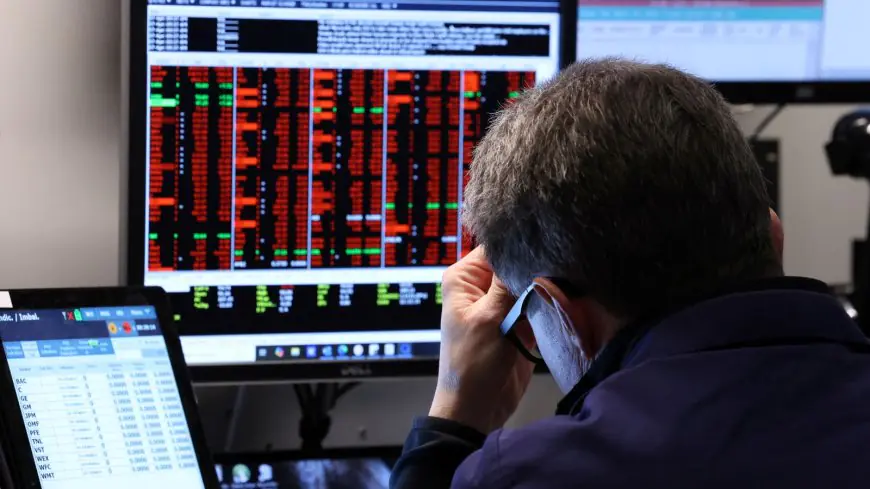
The tech-heavy Nasdaq and the S&P 500 faced one of their most challenging trading sessions of 2026 this week, as a dual threat of aggressive trade tariffs and deepening AI skepticism sent shockwaves through the market. What started as a cautious morning quickly spiraled into a broad-based sell-off, erasing billions in market capitalization within hours. For many investors, the day felt like a final reckoning for the "growth at any cost" mentality that has dominated the artificial intelligence sector for years.
The catalyst for the drop was a combination of leaked policy drafts regarding new hardware tariffs and a cooling sentiment toward AI's immediate profitability. As the "physical" side of AI—the chips, servers, and cooling systems—becomes more expensive due to geopolitical friction, the "digital" side is struggling to prove that its high subscription costs are worth the investment for enterprise clients. This intersection has created a volatility spike that even the most seasoned traders find unsettling.
The Impact of New Tariffs on the AI Supply Chain
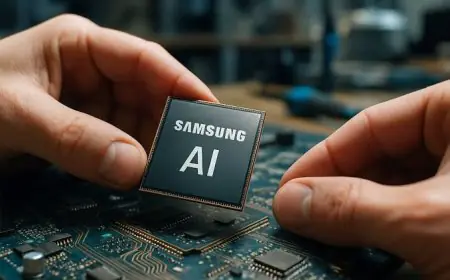
Central to the market's anxiety are the renewed trade barriers affecting high-end semiconductors and data center components. Artificial intelligence is a hardware-heavy industry; it requires a constant stream of specialized GPUs and high-bandwidth memory. When tariffs are introduced, these costs are immediately passed down the chain, squeezing the margins of companies that are already spending record amounts on infrastructure.
Industry analysts have pointed out that the 2026 supply chain is more fragile than it appears. With most high-end manufacturing concentrated in specific global hubs, even a 10% shift in trade duty can mean the difference between a profitable quarter and a massive deficit for a mid-sized AI firm. According to Bloomberg Market Reports, the semiconductor index (SOX) fell nearly 4.5% in a single day, reflecting a deep-seated fear that the "AI tax" is about to get significantly more expensive for American companies.
Investors Transition From Hype to Hard Data
Beyond the geopolitical concerns, there is a growing internal crisis of confidence within the tech sector. For the past two years, AI firms have promised that "agentic workflows" would revolutionize productivity. However, as Q1 2026 earnings reports begin to loom, the data suggests a slower adoption rate than the hype suggested. Many Fortune 500 companies are pausing their "AI pilots" to conduct thorough cost-benefit analyses, leading to a temporary stagnation in new software contracts.
This "wait and see" approach from enterprise customers is a nightmare for growth-oriented stocks. When a company is valued at 50 times its earnings, any hint of a slowdown can lead to a violent correction. We are currently witnessing a flight to safety, with investors rotating out of speculative AI startups and back into traditional "value" stocks or cash-heavy defensive positions. This isn't necessarily a sign that AI is failing, but rather that the market is finally demanding a realistic timeline for returns.
What to Expect for the Rest of 2026
The road ahead for the AI sector will likely be defined by a "survival of the smartest" dynamic. Companies with strong balance sheets and genuine, revenue-generating AI products will likely weather this storm, while those built on vague promises and venture capital subsidies may face a difficult "down round" or acquisition. The current volatility is a painful but perhaps necessary part of a maturing industry.
Experts from the CNBC Tech Council suggest that the next few months will be critical for stabilizing the market. If the upcoming hardware shipments remain steady despite the tariffs, and if major software players can prove their AI tools are actually saving enterprises money, the sell-off could be viewed as a classic "buy the dip" opportunity. However, until the tariff situation is clarified by policymakers, the "tech chill" is expected to linger, keeping the indices under significant pressure.
As we navigate this period of uncertainty, the key for any stakeholder is to look past the daily tickers and focus on the fundamental utility of the technology. AI is still the most transformative force of our generation, but even the strongest tailwinds can't overcome a sudden change in the economic weather.