Anthropic CEO Warns an AI Tsunami is Fast Approaching
Anthropic CEO Dario Amodei has issued a stark warning regarding an impending AI tsunami that society is dangerously underprepared to handle. As artificial intelligence moves toward superhuman capabilities by 2027, Amodei cautions that traditional labor markets and global governance systems may buckle under the weight of rapid automation and concentrated technological power.
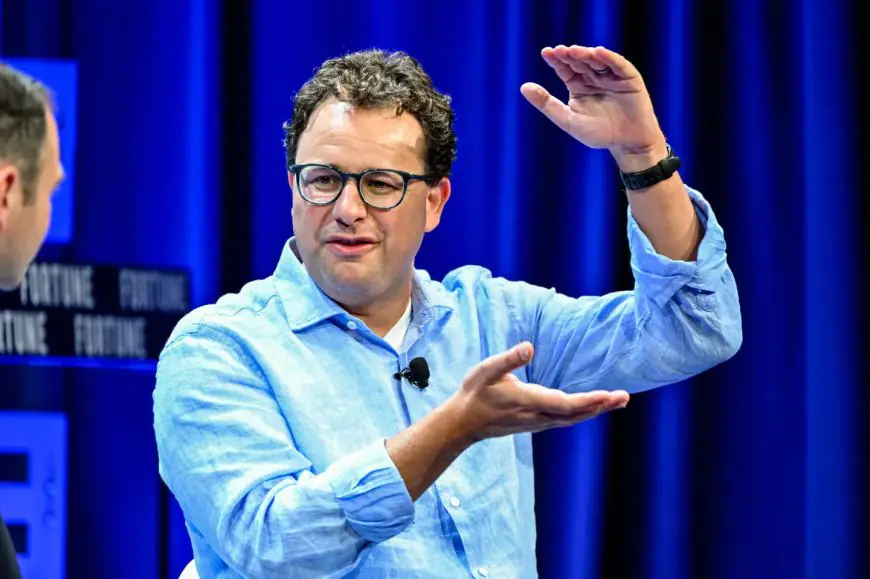


The honeymoon phase of artificial intelligence may be coming to a definitive end, replaced by a wave of disruption that few are ready to navigate. In a series of high-profile statements and a seminal 20,000-word essay titled "The Adolescence of Technology," Anthropic CEO Dario Amodei has sounded the alarm on what he describes as an "AI tsunami." This metaphor isn't just about speed; it's about a scale of change so massive that it threatens to overwhelm the very structures of modern society.
Speaking recently on the People by WTF podcast with Nikhil Kamath, Amodei didn't mince words. He suggested that many people are currently in a state of collective denial, treating the rapid advancement of Large Language Models (LLMs) as a "trick of the light" rather than a fundamental shift in human history. According to Amodei, we are standing on the shore, watching a wave gather strength that could see AI surpass human performance in almost every cognitive task as early as 2027.
The Disruption of the Professional Class
One of the most sobering aspects of Amodei’s warning is the predicted timeline for workforce displacement. While previous industrial revolutions targeted manual labor, the "AI tsunami" is heading straight for the "desk jobs" of the professional class. Amodei predicts that within the next one to five years, up to 50% of entry-level white-collar jobs could effectively vanish.
The vulnerability is particularly high in technical fields that were once considered "future-proof." Amodei highlighted several areas currently at the epicenter of the wave:
- Software Engineering: AI is transitioning from a "copilot" to an autonomous agent capable of end-to-end coding and system design.
- Mathematics and Research: Synthetic data generation is allowing models to train themselves, accelerating scientific discovery beyond human capability.
- Data Analysis: Routine cognitive tasks are being handled with near-perfect accuracy by models like Claude 4.5, rendering traditional entry-level analyst roles obsolete.
However, Amodei does offer a glimmer of hope for certain roles. He argues that "human-centered" jobs—those requiring deep empathy, physical-world interaction, and complex communication—will likely be the last to fall. This perspective is explored further in The Economic Times, where Amodei discusses the survival of roles that revolve around relating to people rather than processing information.
Governance and the Military Deadline
The warning comes at a time of extreme friction between AI labs and government oversight. Anthropic is currently locked in a high-stakes standoff with the U.S. Pentagon. Defense Secretary Pete Hegseth has reportedly given Amodei a February 27 deadline to open Anthropic’s technology for unrestricted military use, or risk being designated a "supply chain risk."
This conflict highlights the exact governance vacuum Amodei is worried about. He has publicly expressed discomfort with the "concentration of power" held by a small number of AI labs, himself included. He advocates for a "constitutional" approach to AI development—where models are built with ingrained ethical principles—rather than allowing them to be weaponized for mass surveillance or fully autonomous warfare without human oversight.
As noted in The Guardian, Amodei believes we are entering a "rite of passage" as a species. The challenge isn't just building the technology; it's proving that our social and political systems are mature enough to wield "almost unimaginable power" without causing a civilizational collapse.
Is Success Still Possible?
Despite the "tsunami" rhetoric, Amodei maintains a guarded optimism. He believes that if society acts "decisively and carefully," the risks can be mitigated. On the other side of this transition, he envisions a world where AI has cured incurable diseases, lifted billions out of poverty, and solved the climate crisis. However, the path to that "glittering prize" requires us to stop looking at the horizon and start building the legal and social seawalls necessary to survive the coming surge.
For businesses and workers, the message is clear: the age of ignoring AI progress is over. Whether we are ready or not, the tide is coming in, and the next two years will determine who swims and who is swept away.