





































AI Crisis Response Teams Are Moving Into Extremism Monitoring
Leading AI safety contractors working with industry giants like OpenAI and Anthropic are significantly expanding their operations to include the active detection of violent extremism, a move that signals a new era in digital surveillance and AI-driven security.
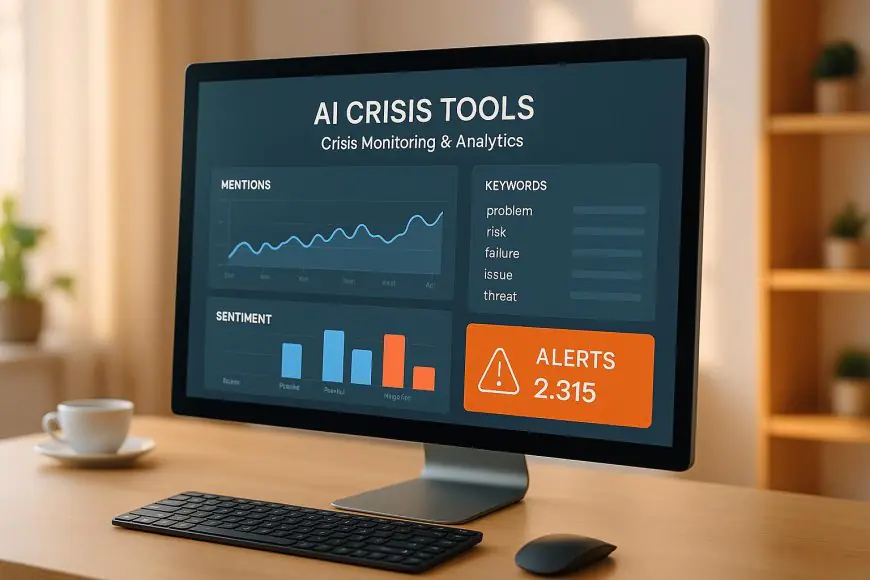


In the quiet back-offices of the artificial intelligence revolution, a specialized workforce is undergoing a profound transformation. What began as a mission to filter out "hallucinations" and toxic language from chatbots is now evolving into something far more consequential. A recent investigation has revealed that crisis-response contractors—the organizations tasked with keeping AI models safe—are now pivoting their sophisticated tools toward the active monitoring of violent extremism and radicalization patterns.
This shift, primarily involving contractors for industry leaders such as OpenAI and Anthropic, represents a significant escalation in how AI is utilized for global security. According to reports from Reuters, these firms are no longer just reactive, waiting for a user to type something harmful into a prompt. Instead, they are exploring ways to use large-scale AI systems to identify, track, and potentially preempt the spread of extremist ideologies across digital ecosystems. It is a move that positions AI safety labs at the center of the world's most sensitive geopolitical and security conversations.
From Safety Filters to Active Threat Detection
For most of the last three years, "AI safety" meant ensuring that an LLM wouldn't give you instructions on how to build a dangerous device. However, as the 2026 digital landscape becomes increasingly fractured, the definition of safety has widened. The new focus involves training models to recognize the subtle linguistic markers of radicalization and the organizational patterns of extremist groups that operate in the shadows of the internet.
The contractors involved in this expansion are reportedly using advanced sentiment analysis and pattern-matching algorithms to scan for "pre-incident" signals. By analyzing how extremist rhetoric evolves in real-time, these AI systems can provide security agencies and policy makers with a "heat map" of potential threats. While the technology is impressive, the transition from a passive tool to an active monitor is causing ripples of concern among privacy advocates and digital rights groups.
The Ethical Tightrope of AI Surveillance
The move into extremism monitoring brings with it a host of ethical dilemmas that the tech industry has yet to fully resolve. When does a safety filter become a surveillance tool? If a private company like Anthropic or OpenAI manages the systems that define what constitutes "extremist speech," who provides the oversight? The risk of "function creep"—where tools designed for one noble purpose are slowly repurposed for more intrusive ones—is a primary concern for civil libertarians.
Furthermore, there is the question of cultural nuance. Extremism is often in the eye of the beholder, and training an AI to distinguish between legitimate political dissent and genuine violent intent is a task fraught with the potential for bias. If these systems are deployed globally, they could inadvertently become tools for state-sponsored censorship, depending on how "extremism" is defined in different jurisdictions. The contractors, however, argue that the speed and volume of modern digital threats leave them with no choice but to automate the defense.
Why the Expansion Is Happening Now
The timing of this expansion is not accidental. As we move deeper into 2026, the complexity of online threats has outpaced human moderation teams. The sheer scale of content generated and shared across platforms requires a level of oversight that only a high-capacity AI can provide. Additionally, major AI labs are under immense pressure from governments worldwide to prove that their technology is a net positive for social stability.
The strategic expansion includes several key focus areas:
- Real-time linguistic analysis to identify recruitment efforts on encrypted messaging apps.
- Cross-platform tracking to see how extremist narratives jump from fringe forums to mainstream social media.
- Automated reporting pipelines that alert human safety officers to high-probability threats in seconds.
As this technology matures, the line between an "AI lab" and a "defense contractor" continues to blur. The move into extremism monitoring is a clear signal that the AI industry is no longer content to sit on the sidelines of global security. For the public, the challenge will be ensuring that as these companies build the digital shield against violence, they don't accidentally dismantle the very privacy and freedom they are tasked with protecting. In the race to secure the future, the most important question may not be what the AI can see, but what we allow it to do with that information.