









































White House is pushing a national AI framework to stop state regulations
The U.S. government has officially unveiled a massive national AI policy framework designed to centralize regulatory power in Washington. The move signals a high-stakes attempt to preempt a growing "patchwork" of state laws while navigating a fierce political divide over the balance between rapid innovation and public safety.
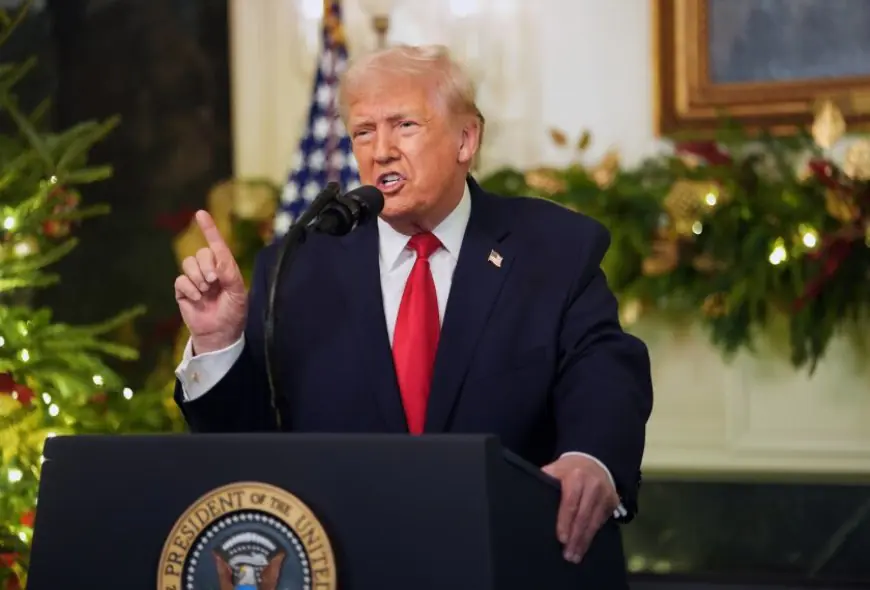


The battle for the soul of American artificial intelligence has officially moved to Pennsylvania Avenue. This week, the White House unveiled its much-anticipated National AI Legislative Framework, a sweeping blueprint that aims to strip away the "patchwork" of state regulations in favor of a singular, federal standard. For months, the tech industry has been holding its breath as state legislatures from California to Colorado raced to implement their own safety guardrails. Now, the federal government is making its move to reclaim the driver’s seat.
At its core, the new framework is a manifesto for "American AI Dominance." The administration argues that the United States cannot win the global AI race if domestic developers are tethered by 50 different sets of conflicting rules. By establishing a "minimally burdensome" national standard, the White House hopes to unleash Silicon Valley while simultaneously addressing growing public anxiety over deepfakes, child safety, and national security.
The War on Onerous State Laws
The most controversial aspect of the rollout is the explicit push for federal preemption. The administration has identified several existing state laws as "onerous," claiming they stifle innovation under the guise of safety. Specifically, the framework targets state mandates that require AI models to alter their "truthful outputs" to mitigate bias—a practice the White House has characterized as a form of ideological censorship or "woke AI."
To put teeth into this policy, the federal government is reportedly considering a "carrot and stick" approach. This includes a strategy of withholding billions in federal technology grants from states that refuse to align their local regulations with the new national standards. This move has already sparked a firestorm of criticism from state attorneys general, who argue that the federal government is overstepping its constitutional bounds and leaving citizens unprotected from local harms like algorithmic discrimination and housing bias.
Innovation vs Safety: A Divided Capital
While the White House is projecting a unified front, the political reality in Washington is far more fractured. The tension between prioritizing speed and ensuring safety remains the biggest hurdle for any lasting legislation. On one side, defense leaders and hawks argue that any regulation slowing down American AI is a gift to global adversaries. On the other, a bipartisan group of lawmakers—and many of the industry’s own pioneers—fear that without robust, enforceable safety standards, the risks of AGI could become unmanageable.
The "One Big Beautiful Bill Act," which previously attempted to implement a ten-year moratorium on state AI laws, was famously gutted in the Senate after a 99-1 vote to remove the preemption clause. This history suggests that while the White House framework sets the stage, getting a deeply divided Congress to agree on the details will be an uphill climb. Many critics point to the recent AP News analysis highlighting that the administration's "light-touch" approach may not do enough to address the sophisticated cyber-fraud and deepfake crises currently hitting American consumers.
What Happens Next
The rollout marks the beginning of a frantic legislative cycle. In the coming weeks, the Department of Justice’s new AI Litigation Task Force is expected to begin challenging state laws in court, using the "Dormant Commerce Clause" as a legal weapon to invalidate local regulations. Meanwhile, tech giants are pouring hundreds of millions into lobbying efforts to ensure that whatever national standard emerges is as flexible as possible.
As the "AI+DC Takeover Week" continues, it’s clear that AI has shifted from a niche tech topic to the center of the American political machine. The question is no longer whether we will have a national AI policy, but whether that policy will prioritize the bottom line of tech firms or the fundamental rights of the people they serve.