










Deepening AI Partnerships Between Nvidia, Cadence, And Google Cloud Are Revolutionizing Industrial Robotics
At the CadenceLIVE 2026 summit, tech giants Nvidia, Cadence Design Systems, and Google Cloud announced a massive expansion of their collaborative AI ecosystems. By integrating agentic AI, physics-based digital twins, and hyperscale cloud computing, these partnerships are bridging the "sim-to-real" gap and accelerating the deployment of autonomous industrial robotics at an unprecedented scale.
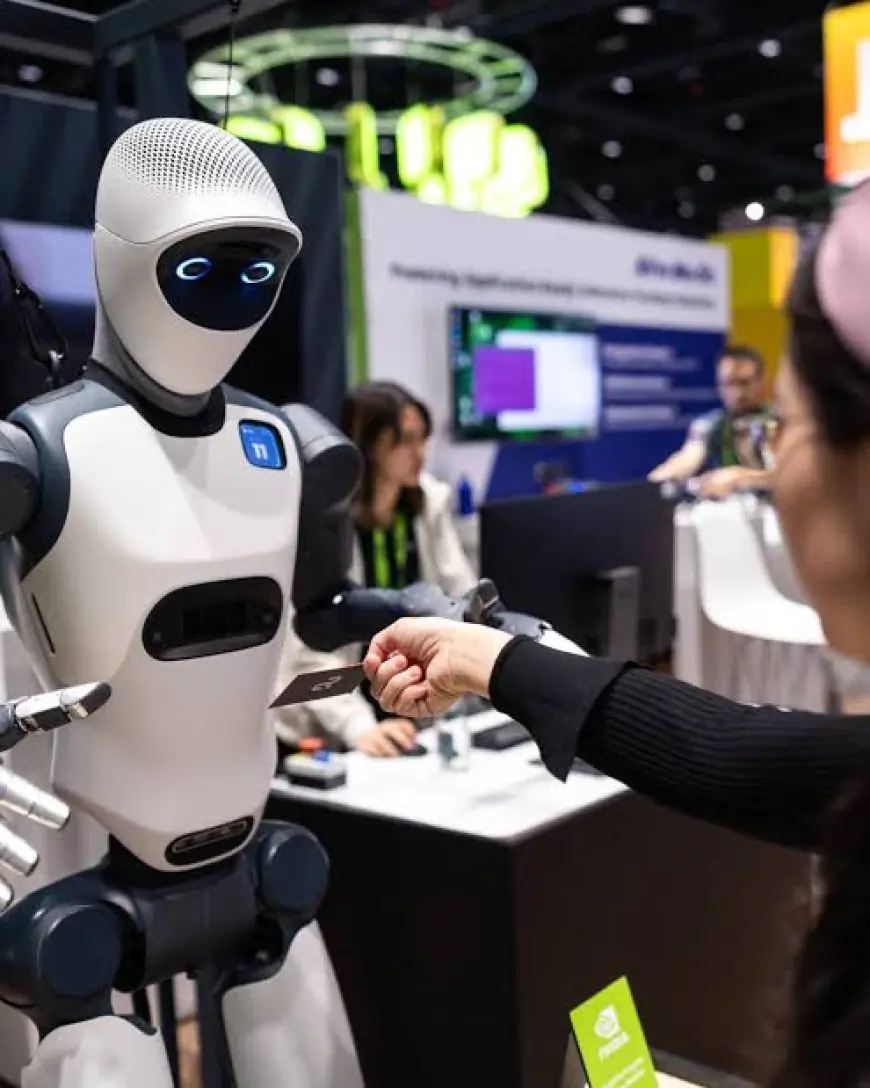


The industrial landscape is undergoing a radical transformation as the boundaries between software simulation and physical hardware dissolve. At the recent CadenceLIVE Silicon Valley 2026 conference, a series of high-stakes partnerships between Nvidia, Cadence Design Systems, and Google Cloud were unveiled, marking a new era for "Physical AI." These collaborations are designed to solve the most persistent bottleneck in robotics: the "sim-to-real" gap, where AI models trained in virtual environments fail to perform accurately in the messy, unpredictable physical world.
For decades, robotics development was a linear, fragmented process. Today, the integration of agentic AI—autonomous systems capable of reasoning and executing multi-step tasks—is turning that model on its head. By combining Nvidia’s accelerated computing power with Cadence’s high-fidelity physics engines, engineers can now build "AI Factories" where robots are designed, tested, and optimized entirely within full-fidelity digital twins before a single physical bolt is tightened.
Nvidia and Cadence: Closing the Sim-to-Real Gap
The centerpiece of the announcement is the expanded integration between Nvidia’s Omniverse and Isaac platforms and Cadence’s multiphysics simulation tools. This partnership allows for the creation of synthetic training data that is indistinguishable from real-world physics. As Nvidia CEO Jensen Huang noted during his keynote, the goal is to create a "digital refinery" where robots can experience millions of iterations of a task—such as delicate object handling or complex navigation—in a matter of hours.
Cadence is contributing its new AgentStack™ technology, a "head agent" designed to orchestrate the entire engineering workflow. This system uses AI to reason over design hierarchies and protocols, allowing it to automatically adjust chip layouts or mechanical specifications to meet performance targets. When these designs are deployed on Nvidia Jetson edge AI systems, a live virtual twin remains connected, providing continuous feedback and allowing the robot to "learn" from its real-world environment in real-time.
Google Cloud: Scaling AI-Driven Design at Hyperscale
While Nvidia and Cadence focus on the intersection of physics and silicon, Google Cloud is providing the hyperscale infrastructure needed to run these massive simulations. A key highlight of the event was the collaboration to scale ChipStack™ AI agents on Google Cloud. This allows semiconductor firms to utilize massive parallel computing to verify and test new chip architectures for robotics at a speed that was previously impossible.
By leveraging Google Cloud’s specialized AI infrastructure, companies can now run "Agentic Design" workflows that compress iteration cycles from weeks to hours. This is particularly vital for the development of custom "edge AI" chips—the brains inside the next generation of humanoid robots—which require extreme power efficiency and low latency. The partnership ensures that the software-defined world of the cloud is perfectly synchronized with the hardware-defined world of the factory floor.
The Impact on Global Industrial Adoption
The implications of these deepening ties extend far beyond the tech sector. Major industrial players, including Honda R&D, Samsung, and SK Hynix, are already leveraging these accelerated workflows to bring autonomous products to market faster. In 2026, the focus has shifted from "can a robot do this?" to "how quickly can we deploy a fleet that does this reliably?"
- Accelerated Engineering: Workflows that once took months are seeing up to a 100x speedup through AI-physics models.
- Productivity Gains: Early deployments of agentic design tools have demonstrated a 10x boost in productivity for design and verification tasks.
- Safety and Trust: By simulating every possible failure point in a digital twin, companies can deploy physical AI systems with a level of safety and confidence that manual testing could never provide.
The Future: From Chatbots to Physical Agents
As we move through 2026, the industry is moving past the "office copilot" phase and into the era of the Industrial Copilot. These partnerships between Nvidia, Cadence, and Google Cloud represent the foundational "operating system" for this new world. We are no longer just building machines; we are building intelligent systems that understand the laws of physics as well as they understand code.
The convergence of agentic AI and digital twins is not just a marginal improvement—it is a reinventing of the engineering process. For the global manufacturing and robotics sectors, the message is clear: the future is being built in the digital world first, and the companies that master this "sim-to-real" pipeline will be the ones that lead the next industrial revolution.