












































Financial Services Reached The AI Point Of No Return
The global financial sector has officially crossed the threshold from AI experimentation to total autonomous integration. With major banks and fintech giants deploying agentic systems that can move money and manage risk without human intervention, the industry has hit a point of no return that is permanently reshaping Wall Street.
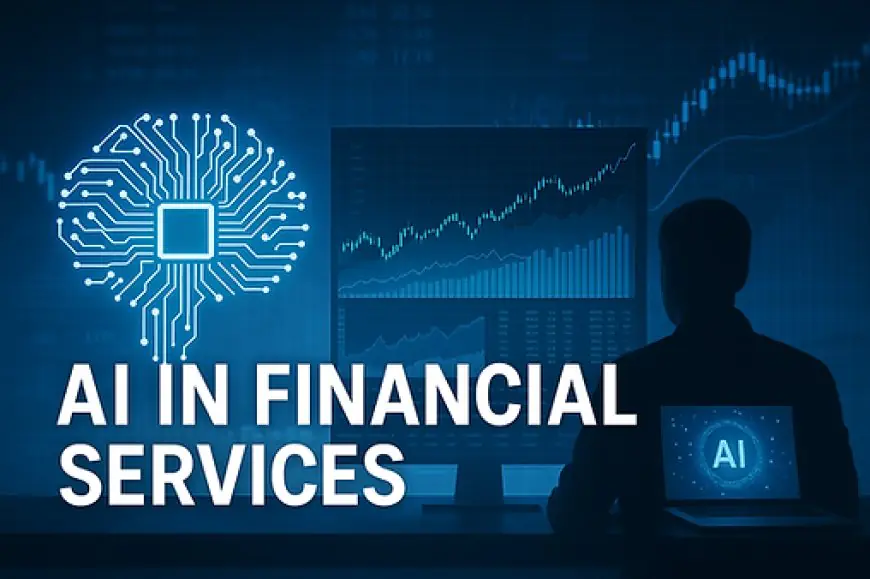


For years, the financial services sector treated artificial intelligence as a sophisticated novelty—a better way to categorize credit card spend or a slightly smarter chatbot for basic customer service. But as we move through 2026, that era of "safe" experimentation has ended. We have officially reached the point of no return. Today, the conversation on Wall Street has shifted from whether AI can assist human bankers to how many autonomous agents are required to run a global treasury department.
This isn't just a marginal improvement in efficiency; it is a total "re-wiring" of the financial plumbing. Large-scale institutions are no longer just using AI to analyze data—they are giving AI the keys to the kingdom. We are seeing the rise of "agentic" systems: AI entities capable of setting their own goals, navigating complex regulatory environments, and executing multi-step financial transactions with zero human oversight.
From Chatbots to Autonomous Agents
The transition from generative AI to agentic AI is the defining story of this year’s fiscal landscape. In the past, a human analyst might ask an AI to "summarize this market report." Today, that same analyst is overseeing an autonomous agent tasked with "optimizing our liquidity across three different continents while minimizing tax exposure." The AI doesn't just provide a summary; it identifies the opportunity, checks it against compliance protocols, and moves the capital.
Major players like JPMorgan Chase and Goldman Sachs have moved beyond pilot programs, integrating these autonomous agents into the very core of their trading desks and risk management units. These systems operate with a level of speed and precision that makes traditional human-led processes look glacial. According to recent reporting by Bloomberg, the adoption of these autonomous systems has already led to a 30% reduction in back-office operational costs for early adopters, creating a massive competitive gap that late-comers are struggling to bridge.
The industry is essentially in a high-stakes arms race. If a competitor can settle trades in milliseconds using autonomous reconciliation while your firm takes hours or days, you aren't just slower—you are obsolete. This competitive pressure is what has pushed the industry past the point of no return; to pull back now would be a form of financial suicide.
The Regulatory Tug of War
Of course, with great autonomy comes great anxiety. Regulators in the U.S. and Europe are working overtime to keep pace with the sheer speed of this transition. The concern isn't just about job losses—though the "middle-office" of banking is shrinking rapidly—it is about systemic risk. If multiple banks use similar autonomous agents that react to market signals in the same way, we could see "flash crashes" or liquidity traps triggered by machine-logic feedback loops.
To combat this, a new sector of "AI Compliance" has emerged. Fintech startups are now building AI "referees" designed specifically to watch the AI "players." These guardian systems monitor autonomous agents for signs of hallucination, bias, or deviation from risk parameters. As noted by Forbes, the capital flowing into AI safety and governance tools for the financial sector has tripled in the last twelve months, proving that the industry is desperate to build a "kill switch" for its own creations.
A New Era for the Customer
For the average consumer, this "point of no return" means the end of the traditional bank relationship. We are entering the age of the "Personal Financial Sovereign"—an AI agent that lives on your device and negotiates with the bank's AI on your behalf. Your agent will automatically move your savings to the account with the highest yield, negotiate lower interest rates on your credit cards, and manage your investment portfolio while you sleep.
The bank is no longer a place you go or even an app you open; it is a set of autonomous protocols that interact with your digital representative. This shift is permanent. The infrastructure being built today is too complex and too deeply integrated to ever be dismantled. We have handed the steering wheel to the machines, and while the ride is becoming incredibly efficient, we are all still learning how to navigate this new, autonomous reality.