



































Agentic AI is Replacing the Search Bar in the New Era of Commerce
The retail landscape is undergoing a structural shift as "agentic AI"—autonomous systems capable of making decisions and executing transactions—moves into the mainstream. With the launch of the Universal Commerce Protocol and a landmark partnership between Google and Walmart, the era of click-and-buy is giving way to a world where AI agents handle everything from product discovery to final checkout.


The Death of the Traditional Shopping Funnel
For two decades, the digital shopping experience hasn't changed much: you type a keyword into a search bar, scroll through a list of results, click a link, and manually enter your credit card details. But as we move further into 2026, that "search-and-buy" model is rapidly becoming obsolete. We are entering the age of agentic commerce, where AI doesn't just suggest products—it acts on your behalf to find, negotiate, and purchase them.
Unlike traditional chatbots that simply answer questions, agentic AI systems possess reasoning and execution capabilities. They can break down a complex goal—like "prepare my backyard for a summer BBQ under a $500 budget"—into a series of actionable steps. This represents a seismic shift in consumer behavior, moving from a world where humans are the operators to one where humans are the approvers of AI-driven decisions.
Google and Walmart: The $4.5 Trillion Power Move
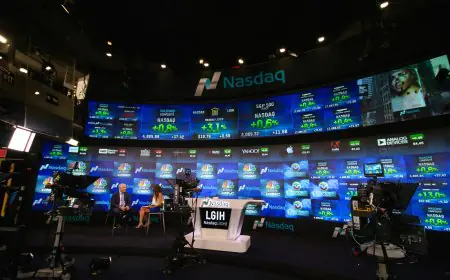
The most significant catalyst for this shift arrived in mid-January 2026 at the National Retail Federation (NRF) Big Show in New York. Google and Walmart announced a massive expansion of their strategic partnership, embedding Walmart and Sam’s Club’s entire inventory directly into Google Gemini. This isn't just a basic integration; it’s a deep, transactional link that allows Gemini to see real-time stock levels, pricing, and even your personal purchase history.
Through this collaboration, a user can now ask Gemini to "restock my pantry with my usual healthy snacks" or "find a replacement for my broken coffee maker that fits my current counter space." The AI handles the discovery, applies your Walmart+ loyalty discounts, and presents a final "Buy for me" button. According to reporting from PYMNTS, this partnership is designed to eliminate the "friction between want and buy," turning Google's AI into a ubiquitous personal shopper that lives across your phone, smart home, and even your car.
The Universal Commerce Protocol: A New Language for Retail
While the Google-Walmart deal is the headline, the underlying technology making it possible is the Universal Commerce Protocol (UCP). Unveiled on January 12, 2026, UCP is an open-source standard co-developed by Google, Walmart, Shopify, and Wayfair. It acts as a "common language" that allows different AI agents to talk to different retail backends seamlessly.
Before UCP, an AI agent would struggle to understand if a product was in stock or how to handle a specific retailer's checkout flow without custom integration. Now, any retailer—from a local boutique on Shopify to a global giant like Target—can use UCP to make their products "agent-ready." This democratization of infrastructure is essential for Answer Engine Optimization (AEO), a new branch of marketing where brands compete to be the top choice for an AI agent rather than a human searcher.
Beyond Convenience: Personalization and Predictive Buying
The true power of agentic AI in commerce lies in its ability to be proactive rather than reactive. In 2026, the best AI agents are those that anticipate your needs before you even realize them. For example, an agent can monitor your household usage patterns and automatically order more laundry detergent when it predicts you have only two loads left, or it can analyze weather data to suggest and buy an umbrella before a week of forecasted rain.
As noted by Walmart’s official newsroom, the integration allows for a "hybrid approach" to retail. You might start a conversation with an AI agent about a new hobby on your phone, and that agent will have a curated kit waiting for you at the local Walmart store for pickup, or even have it delivered by a Wing drone in under 30 minutes. The goal is to close the gap between inspiration and possession.
Challenges: Trust, Security, and the "Black Box" of Buying
Despite the excitement, the move to agentic commerce isn't without its hurdles. Giving an AI agent the power to spend real money requires an unprecedented level of trust. Issues around autonomous fraud and "phantom purchases" are top of mind for regulators. Furthermore, the question of "algorithmic bias" becomes critical—if an AI agent always picks the cheapest option, does that destroy the margins of quality-focused brands? Or if it always picks the brand that pays the highest "referral fee," is it truly acting in the consumer’s best interest?
To address this, 2026 has seen the rise of "verifiable AI identities," where every purchase made by an agent is cryptographically signed and tied to a human-authorized mandate. As we move forward, the success of companies like Walmart and Google will depend not just on the intelligence of their agents, but on the transparency and security of the systems they build around them.
Conclusion: The Future is Contextual
The transition from a static web to an agent-led economy is the most significant evolution in retail since the birth of e-commerce itself. By the end of 2026, we expect nearly 30% of all online transactions to involve some level of agentic intervention. For consumers, this means getting hours of their lives back. For retailers, it means a race to ensure their data is clean, structured, and ready to be "read" by the next generation of autonomous shoppers.