



































Sam Altman Launched World ID 4.0 As The Definitive "Proof Of Human" For The AI Era
Tools for Humanity has officially unveiled World ID 4.0, a massive upgrade to its global identity protocol designed to distinguish humans from AI agents. Featuring tiered verification levels, anti-deepfake technology, and high-profile integrations with Tinder and Zoom, the 4.0 rollout aims to establish a universal "digital passport" in an internet increasingly dominated by synthetic media and automated bots
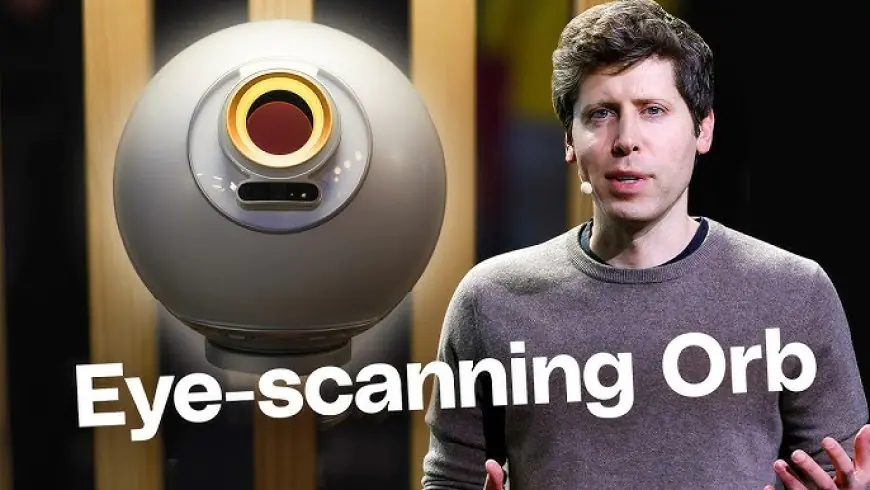


The digital world is reaching a tipping point where telling the difference between a human and a highly sophisticated AI is becoming nearly impossible. As deepfakes become more convincing and bot networks more autonomous, the basic trust that underpins our online interactions is under threat. In response, Sam Altman’s Tools for Humanity has officially launched World ID 4.0, a major upgrade to its "proof of human" verification system designed to reclaim the internet for actual people.
At its core, World ID 4.0 is not just another login method; it is a fundamental shift in how we approach digital identity. By utilizing advanced biometrics and hardware, the system aims to create a secure, private way for users to prove they are unique individuals without having to reveal their personal data. This update comes at a time when platforms are struggling to keep up with the sheer volume of AI-generated content and automated accounts that can sway public opinion or commit large-scale fraud.
The Evolution Of Proof Of Personhood
The latest iteration of the World ID protocol introduces several key features that make it more accessible and robust. Unlike previous versions that relied heavily on the physical "Orb" hardware for iris scanning, World ID 4.0 expands the ways users can verify their identity. This multi-layered approach ensures that the barrier to entry is lower, while the security floor remains high.
One of the most significant hurdles for any identity system is the balance between security and privacy. Tools for Humanity has integrated zero-knowledge proofs (ZKPs), a cryptographic method that allows one party to prove to another that a statement is true without revealing any information beyond the validity of the statement itself. In simple terms, you can prove you are a human being to a website without that website ever knowing your name, age, or location.
The necessity for this technology is growing. According to a recent report on World Network developments, the goal is to create a digital passport that resides locally on a user's smartphone, putting the individual back in control of their own credentials rather than a centralized corporation.
Combating The Bot Crisis
We have all seen how bots can ruin the experience on social media platforms, but the implications of World ID 4.0 go far beyond Twitter threads. In an era where AI can generate professional-grade code, write convincing emails, and even mimic human voices, the risk of "Sybil attacks"—where one person creates thousands of fake accounts to gain undue influence—is at an all-time high.
World ID 4.0 provides a "humanity score" that developers can integrate into their apps. This allows services to prioritize real users over automated scripts. Think of it as a permanent, privacy-preserving CAPTCHA that you only have to solve once. This could revolutionize everything from fair access to government benefits to ensuring that online voting systems remain untainted by artificial interference.
The push for better identity tech is echoed by major tech leaders who argue that without a verifiable "proof of human," the internet will eventually become a hall of mirrors. You can explore more about the philosophical and technical underpinnings of this shift in the latest research on AI safety and alignment, which highlights why distinguishing human intent from machine output is critical for the next decade of technology.
What This Means For Your Privacy
The skeptics of the "Orb" often point toward the invasive nature of biometric data collection. However, World ID 4.0 addresses these concerns by emphasizing decentralization. The system is designed so that the biometric data used for the initial verification is deleted after the unique "iris code" is generated. That code is then transformed into a proof that cannot be traced back to the original biological data.
As Tools for Humanity scales this system globally, the focus remains on building a public utility. It is an ambitious attempt to solve one of the most complex problems of the AI age. Whether it becomes the global standard remains to be seen, but World ID 4.0 is currently the most technologically advanced answer we have to the question of who is actually on the other side of the screen.